Spain’s mortgage market is expanding again, but the bigger story for borrowers is that banks are judging applications more selectively, favoring stable jobs, lower debt and predictable income as higher home prices keep borrowing amounts at record levels.
Spain mortgage lending rises as banks tighten approval
That is the core message from economics expert Victoria Ballesteros: a mortgage approval in Spain depends on far more than salary or savings, and different lenders apply different risk models. In practice, that means two borrowers on the same paycheck can face very different outcomes depending on employment status, income type and the property they want to buy.
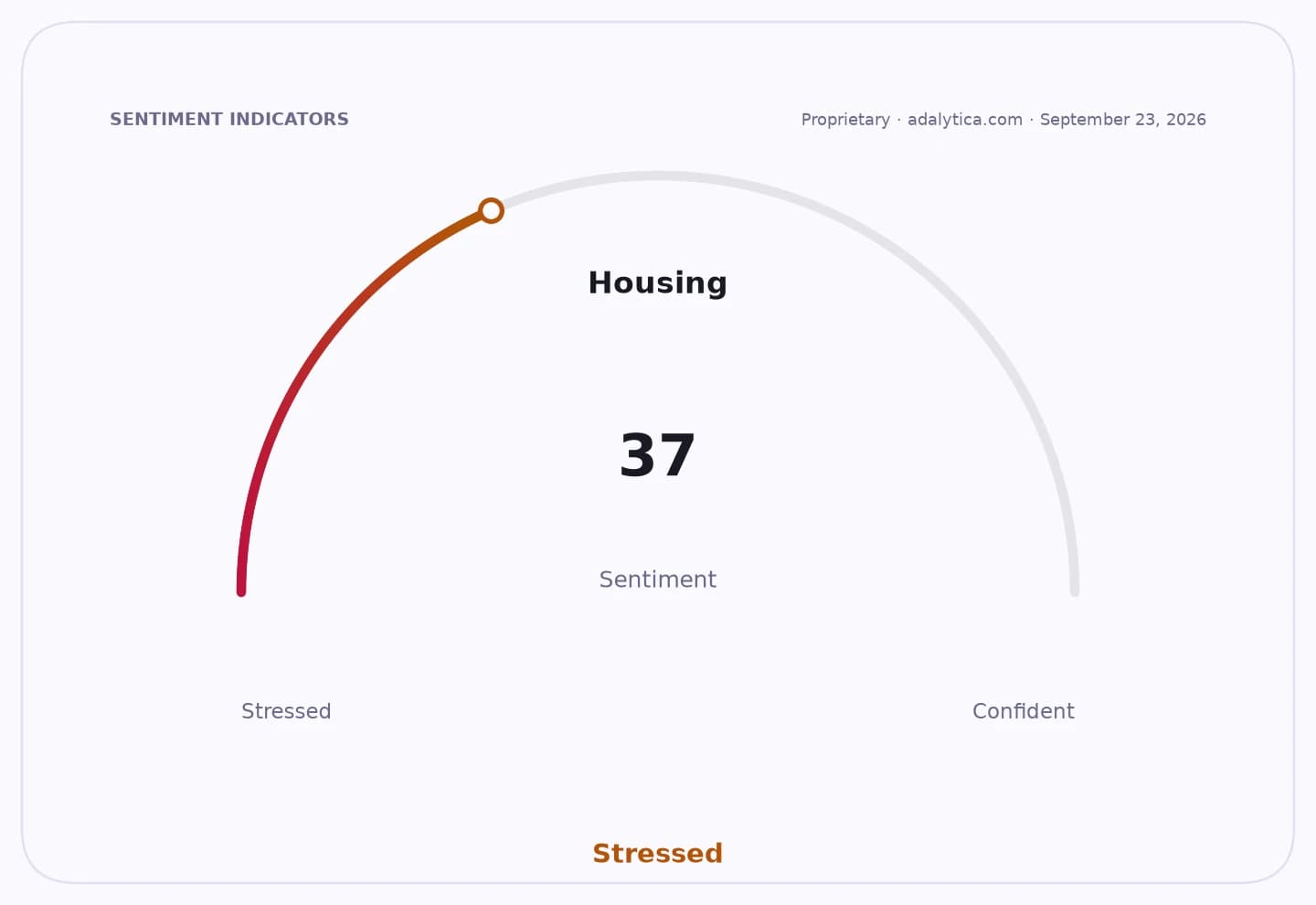
Sentiment IndicatorsⓘProprietary · adalytica.com · September 6, 2026
This is a snapshot — live sentiment, awareness and momentum for 130+ markets update continuously in the dashboard.Open AlphaPulse
The economic significance is clear. In June, Spanish banks originated 45,907 home loans, up 10.8% from a year earlier and the strongest sign yet that financing demand remains resilient despite tighter underwriting. Over the first half of 2026, mortgage lending rose 7%, according to INE data cited by EFE. At the same time, the average loan size climbed 6% to 178,365 euros, the highest on record, showing that rising housing costs are forcing buyers to borrow more even as lenders remain cautious.
Rates are easing only modestly. The average mortgage rate fell to 2.96% in June, while fixed-rate loans accounted for 61.7% of new contracts, reflecting borrowers’ preference for payment certainty at a time when the average interest rate still hovers near 3%. That mix matters for the broader economy because it shapes household cash flow, consumption and housing demand. Higher monthly payments can constrain spending even when employment remains solid.
The approval standards also reveal who is winning and losing in the current market. Public-sector workers, including civil servants, are being treated more favorably because of their employment stability, while younger buyers and those with more precarious contracts face tougher access to credit. That split matters in a country where housing affordability has already been stretched by elevated property prices and a shortage of supply in many urban areas.
For investors, the message is mixed. Mortgage originators and housing-finance platforms benefit from higher volumes and larger loan balances, but tighter credit filters may cap growth later in the year if affordability worsens or if banks continue to harden criteria. The decline in registered mortgage amendments also suggests less refinancing activity, with 10,261 changes in June, down 19.1% from a year earlier, as borrowers are less able or less willing to switch terms in a still-costly funding environment.
Some market participants remain constructive. Industry analysts cited in the report argue that solid employment and bank competition should keep the market stable in the second half. Others warn that the effect of the new financing conditions has yet to fully filter through, raising the risk of a slower pace of lending if house prices keep rising faster than wages.
For investors, the key catalyst is whether falling borrowing rates can offset stricter underwriting and preserve loan demand. If employment holds and rates drift lower, Spain’s mortgage market should remain active. If not, the current rebound could prove short-lived, especially for first-time buyers and more leveraged households.
| Entity | Gains | Losses |
|---|---|---|
| Banks | ▲Higher loan volumes | ▼Tighter credit exposure |
| Civil servants | ▲Easier approval terms | ▼Less favorable terms |
| Young buyers | ▲Some rate relief | ▼Weaker affordability |
| Mortgage lenders | ▲Larger average loan sizes | ▼Slower refinance activity |