Sweden’s central bank left its policy rate unchanged at 1.75%, but the bigger message for households is that the tightening cycle is not necessarily over, keeping the case for waiting on fixed mortgages alive but narrowing the margin of safety.
Sweden Central Bank Keeps Rate at 1.75%

That matters because the mortgage decision is now being made in a market where borrowing costs already differ meaningfully across maturities. In July, the average bank rate on a three-month floating mortgage was 2.73%, compared with 3.07% for a one-year fix and 3.32% for a three-year fix, according to Zmarta. With several banks and the National Institute of Economic Research now forecasting multiple rate hikes — in some cases as many as four over the next 12 months — the choice between floating and fixed is less about locking in cheap money and more about how much rate risk a household is willing to absorb.
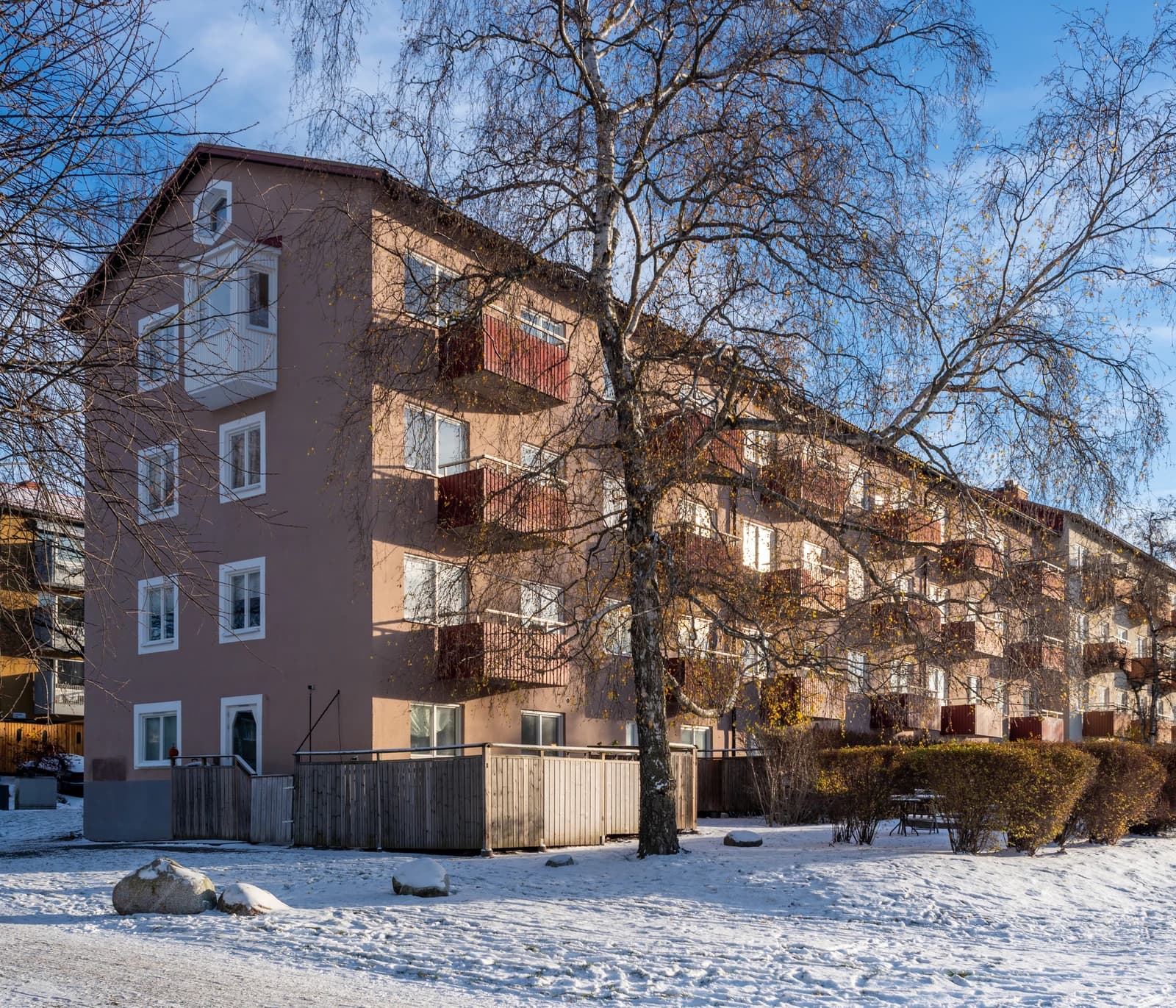
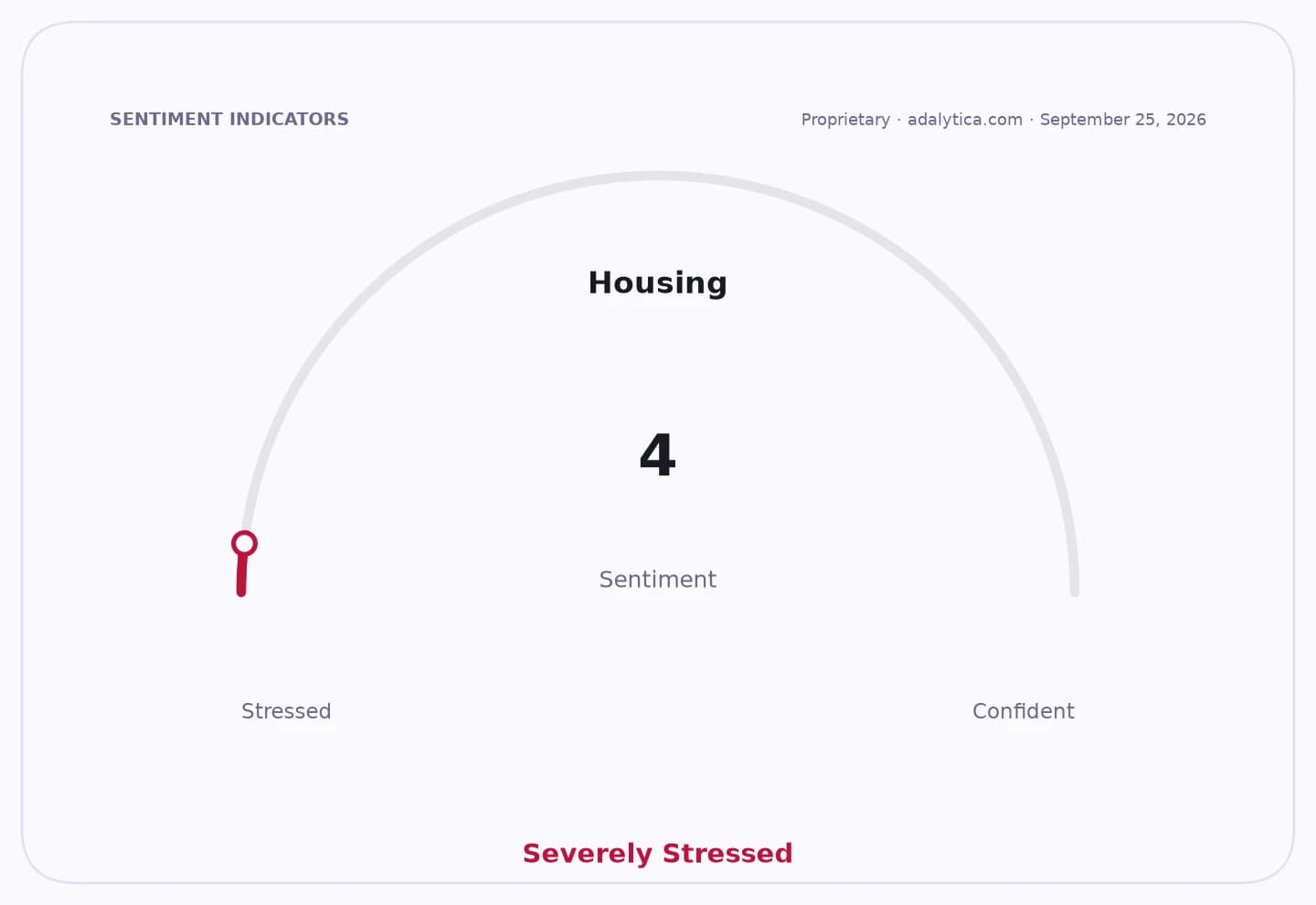
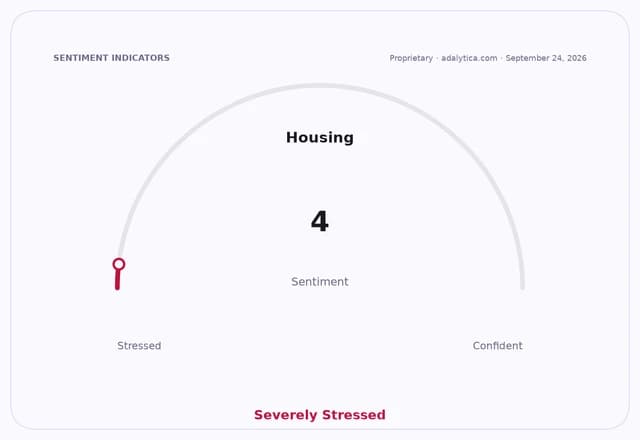
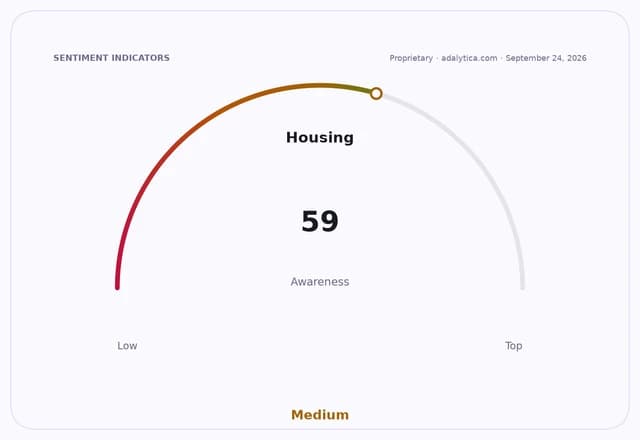
Sentiment IndicatorsⓘProprietary · adalytica.com · September 24, 2026
This is a snapshot — live sentiment, awareness and momentum for 130+ markets update continuously in the dashboard.Open AlphaPulse
For investors, the implications run beyond Swedish homeowners. Mortgage pricing feeds directly into housing demand, household balance sheets and the broader credit cycle. If the Riksbank follows through with higher rates, monthly payments on variable loans will rise quickly because Swedish floating mortgages reset every three months. Ola Söderlind of Zmarta argued that the current gap between floating and one-year fixed rates is only about 0.25 percentage points, meaning just one hike would roughly erase the advantage of staying floating over a 12-month period. But he also cautioned that the timing matters: rates would need to rise soon, and probably more than once, for a fixed loan to pay off.
That keeps the Swedish housing market in a familiar bind. The Riksbank is trying to balance inflation control against a property market that is still sensitive to financing costs, and banks are already preparing for a more restrictive backdrop. A rate path that delivers another 50 to 100 basis points of tightening would tighten affordability further, even if it does not trigger the kind of stress seen when central banks moved aggressively earlier in the cycle. It would also support lenders with floating-rate exposure while pressuring brokers, originators and housing-related names that depend on transaction volumes.
The trade-off is clearer in the United States, where mortgage rates remain elevated by historical standards. The 30-year fixed rate was 7.03% on Sept. 24, up from 6.76% two weeks earlier, while the 10-year Treasury yield was around 5.08%, underscoring how stubbornly high long-term borrowing costs remain. That backdrop has already been painful for housing activity, with U.S. housing starts at 1,278.5 million units in September, little changed from August and well below the levels associated with a healthy market. In that environment, Swedish households are being told the same thing as U.S. buyers: wait for policy clarity, but don’t assume lower borrowing costs are imminent.
For mortgage lenders and housing-linked companies, the message is mixed. A stable policy rate avoids an immediate shock to credit demand, but the prospect of more hikes keeps refinancing activity muted and affordability stretched. For borrowers, the near-term arithmetic still favors floating loans for those who can tolerate volatility, though the buffer strategy Söderlind recommends — setting aside cash equal to one rate hike — looks increasingly rational if the Riksbank follows through with its warning.
The next catalyst is whether incoming inflation data and bank forecasts push the Riksbank from caution to action. If they do, Swedish mortgage costs will reset higher quickly; if not, the current pause may give households a little more breathing room, but not enough to declare the cycle over.
| Entity | Gains | Losses |
|---|---|---|
| Swedish banks | ▲Wider mortgage margins | ▼Softer loan demand |
| Floating-rate borrowers | ▲Lower upfront cost | ▼Higher payment risk |
| Fixed-rate borrowers | ▲Payment certainty | ▼Higher current rate |
| Housing market | ▲Policy pause support | ▼Affordability remains strained |