Swedish households are again moving to fix mortgage rates, a shift that could change borrowing costs, housing demand and bank pricing after months of renewed optimism over floating loans.
Swedish Households Turn More Toward Fixed Mortgages
The clearest sign is in SEB’s October housing barometer, where 15% of respondents said they were considering locking in their variable mortgages over the next three months, up from 11% in September and the highest level since early 2022, just before the Riksbank began its last tightening cycle. The move reflects a growing belief that policy rates are headed higher, even as many borrowers still prefer to stay variable and keep the flexibility to benefit if rates do not rise as much as expected.
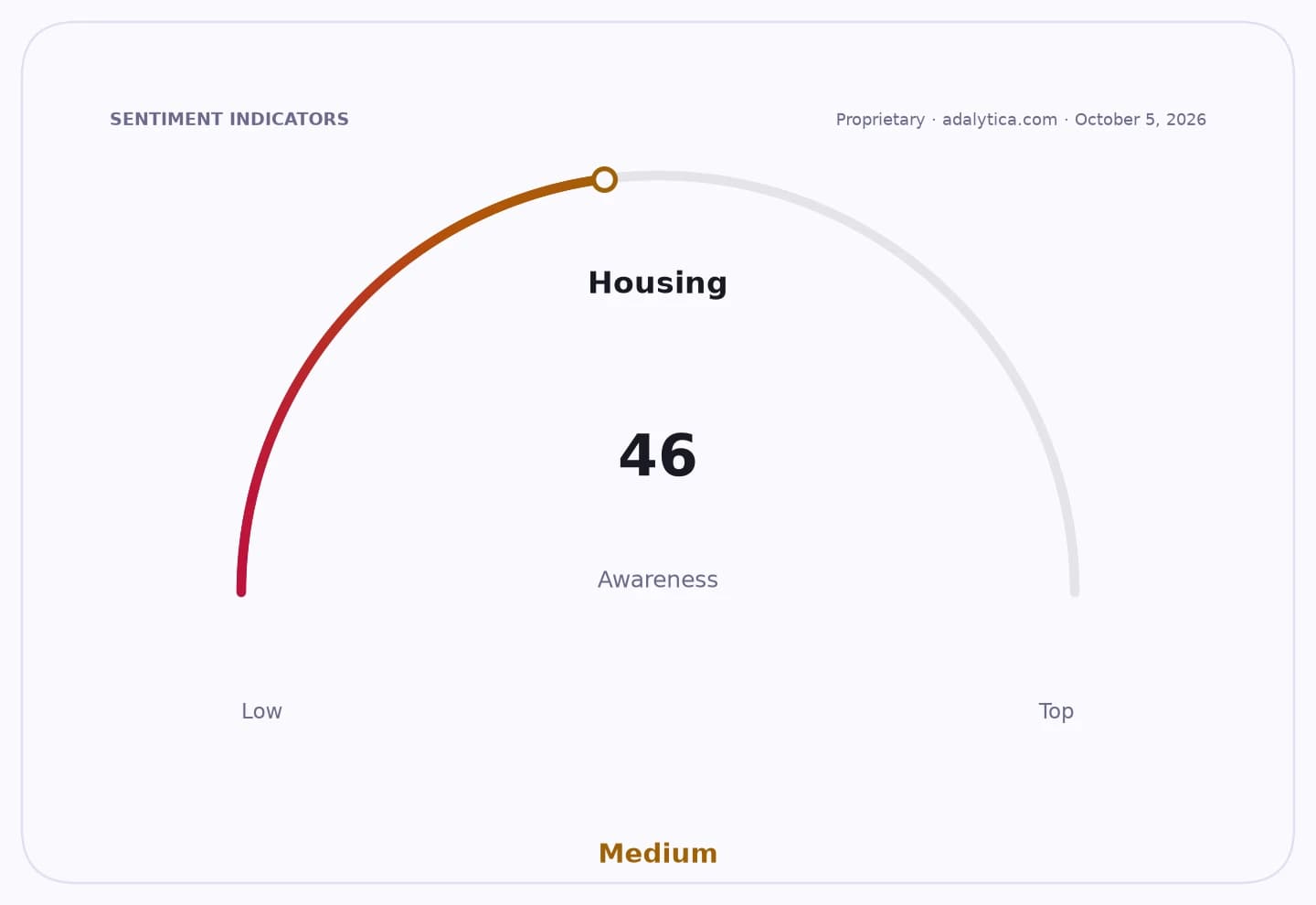
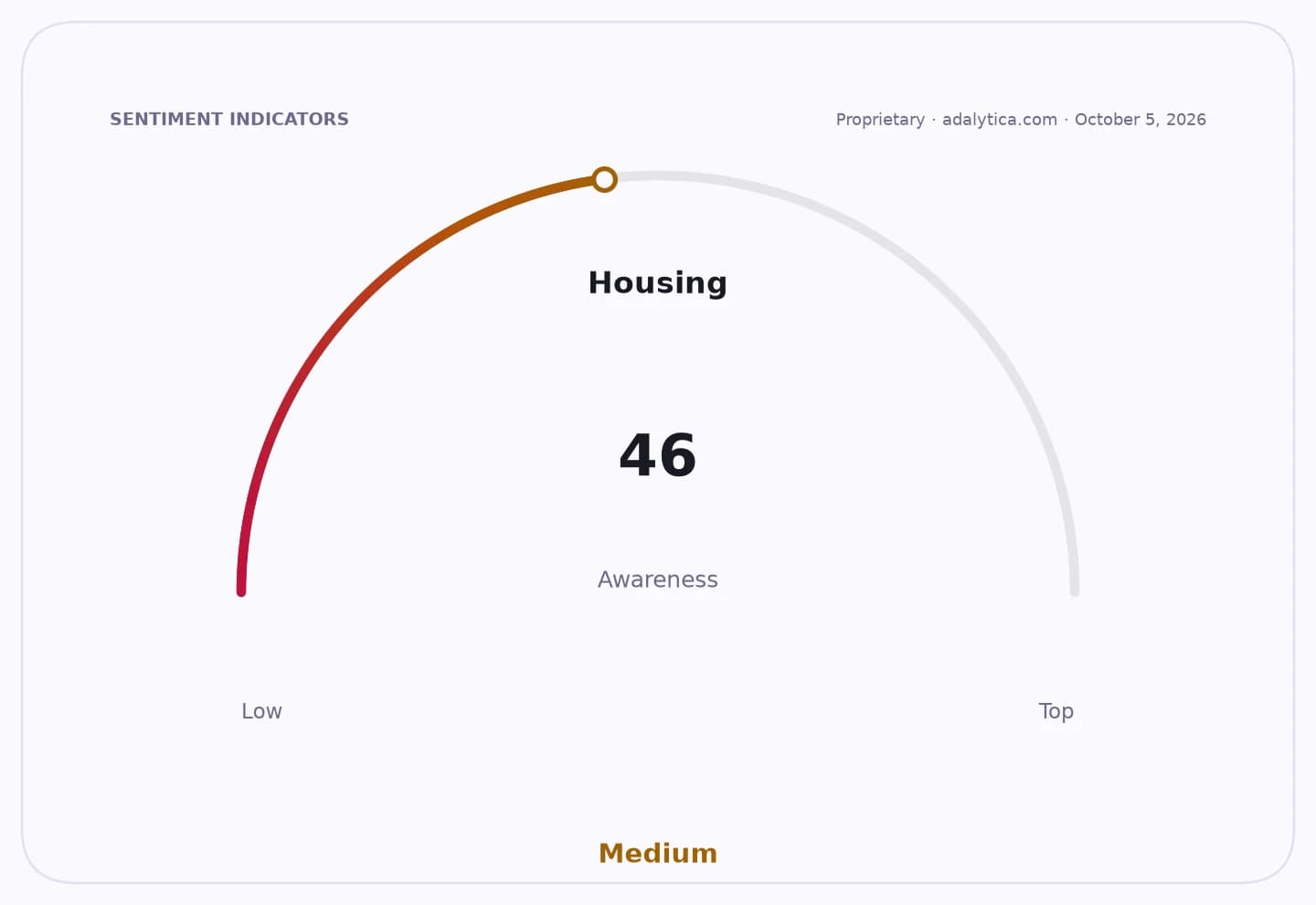
Sentiment IndicatorsⓘProprietary · adalytica.com · October 5, 2026
This is a snapshot — live sentiment, awareness and momentum for 130+ markets update continuously in the dashboard.Open AlphaPulse
That calculus matters because mortgage choice is no longer just a personal budget decision. It is becoming a macro signal. If more households fix their loans, they are buying insurance against future rate rises but also accepting an immediate premium. Bank averages cited by DN showed variable mortgages around 2.7% in September, while three-year fixed rates were about half a percentage point higher. In other words, borrowers are paying up for certainty at a time when household finances are already under pressure from a higher-rate environment.
SEB private economist Américo Fernández said the Riksbank’s increasingly clear signals had pushed households to conclude that rates are on the way up. The market is also pricing that view in. In SEB’s latest survey, households expect the policy rate to be 2.13% in a year, up from 2.04% previously. That is not a dramatic shift, but it is enough to alter behavior in a market where even small moves in mortgage costs can sway demand for housing and credit.
For banks, the trend cuts both ways. A move toward fixed-rate loans can stabilize margins and reduce the risk that households refinance aggressively if short rates fall. But it can also compress pricing competition if lenders have to work harder to attract borrowers who want the safety of fixed terms. For borrowers, the decision is increasingly a trade-off between cash flow and peace of mind. Sharon Lavie, a savings economist at Lendo, put it bluntly: customers pay a premium “to sleep well at night.” For households with room in their budgets, staying variable and setting aside the difference remains the cheaper strategy.
The bigger implication is that Sweden’s housing market is still being shaped by expectations, not just current rates. SEB’s survey showed 53% of households expect home prices to rise over the next year, up from 51% in September, while only 10% expect declines. That resilience suggests many buyers still believe strong growth, solid purchasing power and eased mortgage rules can offset tighter monetary conditions. But if fixed-rate demand keeps rising, it will signal that families are preparing for a less forgiving rate cycle — and that housing costs may remain elevated even if headline inflation cools.
| Entity | Gains | Losses |
|---|---|---|
| Fixed-rate borrowers | ▲Certainty on monthly payments | ▼Higher upfront interest cost |
| Variable-rate borrowers | ▲Lower current pricing if rates stay contained | ▼Greater exposure to Riksbank hikes |
| Swedish banks | ▲More stable loan books and pricing power | ▼Pressure to compete on fixed-rate terms |
| Housing market activity | ▲Support from continued price expectations | ▼Demand if borrowing costs rise further |