Spain’s mortgage market is cooling fast as borrowing costs climb and banks become more selective, with July mortgage signings falling 3.5% from a year earlier — the sharpest annual drop since June 2024 — even though lending remains high on a year-to-date basis.
Spain mortgage signings fall 3.5% in July
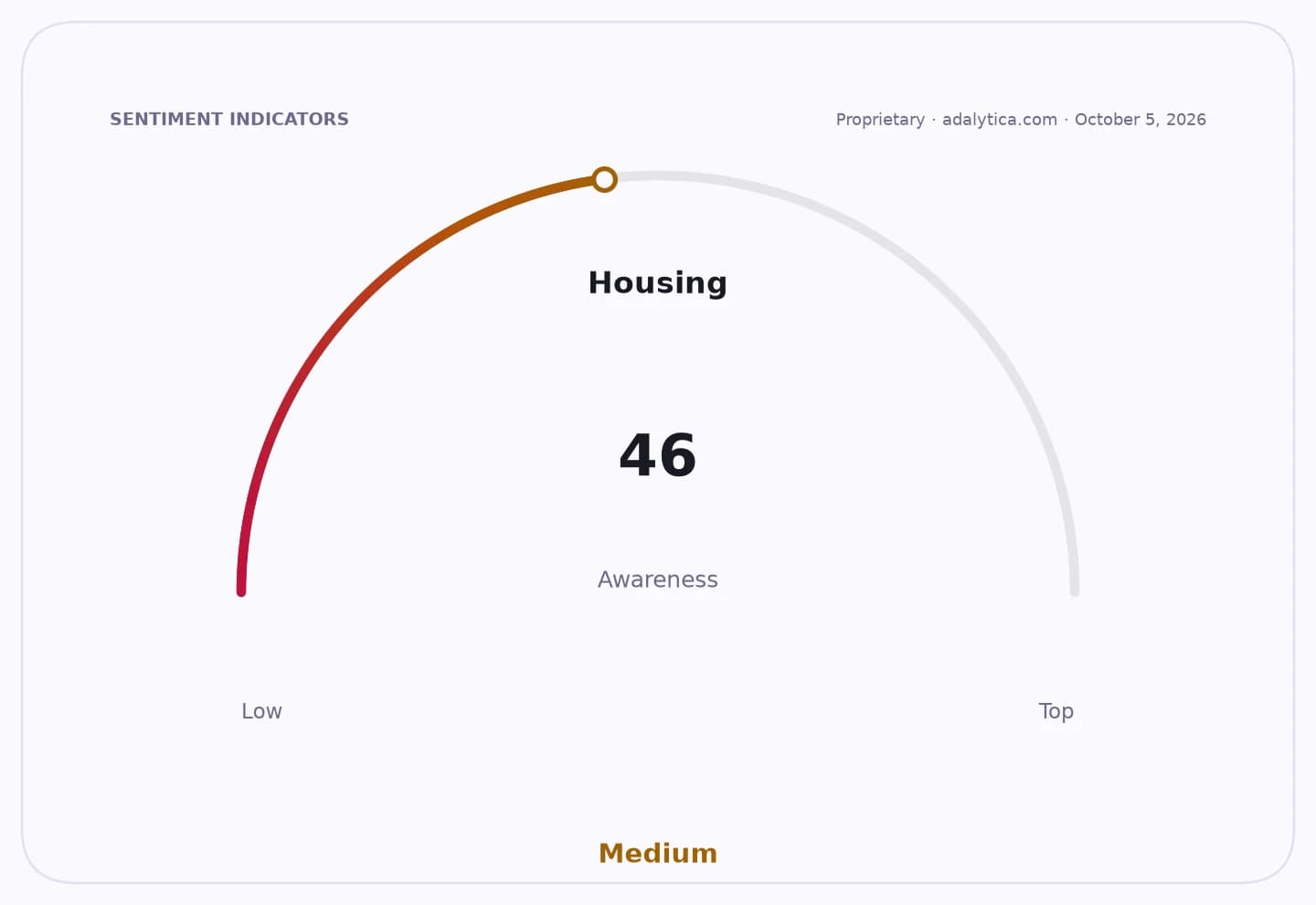
The retreat matters because housing is becoming one of the clearest transmission channels from monetary tightening to household demand. A market that is still posting 303,999 mortgages in the first seven months of the year, up 5.1% from 2025, is not in outright collapse. But the latest monthly print suggests the post-rate-hike normalization is giving way to a harder squeeze on affordability, especially as average new mortgage size rises and borrowers face a more demanding credit screen.
Sentiment IndicatorsⓘProprietary · adalytica.com · October 5, 2026
This is a snapshot — live sentiment, awareness and momentum for 130+ markets update continuously in the dashboard.Open AlphaPulse
According to the latest data, 43,372 mortgages were set up on homes in July, down 5.5% from June and 3.5% from a year earlier. The average new mortgage climbed to 180,785 euros, up 10.9% year on year, while the average interest rate was 3.01%. That combination points to a market where buyers are still paying more for homes and still borrowing large sums, but are doing so under tighter financial conditions than a year ago.
Montse Cespedosa, a financial adviser and mortgage specialist cited in the data, argues the headline decline is less about a one-off statistical wobble than a shift in borrower composition. The buyers getting financed now are increasingly those with more savings and stronger balance sheets, while households needing high loan-to-value financing are being filtered out. In economic terms, that means credit availability is becoming more selective just as affordability is deteriorating — a dynamic that can slow transactions even before prices adjust.
The timing is important. Spain’s housing shortage and elevated prices have already pushed the issue into the streets, with demonstrations underscoring the social pressure around access to shelter. But the mortgage figures also lag reality by roughly two months, meaning July’s contracts largely reflect decisions made before the latest move higher in rates. That leaves room for further weakness in coming months if financing costs keep rising.
The fixed-rate share of new mortgages remained dominant at 62.3% in July, versus 37.7% variable. That preference reflects borrower caution: households want payment certainty when Euribor remains elevated and monthly budgets are already stretched. For banks, the shift is a mixed blessing. Fixed-rate products can help protect customers from near-term volatility, but they also lock lenders into tighter margins if funding costs keep moving higher.
For investors, the message is that Spain’s housing cycle is moving from resilience to fragility. Homebuilders, mortgage originators and lenders tied to retail credit growth face a slower volume environment, even if nominal loan values remain supported by expensive properties. By contrast, borrowers with strong deposits and lower leverage remain better positioned, and large banks may gain share as underwriting standards tighten.
The broader question is whether mortgage demand can stabilize before higher rates and weak affordability damage home sales more visibly. If borrowing costs continue to drift up, the next data releases may show the July decline was not an outlier but the start of a more durable cooling phase in one of Spain’s most important consumer-credit markets.
| Entity | Gains | Losses |
|---|---|---|
| Banks with strong balance sheets | ▲Higher-margin lending power | ▼Lower loan volume growth |
| Cash-rich homebuyers | ▲Better access to approvals | ▼Less leverage-friendly market |
| Highly leveraged households | ▲None | ▼Stricter underwriting |
| Home sellers and brokers | ▲None | ▼Slower transaction pace |