Portugal’s housing market has just posted another record, and the bigger message for investors is that affordability pressure is still translating into sticky price gains even as European property growth cools elsewhere.
Portugal housing prices hit record high in August

The median bank appraisal value for homes rose to 2,254 euros a square meter in August, up 14 euros from July and 14.7% above a year earlier, according to Portugal’s statistics office, INE. That is a new national high and underscores how limited supply, resilient demand and elevated financing costs continue to keep home values bid.
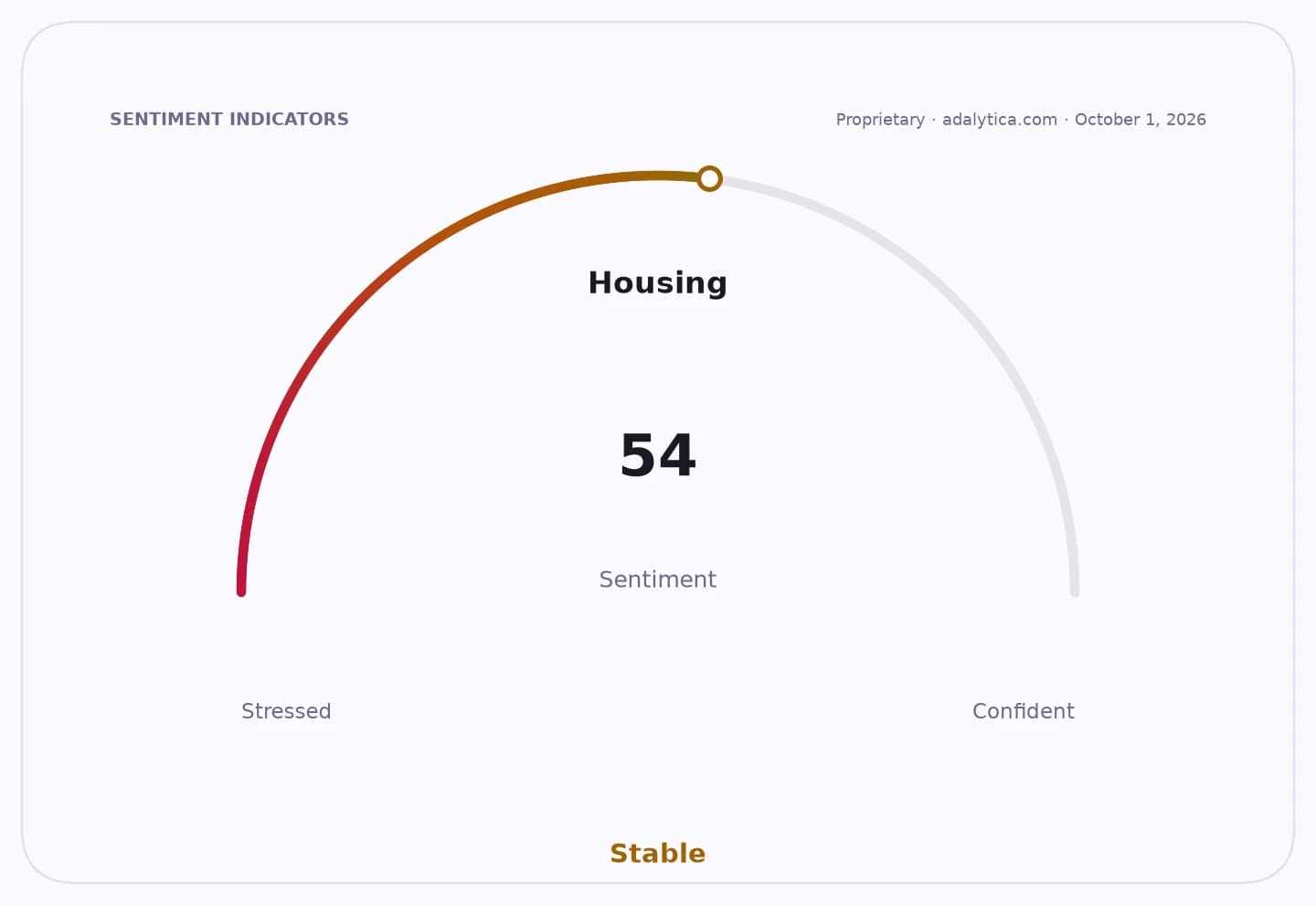
Sentiment IndicatorsⓘProprietary · adalytica.com · September 29, 2026
This is a snapshot — live sentiment, awareness and momentum for 130+ markets update continuously in the dashboard.Open AlphaPulse
For the economy, that matters because housing is one of the clearest channels through which inflation and household stress feed into spending, credit demand and construction activity. Even with monthly growth slowing to 0.6% from 0.7% in July, the annual pace remains forceful, showing that Portugal has not yet escaped the affordability squeeze that is weighing on buyers across much of Europe.
The regional split shows the pressure is not uniform. The Península de Setúbal posted the biggest monthly increase at 1.6%, while the Algarve saw the sharpest drop at 1.2%. That divergence suggests the market is increasingly being driven by local supply constraints and buyer mix rather than a broad national upswing.
Investors should care because persistent house-price inflation can support lenders, mortgage originators and select homebuilders, while tightening the outlook for consumers and policymakers. It also reinforces the case for defensive exposure to housing-linked income streams rather than speculative bets on a quick affordability rebound. In Europe, where Germany and parts of London are already showing slower property growth, Portugal stands out as a market where shortages still dominate the pricing narrative.
The investable takeaway is that this is less a story about a one-month move and more about a structural imbalance. Until supply catches up, Portuguese housing should keep acting like a toll road on wealth and rents — a headwind for first-time buyers, but a tailwind for owners, landlords and the companies that finance or service real estate.
| Entity | Gains | Losses |
|---|---|---|
| Existing homeowners | ▲Higher property values | ▼Affordability politics |
| Banks and lenders | ▲Bigger mortgage balances | ▼Credit stress risk |
| Landlords and REITs | ▲Stronger rent support | ▼More regulation pressure |
| First-time buyers | ▲— | ▼Higher entry costs |