When 90% of Spain’s mortgages were variable, borrowers were essentially betting on a world of falling rates — and that world has now gone.
Spain Mortgage Market Shifts to Fixed-Rate Loans
Spain’s mortgage market has completed one of the clearest behavioural reversals in European retail finance, with 61.7% of new home loans now fixed-rate and only 38.3% variable, including mixed products, as households increasingly pay for certainty rather than chasing the lowest headline rate. The shift matters because it changes who carries interest-rate risk, how quickly higher ECB policy filters through to monthly payments, and how much stress the housing market can absorb if borrowing costs stay elevated for longer.
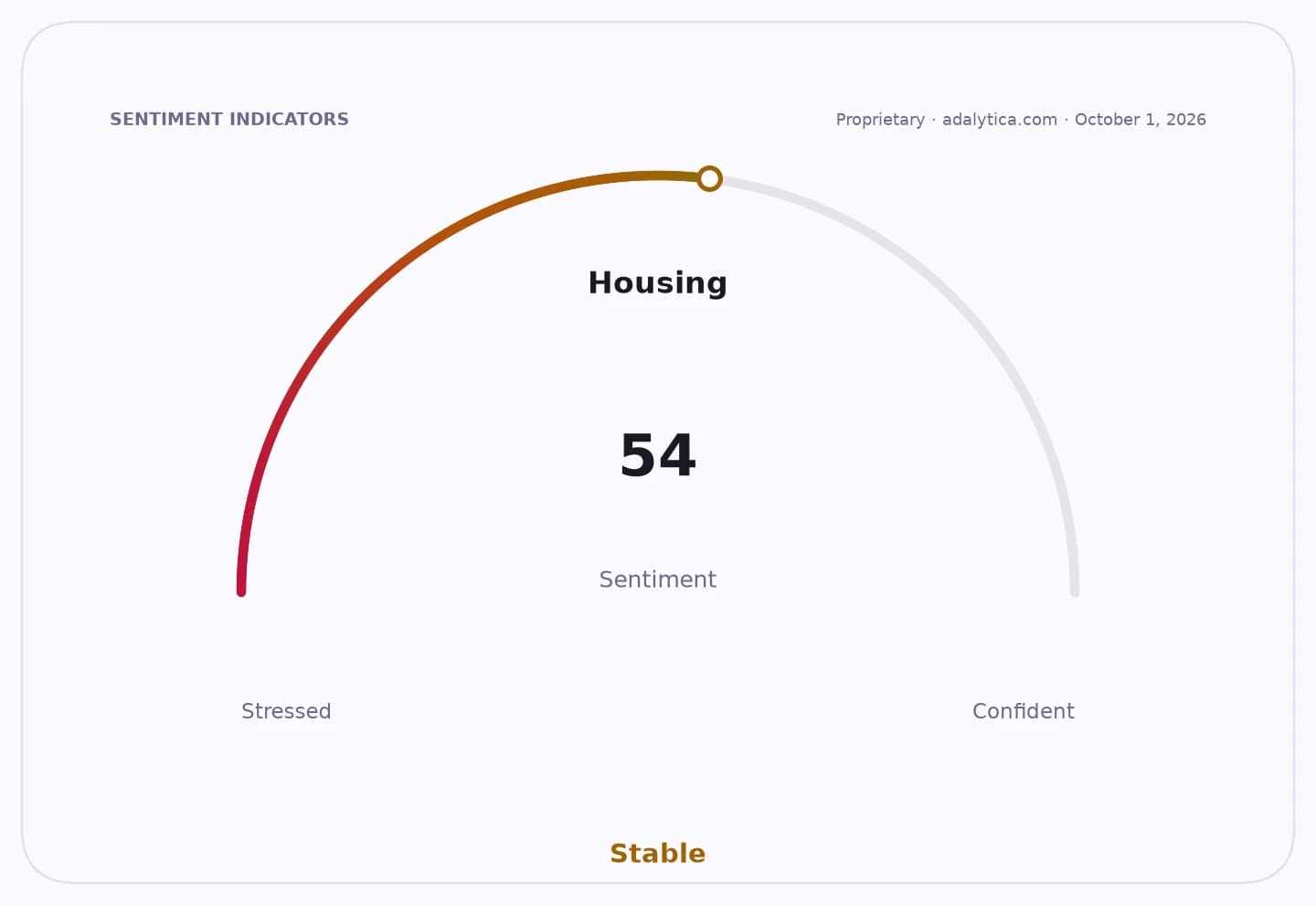
Sentiment IndicatorsⓘProprietary · adalytica.com · October 1, 2026
This is a snapshot — live sentiment, awareness and momentum for 130+ markets update continuously in the dashboard.Open AlphaPulse
June data from the national statistics office showed the market still expanding despite the tougher rate backdrop. The average mortgage size hit a record 178,365 euros, up 6% from a year earlier, while the value of capital lent rose 17.5%. The number of mortgages granted increased 10.8%, suggesting demand has not vanished — but buyers are financing pricier homes and taking on larger debt loads. That combination can support transaction volumes in the near term, but it also leaves households more exposed if wage growth and house prices do not keep pace.
The composition of the market is the more important story. A decade ago, variable-rate mortgages accounted for 89.5% of new lending and fixed loans just 10%. Back then, Euribor was negative at points and borrowers were comfortable letting banks transfer future rate risk back to them. Now, after the pandemic-era inflation shock and the ECB’s tightening cycle, the logic has flipped. The ECB’s deposit rate stood at 2.25% in June, while Euribor closed August at 2.952%, with several daily readings above 3%. Inflation was 4.3% in August, and those conditions made predictability more valuable than the chance of shaving a few euros off a monthly payment.
For investors, that change has direct implications for Spanish lenders, mortgage originators and housing-linked credit risk. Fixed-rate lending gives banks more certainty on customer retention and reduces the immediate transmission of rate volatility to borrowers, but it also shifts pricing pressure onto banks at the point of origination. Lenders have had to make fixed products more competitive to keep market share, while borrowers who still choose variable or mixed loans remain exposed to further rate rises. In practical terms, a 200,000-euro mortgage has already become notably more expensive to service after recent Euribor resets, with one comparison service estimating the monthly payment rising from 812.67 euros to 901.04 euros, or about 1,060 euros a year more.
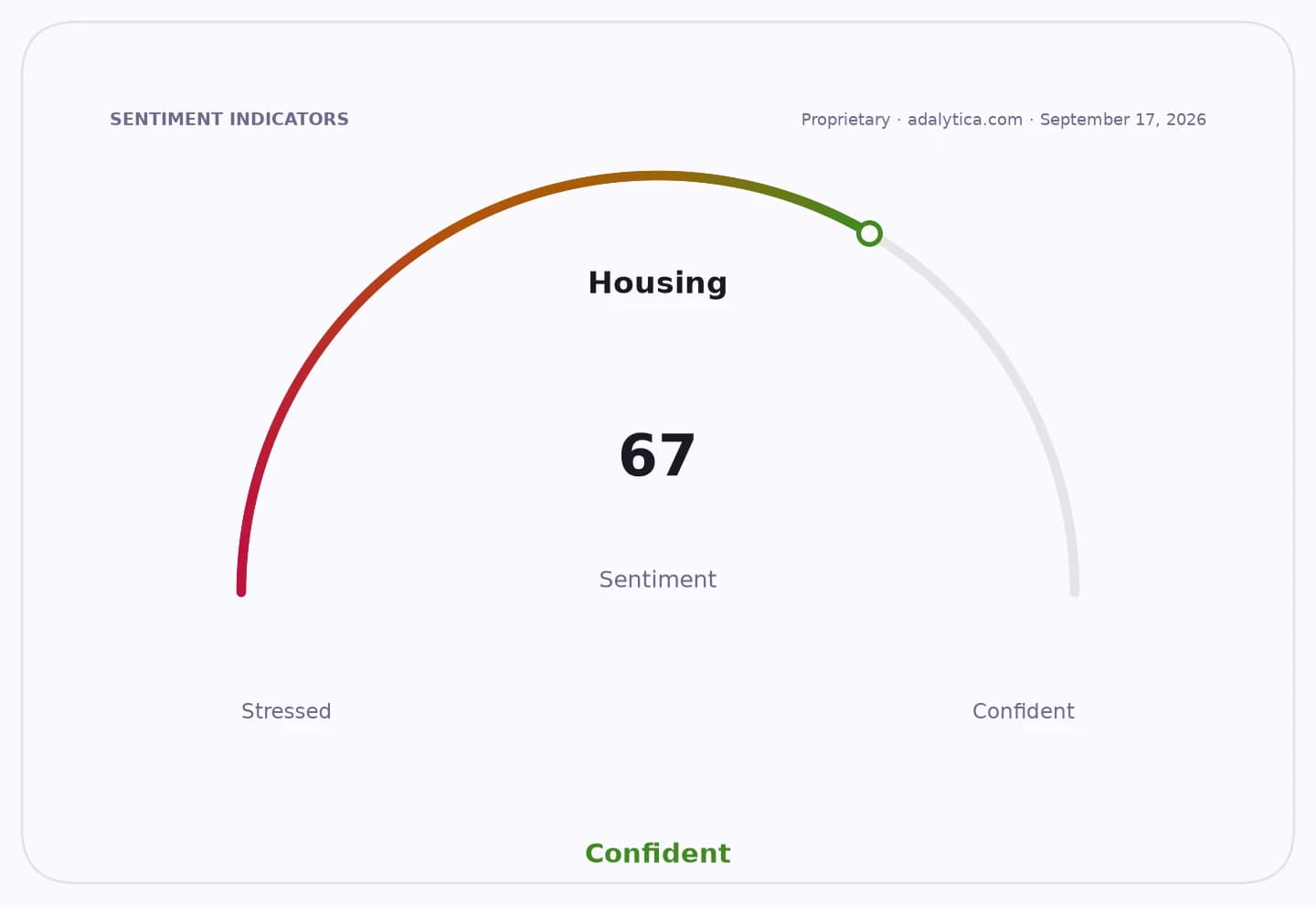
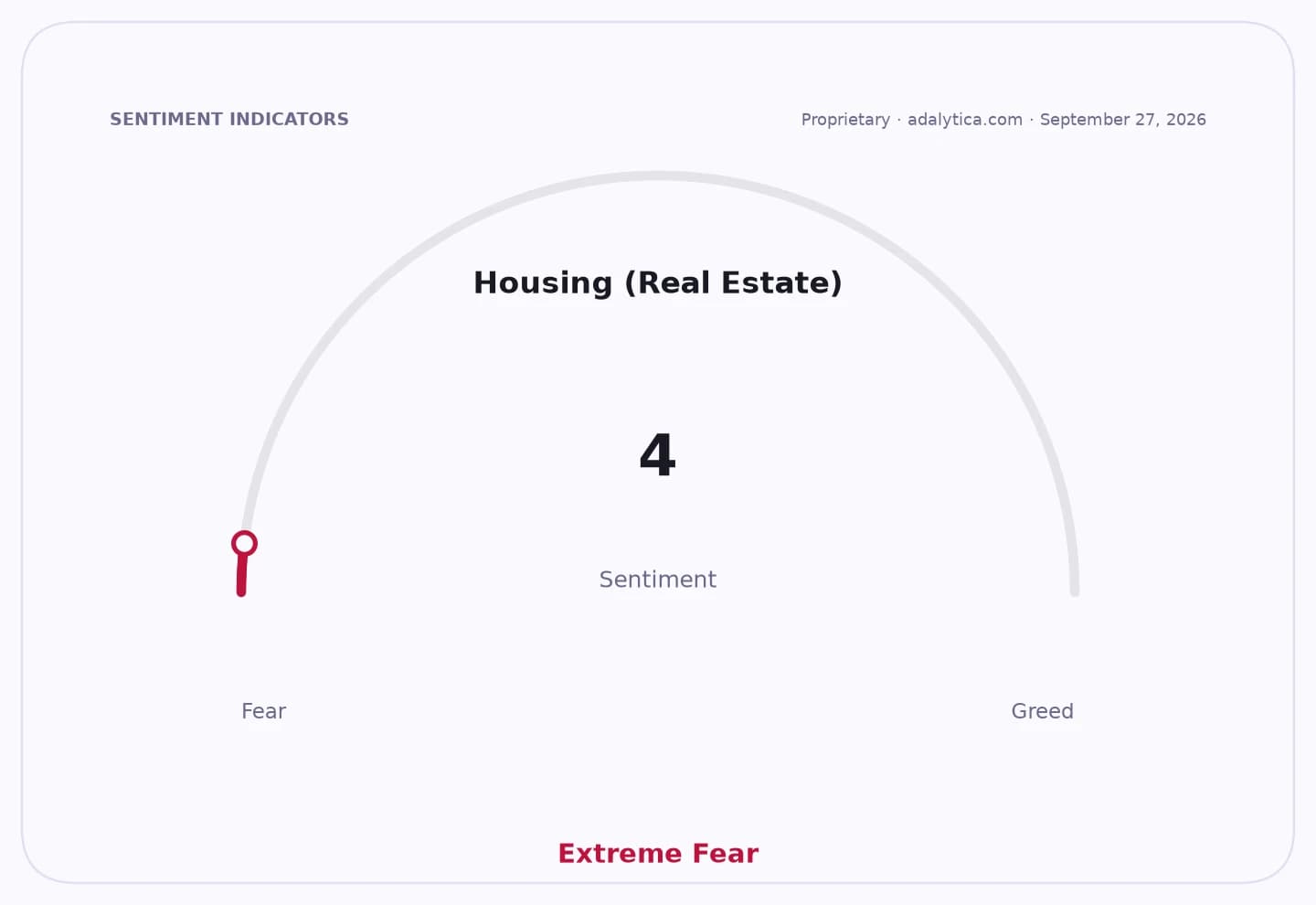
The broader economic narrative is a market adapting to a higher-rate regime after years in which cheap money distorted consumer preferences. The pandemic changed the perception of risk: stability now matters more than upside. That is consistent with the broader picture in housing and inflation sentiment, where uncertainty remains elevated even as financing conditions stabilize at a higher level than borrowers were used to. If rates stay restrictive, fixed-rate dominance should continue; if the ECB eventually eases, variable products could regain some appeal, but only if consumers once again feel confident that rate volatility is manageable.
For now, Spain’s mortgage market is no longer defined by the hunt for the cheapest floating benchmark. It is defined by households paying up for insulation from it.
| Entity | Gains | Losses |
|---|---|---|
| Fixed-rate borrowers | ▲Payment certainty | ▼Lower initial rates |
| Variable-rate borrowers | ▲Benefit if rates fall | ▼Higher monthly payments |
| Spanish banks | ▲More stable loan books | ▼Margin pressure on new fixed loans |
| Homebuyers | ▲Access to credit | ▼Higher debt burdens |