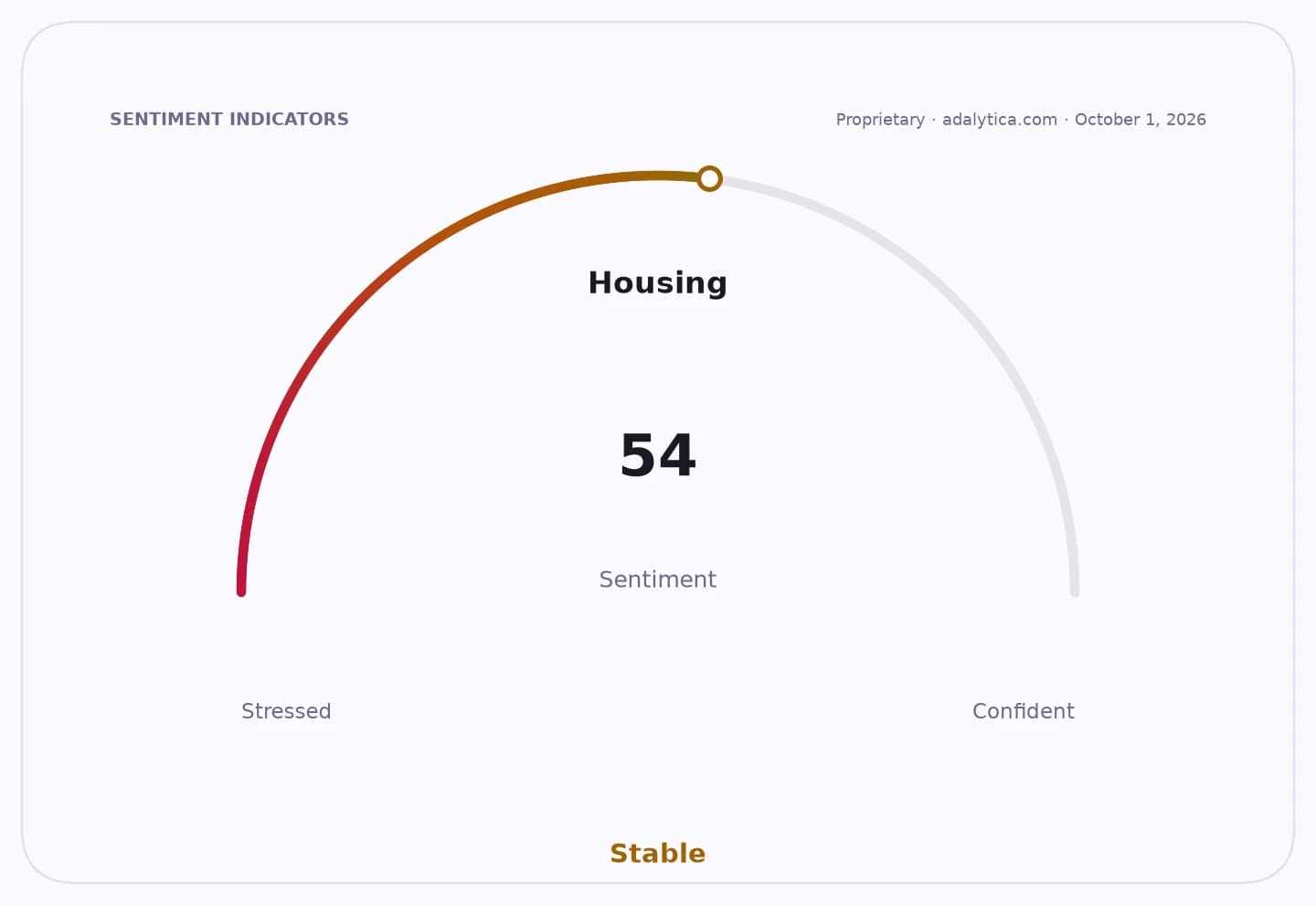
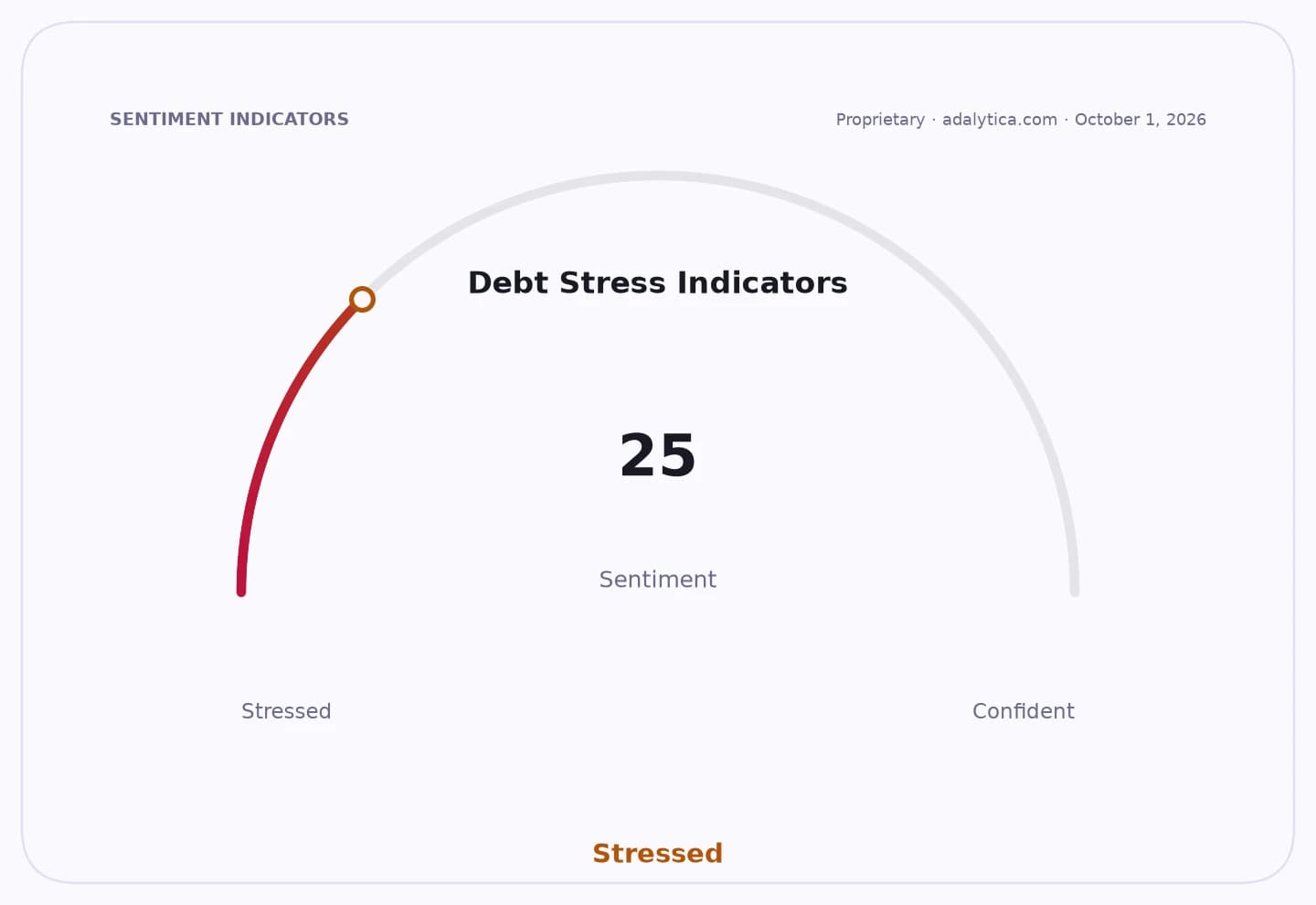
Estonian households and businesses are facing a new step-up in borrowing costs as six-month Euribor climbs above 3%, with local lenders saying the move will feed through to monthly installments on mortgages, leases and other floating-rate loans.
Estonia Borrowing Costs Rise as Six-Month Euribor Tops 3%

Coop Pank finance chief Paavo Truu said the jump from about 2.1% at the start of the year to just over 3% now will affect all borrowers tied to the benchmark, but not all at once, reducing the risk of a sudden wave of payment distress. Banks say customers were stress-tested against higher rates than this, suggesting the latest rise is painful but still manageable for most.
Sentiment IndicatorsⓘProprietary · adalytica.com · September 30, 2026
This is a snapshot — live sentiment, awareness and momentum for 130+ markets update continuously in the dashboard.Open AlphaPulse
The concern for the economy is that even a gradual increase in loan costs can still squeeze disposable income in a small, open economy such as Estonia’s, where consumer spending and business investment are highly sensitive to financing conditions. Higher monthly payments can slow retail demand, weigh on housing activity and make it more expensive for companies to roll over debt or expand.
That matters for lenders too. If the move is absorbed without a spike in delinquencies, banks preserve asset quality and profitability, but if rates stay elevated long enough, the strain on borrowers could show up in arrears and weaker credit growth. The latest increase also underscores how quickly euro-area funding costs have adjusted as markets price a tighter policy backdrop.

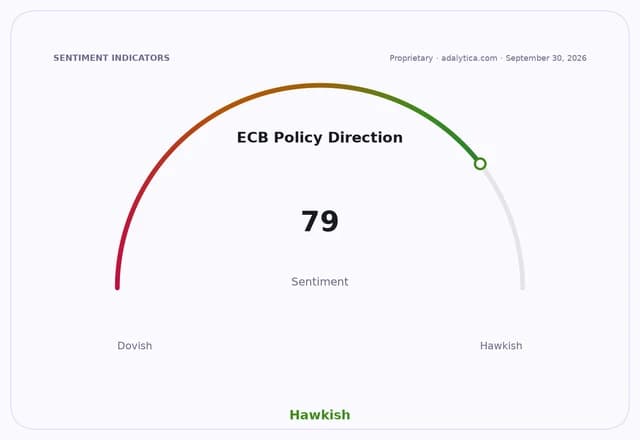
The story sits against a broader divergence in central-bank policy, with the U.S. Federal Reserve tightening further while the European Central Bank signals it is unlikely to rush into another hike. For Estonia, the immediate test is whether households can absorb higher repayments without cutting spending too sharply, a question that will be watched closely in the months ahead as Euribor and ECB messaging continue to move loan pricing.
| Entity | Gains | Losses |
|---|---|---|
| Banks | ▲Higher lending margins | ▼Credit growth risk |
| Savers | ▲Better deposit rates | ▼Less clearly affected |
| Borrowers with floating loans | ▲Limited short-term shock | ▼Higher monthly payments |
| Retailers and home sellers | ▲— | ▼Weaker consumer spending |