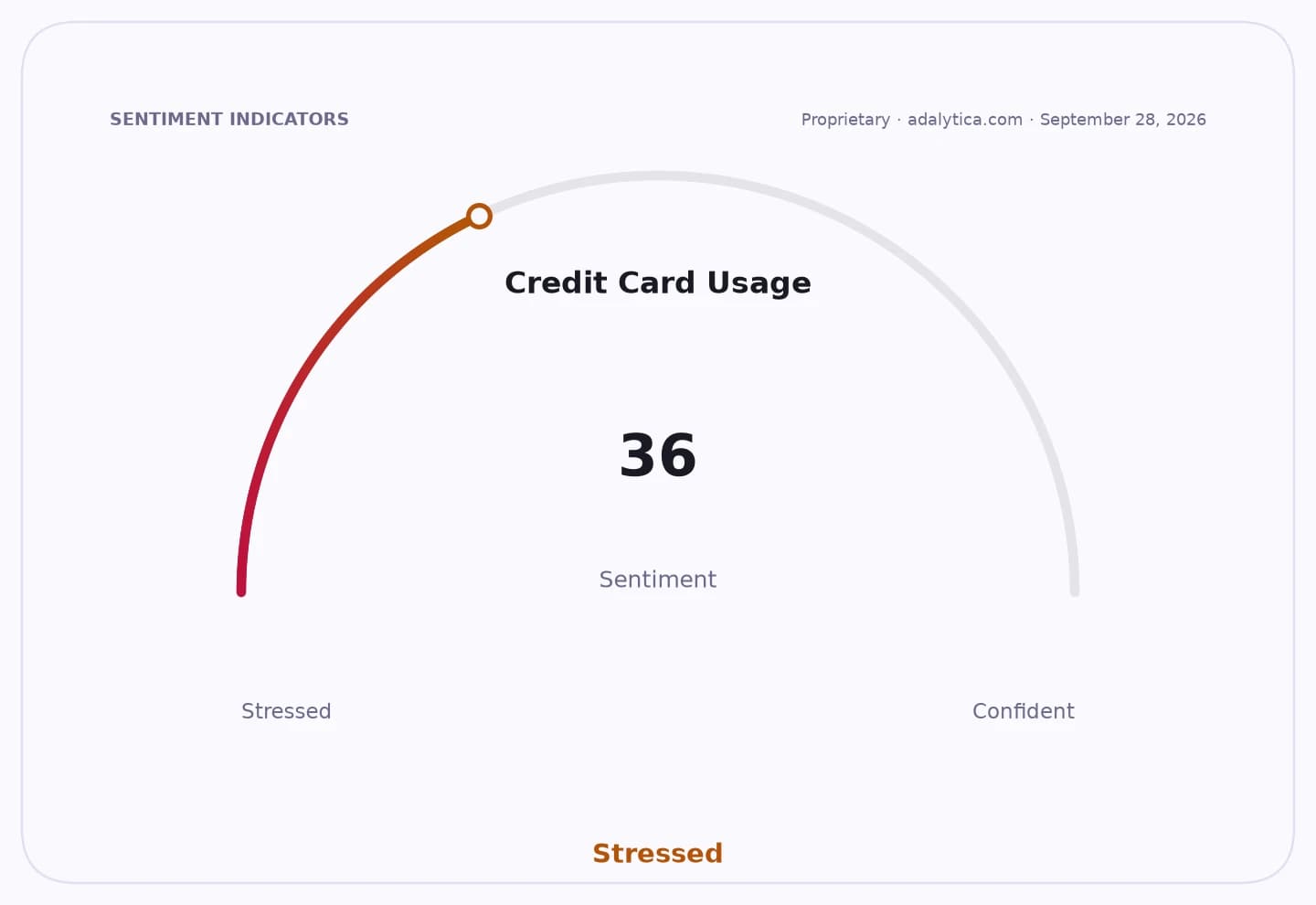
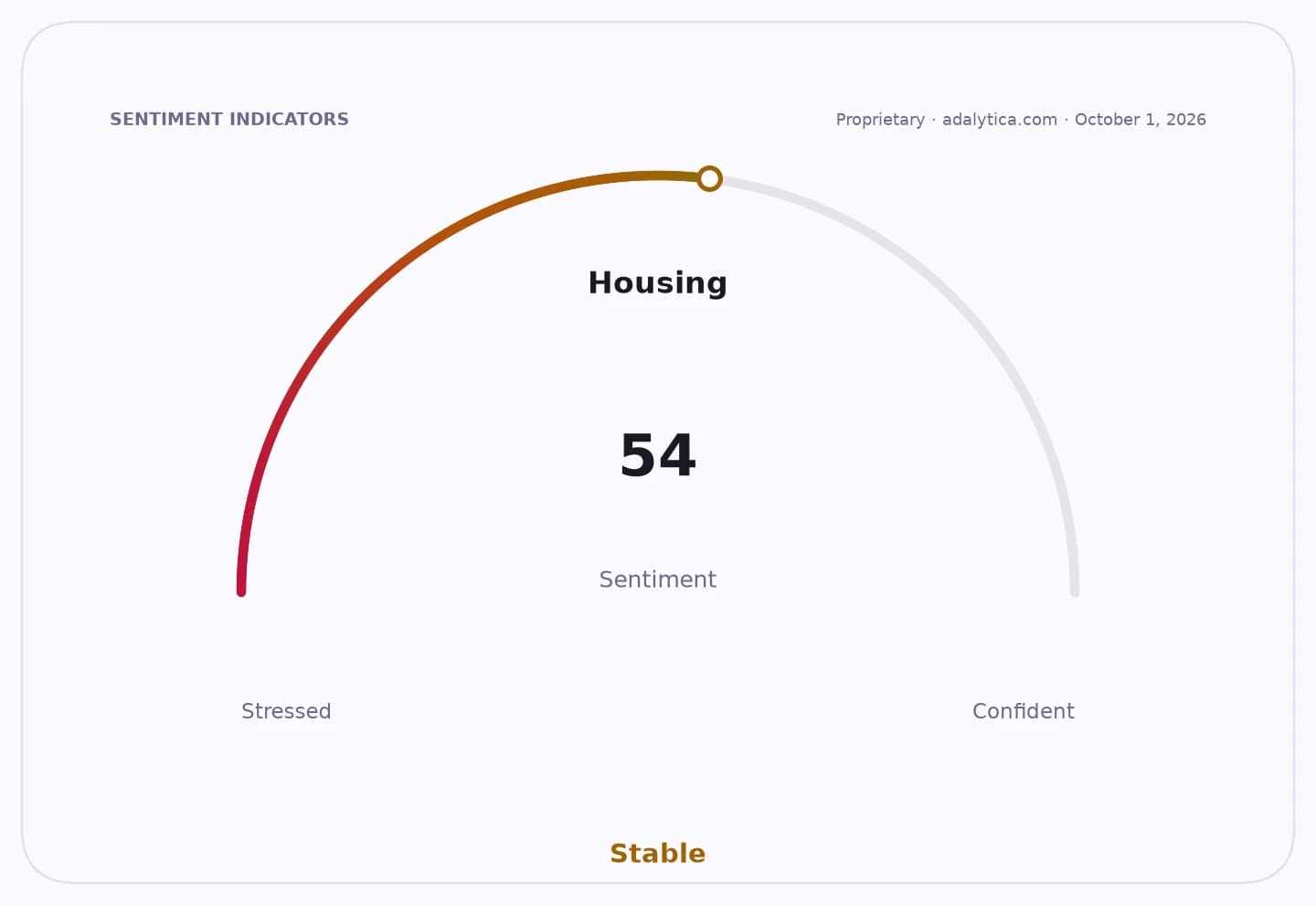
Cyprus households withdrew savings in August and took on more debt as higher prices squeezed disposable income, a sign that inflation is starting to bite harder at family balance sheets.
Cyprus households cut deposits as borrowing rises

Data from the central bank showed domestic household deposits fell by €1.9 million in one month, while household borrowing rose by €12.6 million. The shift matters because it points to consumers leaning on credit and cash buffers to absorb the cost of essentials rather than building savings.
Sentiment IndicatorsⓘProprietary · adalytica.com · October 2, 2026
This is a snapshot — live sentiment, awareness and momentum for 130+ markets update continuously in the dashboard.Open AlphaPulse
The strain comes as prices for fuel, electricity, food and housing continue to weigh on living costs. A single month does not prove a lasting trend, but the combination of falling deposits and rising loans is consistent with households under pressure from the cost of living and could become more important if it persists in the coming months.
Businesses showed a different pattern. Domestic corporate deposits rose by €60.2 million in August, while corporate lending increased by €32.4 million, suggesting firms are still accessing funding even as operating costs stay elevated, especially for smaller companies.
Across residents of Cyprus, deposits still rose by €175.3 million overall, but households were not part of that gain. The increase was driven by companies and other domestic sectors, underscoring how uneven the impact of inflation and borrowing conditions has become across the economy.
At the banking-system level, total deposits rose net by €171.5 million to €59.3 billion, with annual growth accelerating to 6.5%. Total loans rose by €114.6 million to €28.5 billion, and annual loan growth sped up to 11.8% from 11.1%, leaving credit expansion running at almost twice the pace of deposit growth.
For investors, the mix points to a banking sector still growing credit faster than funding, while households face weaker savings capacity and more reliance on debt. The key question now is whether August marks an isolated monthly wobble or the start of a broader squeeze on consumer balance sheets that could eventually feed into loan quality and consumption.
| Entity | Gains | Losses |
|---|---|---|
| Banks | ▲Faster loan growth | ▼Slower deposit growth |
| Households | ▲Short-term access to credit | ▼Savings buffer |
| Businesses | ▲More corporate deposits | ▼Higher operating-cost pressure |
| Consumers | ▲Ability to cover bills | ▼Purchasing power from inflation |