The pound has room to extend gains against the euro if Bank of England Governor Andrew Bailey reinforces expectations for a November rate hike, while France’s fiscal strain continues to cap any meaningful recovery in the single currency.
Pound Gains Against Euro on BoE Hike Bets
Sterling is already benefiting from a better UK growth backdrop. August GDP rose 0.1% month on month, beating forecasts for a contraction and helping push market expectations for a November BoE hike above 90%. That matters because the rate differential is still one of the cleanest drivers of GBP/EUR, and even a modest shift in the odds of tighter UK policy can tilt flows toward the pound.
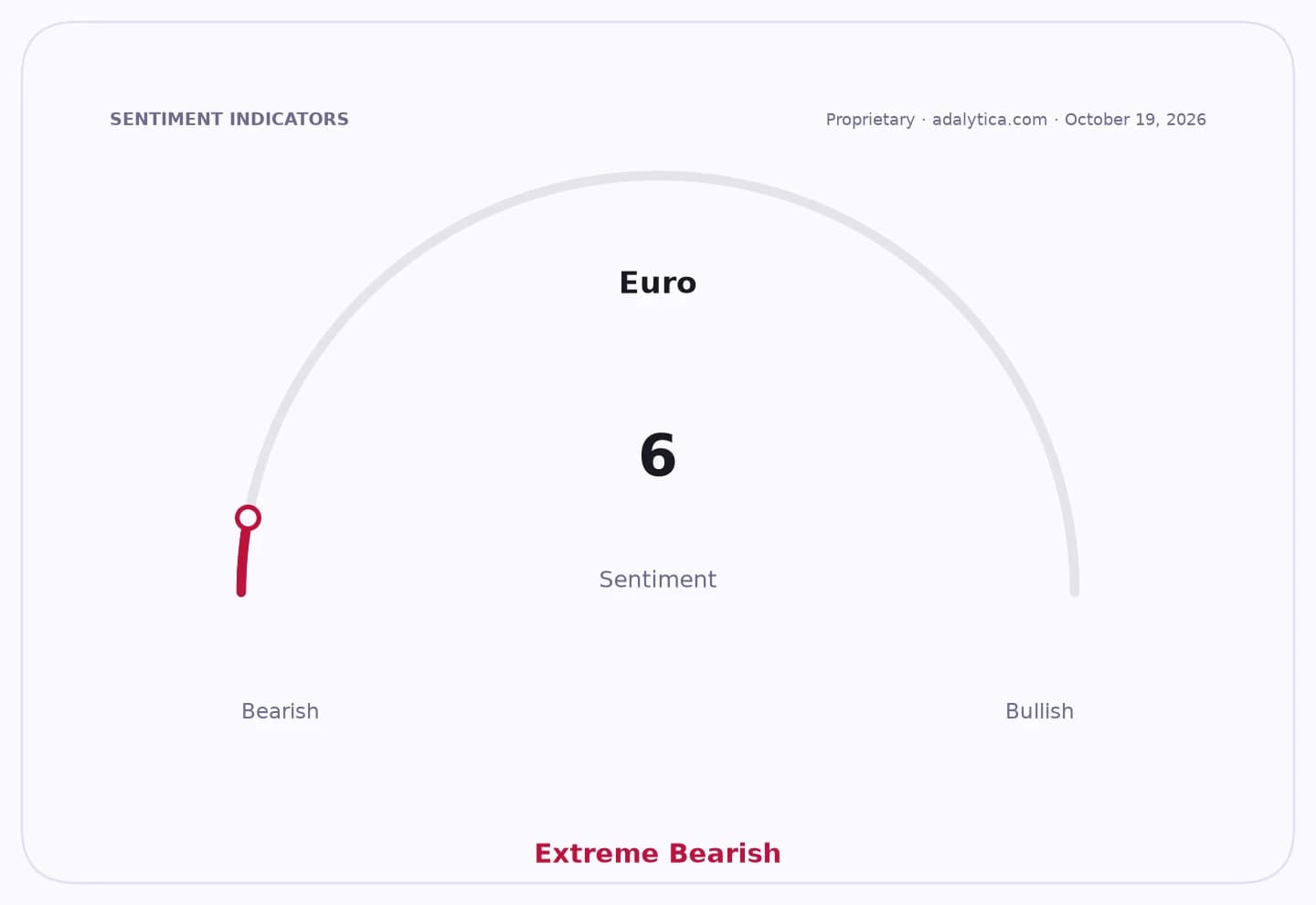
Sentiment IndicatorsⓘProprietary · adalytica.com · October 19, 2026
This is a snapshot — live sentiment, awareness and momentum for 130+ markets update continuously in the dashboard.Open AlphaPulse
The euro, meanwhile, remains anchored by a very different risk premium. France’s debt worries are not a one-day headline, but a structural overhang for the currency union’s second-largest economy. Investors remain sceptical that the government can force through its 2027 budget in the face of entrenched political resistance to spending cuts, and that uncertainty keeps the euro on the back foot even when the US dollar eases.
That mix leaves GBP/EUR vulnerable to another leg higher from current levels around €1.1817. The pair was little changed on Thursday, but the broader setup still favours sterling if Bailey sounds more openly hawkish. A clearer signal that the BoE is entering a new tightening cycle would likely reinforce speculation about further hikes beyond November and support the pound across the board.
For euro bulls, the problem is that hotter inflation may not be enough to rescue the currency. Final September consumer price figures for the eurozone are expected to show inflation accelerating to 3.8%, but the European Central Bank has so far shown little appetite for additional tightening. In other words, the data may confirm pressure on prices without delivering the policy response traders would need to bid the euro materially higher.
Technical signals also lean toward caution on the euro. FXE, the euro-tracking ETF, has slipped below its 50-day and 200-day moving averages, while RSI readings remain weak and MACD momentum is still negative. That does not guarantee an immediate break lower, but it reinforces the view that rallies are likely to be sold unless the macro backdrop improves quickly.
The trade here is straightforward: favour sterling strength against the euro while the market is pricing a BoE tightening bias and France’s fiscal risks keep capital cautious on the euro. The asymmetric opportunity is in positioning for policy divergence, not chasing a broad euro rebound that lacks a clear catalyst.
| Entity | Gains | Losses |
|---|---|---|
| British pound | ▲BoE hike repricing | ▼None if Bailey turns hawkish |
| Euro | ▲Temporary relief from weaker USD | ▼France debt premium |
| UK rate traders | ▲Higher yield expectations | ▼Short-sterling positions |
| EUR bulls | ▲Eurozone inflation support | ▼ECB caution and fiscal risk |