An Icelandic startup has built an AI scanner that can estimate a home’s value in about a minute, a small launch with big implications for one of the economy’s most friction-heavy markets: housing.
Property Scanner AI Valuation Tool Launches in Iceland

That matters because property valuation sits at the center of mortgage lending, broker commissions, renovations and pricing power across the real-estate chain. When information is scarce, transactions are slower, negotiation spreads stay wide and capital is misallocated. A tool that can quickly turn photos and basic property data into a valuation and upgrade suggestions compresses that friction — and in a housing market where mistakes can easily mean paying too much or selling too cheap, even a modest improvement in pricing accuracy can move money.
The platform, called Property Scanner, was developed by entrepreneurs Arnar Kjartansson, Steingrímur Þór Ágústsson and Stefán Atli Rúnarsson, who said they were responding to a lack of reliable information about home values in Iceland. The company says the service, launched in August after development beginning last December, is designed to complement brokers rather than replace them. Users upload images and basic details, then receive a list of possible improvements and an indication of how much those changes could raise the property’s worth.
That is the real investment story here: AI is moving from chatbots and content generation into transactions where data quality directly affects asset prices. Housing is a giant, recurring market, and valuation is a toll booth. Whoever controls the pricing workflow gains leverage over listings, lending, insurance, home-improvement spending and brokerage distribution. For investors, that creates a clear theme: the winners are not just the AI platforms themselves, but the adjacent businesses that can own the data pipe, the workflow or the financing decision.
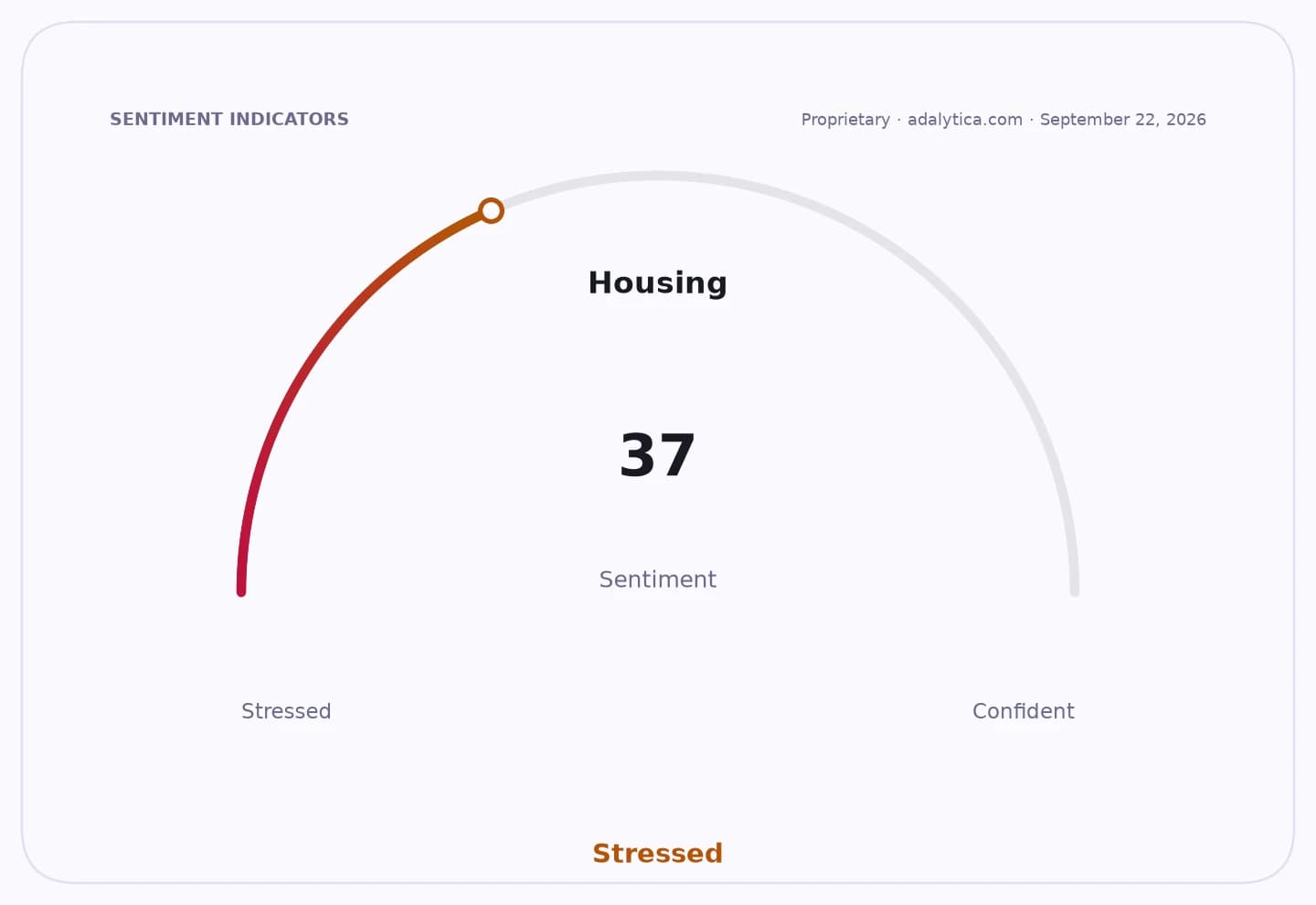
The broader backdrop is favorable. U.S. housing prices continue to grind higher over time even as transactions remain sensitive to rate and labor-market conditions, while unemployment near 4.1% suggests the consumer backdrop is still stable enough to support demand. In that setting, tools that reduce valuation uncertainty become more valuable, not less, because buyers and sellers need a faster way to anchor price expectations. If the model is even roughly right — Booli says valuations within plus or minus 5% of the final sale price can be considered accurate — then the economic payoff is meaningful.
Investors should see this as another sign that AI’s next leg is in unglamorous but lucrative infrastructure: property data, underwriting, brokerage software and home services. The market often overpays for the obvious model layer and underprices the workflow layer. That is where the asymmetric opportunity sits.
For now, the Icelandic launch is a proof point, not a revolution. But it fits a much larger pattern: as AI becomes good enough to price real assets faster, the companies that sit closest to those decisions are likely to capture the gains long before the headline names do. In housing, speed and accuracy are both alpha — and this is exactly where early positioning can pay off.
| Entity | Gains | Losses |
|---|---|---|
| Property Scanner / founders | ▲Faster adoption, broker interest | ▼Execution risk |
| Homebuyers and sellers | ▲Quicker, clearer pricing | ▼Less room for guesswork |
| Real-estate brokers | ▲Better client tools | ▼More pricing transparency |
| Manual valuers / slow workflows | ▲— | ▼Compression of fee advantage |