Tech and AI stocks may grab the headlines, but long-term wealth is still more often built by simple, diversified funds that let compounding do the heavy lifting. For patient investors, the biggest opportunity right now is not trying to guess the next move in Nvidia or the latest AI winner — it is owning the market, balancing growth with quality, and staying invested through the noise.
QQQ Pulls Back as Diversified ETFs Gain Appeal

That matters because market leadership rarely lasts forever. The Nasdaq-100-focused Invesco QQQ Trust has climbed far above its 200-day moving average, but it has also cooled sharply from recent highs, with the ETF closing at 709.80 on Oct. 16 after falling from 728.95 the day before. The 50-day moving average sits near 726.33, and RSI readings have slipped to 33.4, a sign that momentum has weakened. That is exactly the kind of reminder long-term investors need: even great themes can be volatile, and concentration can cut both ways.
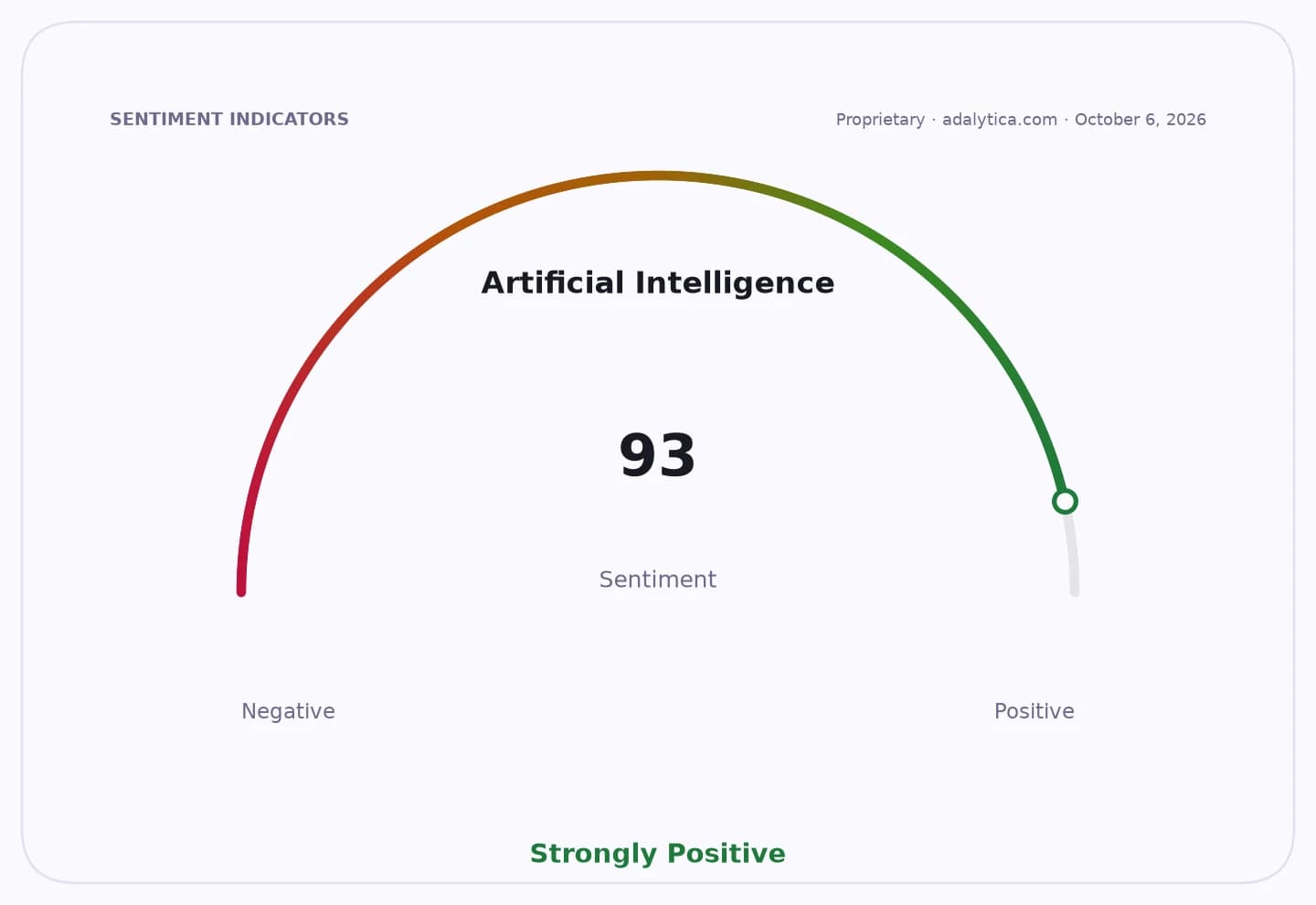
Sentiment IndicatorsⓘProprietary · adalytica.com · October 19, 2026
This is a snapshot — live sentiment, awareness and momentum for 130+ markets update continuously in the dashboard.Open AlphaPulse
The better approach is to build around funds that can compound through many different market environments. Vanguard Total Stock Market ETF is the broadest bet in the group, owning about 3,500 U.S. stocks across sectors and market caps at an ultra-low 0.03% expense ratio. Vanguard Dividend Appreciation ETF adds a different engine: companies with at least 10 years of annual dividend growth, which tends to favor profitable, durable businesses over speculative stories. Invesco S&P MidCap Quality ETF brings exposure to smaller companies with strong balance sheets, while Vanguard Total International Stock ETF gives investors a way to capture overseas markets that have lagged the U.S. for years and may be due for a longer rotation.
That combination matters economically because it does what many investors struggle to do on their own: spreads risk across the businesses that actually drive growth. The U.S. stock market remains the core wealth-creation machine, but history suggests leadership changes over time. International equities, midcaps, dividend growers and the broad market each play a different role in a portfolio, and none requires perfect timing to work. For households trying to grow capital over a decade or more, that simplicity is powerful.
Artificial Intelligence vs QQQadalytica.com
Explore this data interactively — full history, time series and cross-market comparisons.Open AlphaPulse
It also matters for investors because the AI boom is still real, but the market is already separating the winners from the rest. Semiconductor-focused funds such as SMH remain highly sensitive to that cycle; on Oct. 16, SMH fell to 539.79, well below its 50-day average of 579.03 and with RSI at 26.5, showing how quickly enthusiasm can unwind. Meanwhile, the broader tech ETF VGT dropped to 118.83, below its 50-day average of 122.42. Those moves do not mean AI is over. They do mean investors should be careful about making a portfolio depend on a narrow slice of the market, especially when the trend can reverse fast.
Anthropic’s reported plan to set aside 5% of its shares for a public good fund also underscores a bigger point: AI is becoming not just an investing theme but a structural economic force with social costs, policy questions and wide second-order effects. That reinforces the case for diversification. The long-term winners may include AI infrastructure, but the broader economy still rewards companies that raise dividends, maintain strong balance sheets and produce cash consistently.
For investors, the takeaway is straightforward. If you want exposure to the growth of the U.S. economy, the durability of dividend growers, the rebound potential of midcaps and the possibility of an international comeback, these are the kinds of ETFs worth holding for years, not trading for weeks. The market will keep rotating, AI will keep evolving and volatility will keep showing up. Patient investors can use that to their advantage by owning a diversified core and letting compounding work. These funds belong on the watchlist — and for many portfolios, in the account.
| Entity | Gains | Losses |
|---|---|---|
| Long-term ETF investors | ▲Broad diversification | ▼Stock-picking stress |
| VTI, VIG, XMHQ, VXUS | ▲Steady compounding | ▼Narrow-theme dependence |
| QQQ, VGT, SMH holders | ▲AI upside exposure | ▼Higher volatility |
| Single-stock AI chasers | ▲Potential high returns | ▼Concentration risk |