Global investors are retreating from technology shares as rising Treasury yields and renewed doubts about AI-driven growth put pressure on the sector that led the market higher for much of the year.
QQQ and XLK fall as Treasury yields rise
The Nasdaq-100 ETF QQQ fell to 679.89 on Nov. 13 from 709.8 on Oct. 16, while the technology-heavy XLK dropped to 170.28 from 183.47 over the same stretch. The pullback comes as the 10-year US Treasury yield climbed to 5.124% in the latest reading, its highest level in the data set, and the 2-year yield rose to 4.93%, tightening financial conditions for the most rate-sensitive corners of the market.
Sentiment Indicators

That matters because higher yields reduce the present value of future earnings, a problem for the large-cap growth names that dominate benchmarks and portfolios. It also makes cash and bonds more competitive alternatives, especially for managers deciding whether to buy the dip or cut exposure after a sharp run-up in AI and semiconductor stocks.
The damage has spread beyond the biggest names. ARKK, a proxy for speculative growth, fell to 74.99 on Nov. 13 from 92.78 on Oct. 5, with its 14-day RSI slipping to 39.5, a sign of weakening momentum. QQQ’s RSI fell to 40.9, while XLK’s dropped to 36.1, both reflecting selling pressure that has pushed the funds back toward their lower Bollinger Bands and below recent peaks.
US Dollar
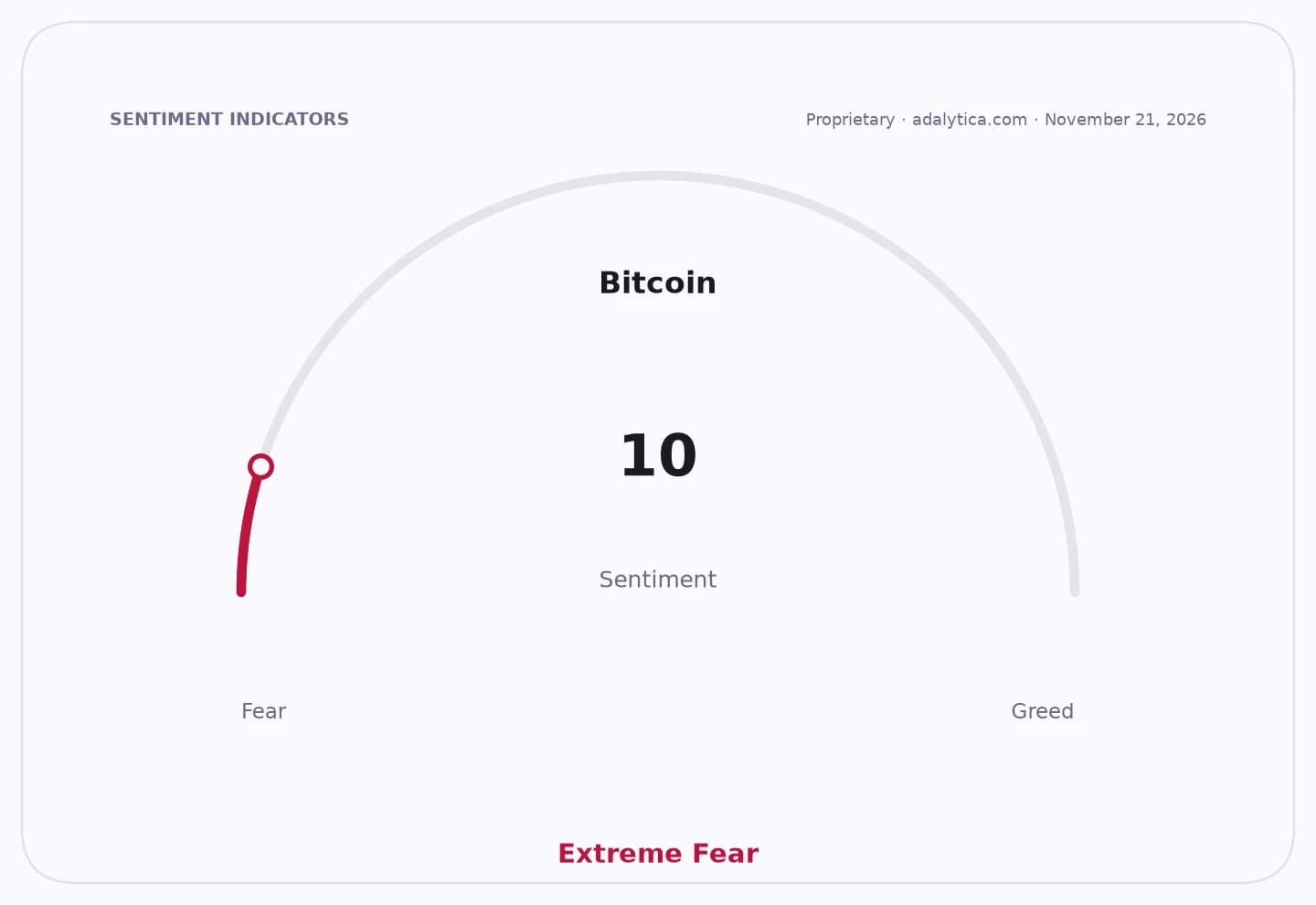
The move is also showing up in market sentiment. Adalytica’s S&P 500 trade signals show extreme greed at 97, even as the broader equity market still appears extended and vulnerable to a sharp rotation. In Treasuries, however, the trade signal framework shows extreme fear in bond-aware positioning, underscoring how quickly investors have been forced to reprice rate risk alongside equity valuations.
For managers, the debate is now less about chasing momentum and more about whether the AI trade can justify higher multiples after a stretch of heavy inflows and crowded positioning. If yields stay elevated and tech earnings fail to re-accelerate, the current pullback could deepen; if inflation and growth cool enough to pull Treasury yields back down, buyers may step back in fast.
| Entity | Gains | Losses |
|---|---|---|
| Treasury bond sellers | ▲Higher borrowing costs | ▼Lower bond prices |
| Value and defensives | ▲Relative inflows | ▼Under-owned status |
| Tech bulls buying dips | ▲Potential rebound if yields ease | ▼Mark-to-market losses |
| QQQ, XLK and ARKK holders | ▲None in current selloff | ▼Valuation compression |