Treasury yields are edging lower as investors pull money from the market’s most crowded AI winners and seek safety in government debt, a rotation that matters because it shows how quickly enthusiasm for artificial intelligence can turn into a de-risking event for the whole equity complex.
U.S. Treasuries Rise as AI Stocks Sell Off

The move is more than a one-day flight to quality. The 10-year Treasury yield slipped to 5.015% in the latest forecast from 5.04% the prior session, while the 2-year yield eased to 4.733% from 4.76%. That leaves the 10s-2s spread at 0.28 percentage point, still positive but narrow enough to underline how cautious the bond market remains about growth and Fed policy. In other words, investors are not just buying duration for yield — they are buying insurance against a sharper unwind in risk assets.
Sentiment Indicators
That caution is showing up in the tape. TLT, the long-duration Treasury ETF, jumped to 81.45 from 80.35 a day earlier, with volume surging to 65.3 million shares. The 50-day moving average sits near 79.76, so the latest rebound has pushed the fund back above a key trend line after a shaky stretch. IEF also firmed to 91.65, while technical readings in both funds point to improving momentum after recent weakness. Adalytica’s Treasury Purchase Sentiment Outlook still shows “Extreme Fear,” but the abrupt jump in awareness suggests the market is actively chasing safe havens again.
What makes this move especially important is that the selloff is not being driven by a generic macro shock. It is being driven by anxiety around the AI trade itself, the market’s dominant source of multiple expansion for months. When the trade that has powered the indexes starts to wobble, the marginal buyer of risk gets more selective fast. That is bad news for crowded semiconductor names and high-beta growth stocks, but it can be a gift for balance-sheet-heavy defensives and for the Treasury market, which benefits whenever investors decide they would rather wait than chase momentum.
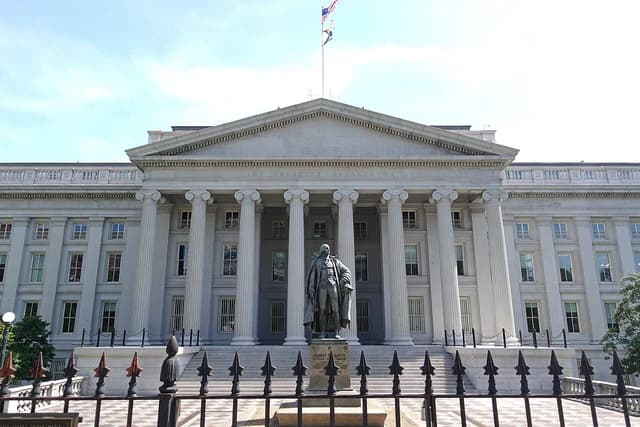
US Treasury
Nvidia’s sharp slide captures the shift. NVDA fell to 125.53 in the latest trading snapshot from 145.98 a day earlier, with the stock deeply below both its 50-day and 200-day moving averages and RSI readings in oversold territory. That kind of move matters far beyond one name: it tells you the AI complex is no longer being treated as a one-way trade. If investors continue to question the durability of AI capex returns, money will keep rotating out of the most expensive beneficiaries and into assets with more predictable cash flows.
The market implication is straightforward. Treasury bonds, cash-rich defensives and select megacap refuges should keep drawing capital if AI volatility persists. Apple’s emergence as a perceived safe haven fits that pattern. So does the ongoing bid for government debt. The losers are the vendors that depend on uninterrupted AI spending and an easy financing backdrop — chipmakers, infrastructure suppliers and other high-expectation names priced for perfection.
For investors, this is not a reason to abandon the AI theme. It is a reason to reposition around it. The biggest opportunity may now lie in the second-order beneficiaries: utilities, power infrastructure, data-center enablers and the highest-quality balance sheets that can survive a valuation reset in the most crowded AI trades. If Treasury yields keep drifting lower while AI leaders de-rate, the next phase of the market will reward selectivity, not enthusiasm. Position early.
| Entity | Gains | Losses |
|---|---|---|
| U.S. Treasuries | ▲Safe-haven inflows | ▼Yield pressure |
| Apple | ▲Defensive refuge demand | ▼Limited upside if risk appetite returns |
| AI chip leaders | ▲— | ▼Multiple compression |
| Long-duration bond ETFs | ▲Price support | ▼Rate-volatility risk |