A labor-exploitation scandal at a restaurant operator is a reminder that in today’s restaurant market, the biggest risk is no longer just food costs — it is compliance, staffing and the cost of doing business in a tighter labor regime.
Restaurant labor scandal raises compliance costs

That matters because restaurants are sitting at the intersection of three pressures investors still underestimate: higher wages, heavier regulation and a consumer that is increasingly selective. When a restaurateur is accused of making workers toil 12-hour days for about 1,000 euros a month and keeping people in irregular status, it reinforces a much larger theme for the sector: labor is no longer a cheap input that can be squeezed without consequence. It is a balance-sheet issue, a margin issue and, increasingly, a valuation issue.
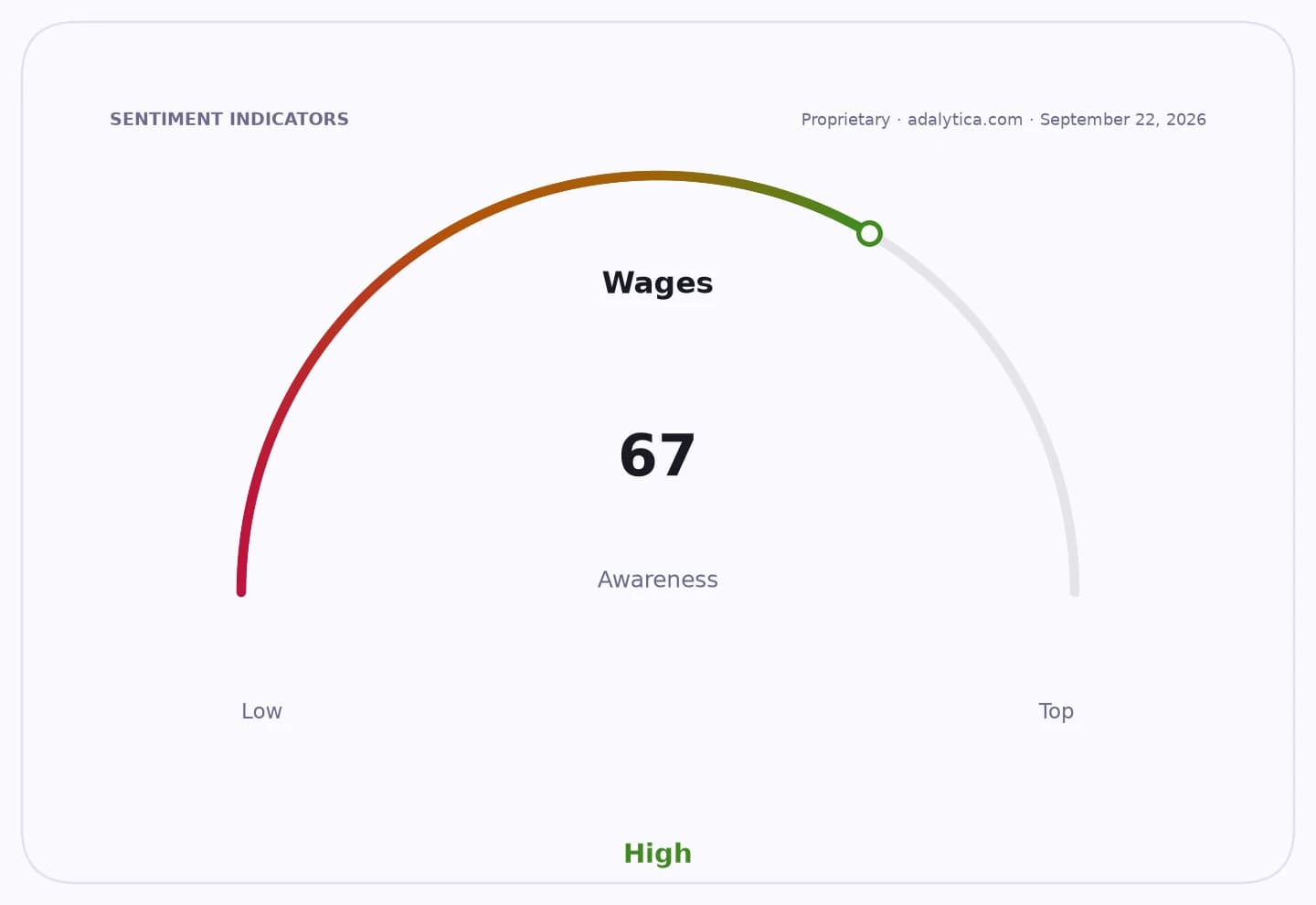
Sentiment IndicatorsⓘProprietary · adalytica.com · August 24, 2026
This is a snapshot — live sentiment, awareness and momentum for 130+ markets update continuously in the dashboard.Open AlphaPulse
The market has already started to price that reality into the biggest casual-dining names. Brinker International, the parent of Chili’s, has staged a powerful rally, with the stock climbing to $66.76 from $29.54 in October and briefly reaching $74.26 in late July. But the run has also left it stretched: the shares are still hovering well above the 50-day moving average, and recent RSI readings have cooled sharply from overbought levels. That is the market telling you the easy part of the rerating may be over.
Even so, the operating message is not bearish for the sector as a whole. The winners are the chains that can spread labor, compliance and procurement costs across a larger system. McDonald’s is the clearest example. The stock has rebounded to $270.95 from a 2026 low near $264.54 after a brutal slide from above $330 earlier in the year, but it remains below its 200-day moving average. That gap matters: investors are still questioning whether the company’s scale, franchise model and pricing power are enough to offset a tougher labor and regulatory backdrop. Its own filings flag the very risks now in focus — wage-and-hour exposure, staffing challenges and legal costs tied to workplace practices.
In other words, the scandal in Europe is not just a local crime story. It is a reminder that the low-cost labor model that once underpinned parts of hospitality is being dismantled by enforcement, politics and public scrutiny. That pushes the industry toward a different competitive structure: more automation, more menu pricing, more scale and fewer operators that can survive on informal labor and thin controls. That should benefit the best-capitalized brands, the technology and equipment vendors selling labor-saving tools, and the franchised models that can push compliance down the chain.
For investors, the key is to separate the vulnerable operators from the structural winners. The market tends to punish restaurants as a group when labor headlines hit, but the bigger opportunity is to own the names that can absorb higher wage bills and turn them into market share gains. I believe that means staying selective: favor scaled operators with pricing power and technology leverage, and avoid businesses whose margins depend on labor practices that regulators are now determined to unwind.
The next catalyst will be whether this becomes a one-off enforcement case or part of a broader crackdown that raises operating costs across the European and U.S. dining sectors. If it does, the real trade is not in the scandal itself — it is in the companies that can profit as the industry is forced to professionalize.
| Entity | Gains | Losses |
|---|---|---|
| Large chains like McDonald’s | ▲Scale and compliance systems | ▼Small operators with weak controls |
| Brinker International | ▲Pricing power and brand strength | ▼Short-term momentum if costs rise |
| Labor-saving tech suppliers | ▲Higher demand for automation | ▼Low-cost labor model |
| Rogue restaurateurs | ▲— | ▼Fines, raids, reputational damage |