The rupiah extended its slide to a record low of IDR18,270 per US dollar on Friday, underscoring how global dollar demand and expectations of higher US rates are overpowering Indonesia’s improving external balances.
Rupiah Falls to Record Low as US Yields Rise

The currency’s weakest close on record came after a week in which the spot rupiah fell 0.35%, while the Jakarta Interbank Spot Dollar Rate weakened 0.32% to IDR18,278. The move matters economically because a cheaper rupiah raises the local-currency cost of imported fuel, food, machinery and dollar-denominated debt, adding pressure to inflation, corporate margins and the central bank’s room to maneuver.
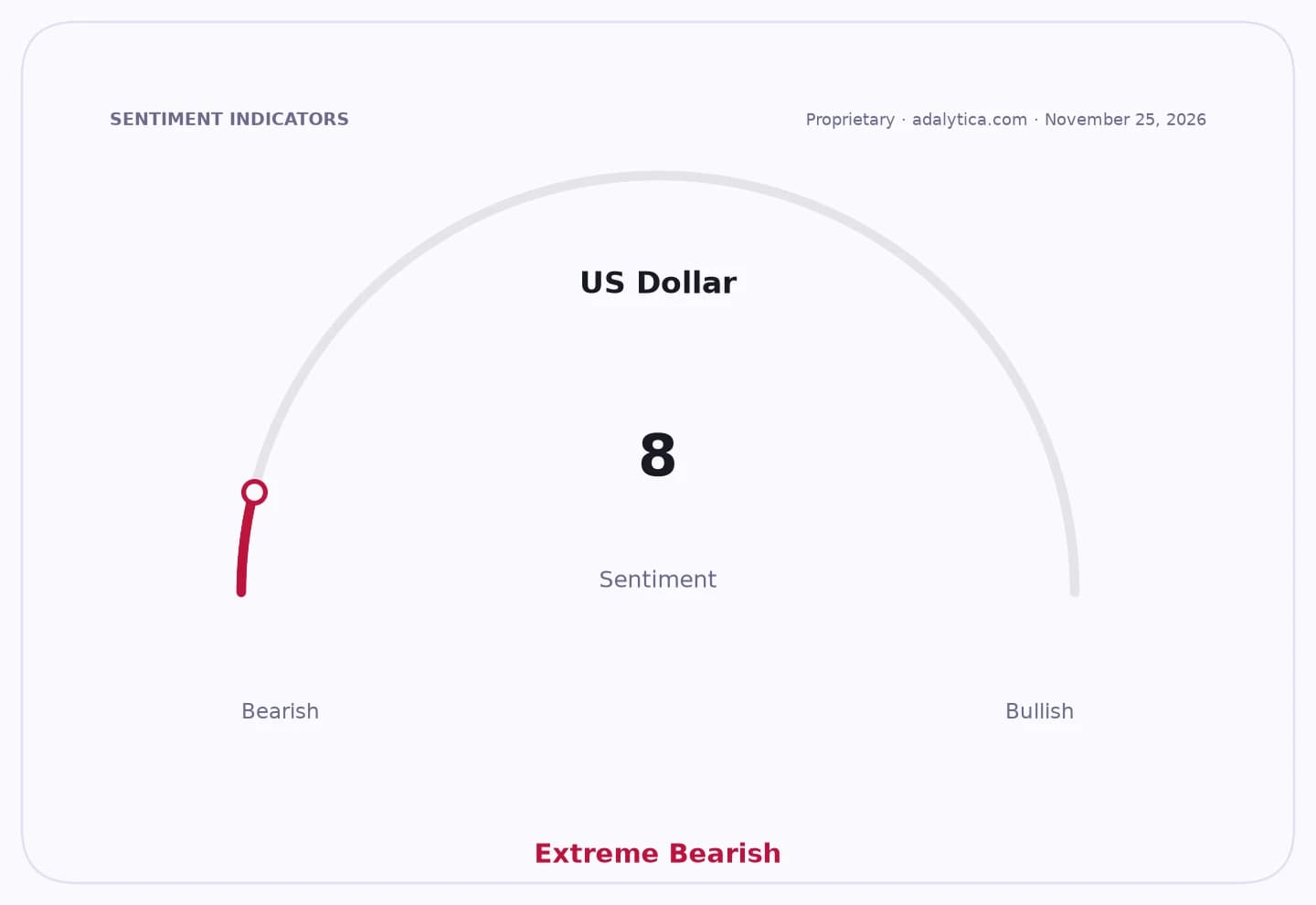
Sentiment Indicators
Indonesia’s third-quarter current account deficit narrowed sharply to $2 billion, or 0.5% of GDP, from $12.6 billion, or 3.4% of GDP, in the previous quarter. Ordinarily, that would support the currency by easing dollar demand for trade and external payments. But traders have treated the improvement as insufficient against a stronger greenback, with the US 10-year Treasury yield climbing to 4.92% on Friday and the dollar staying bid as markets price a tighter Federal Reserve path.
That combination is the key narrative behind the rupiah’s latest record low: domestic fundamentals are improving, but global funding conditions are deteriorating faster. For investors, that means Indonesia’s asset prices may remain vulnerable even if macro data at home looks better on paper. Foreign buyers of Indonesian equities and bonds face translation losses and potentially wider hedging costs, while local corporates with dollar liabilities could see earnings and cash flow come under strain.
DGS10 — macro contextadalytica.com
Explore this data interactively — full history, time series and cross-market comparisons.
There is also a policy angle. Bank Indonesia has been trying to cushion volatility, but the scale of the move suggests markets want either more aggressive intervention or a clearer signal on policy support. If the rupiah continues to weaken, authorities may need to balance currency defense against growth, especially if tighter financial conditions start to feed through to domestic demand.
For now, the message from the market is straightforward: a better current account is not enough to stop the rupiah when the dollar is rising and US yields are pulling capital back toward the US. The next test will be whether Bank Indonesia can slow the depreciation without tightening conditions enough to hurt the broader economy.
| Entity | Gains | Losses |
|---|---|---|
| US dollar | ▲Safe-haven demand | ▼None |
| Indonesian exporters | ▲Higher rupiah revenues | ▼Input-cost inflation |
| Indonesian importers | ▲None | ▼Higher dollar costs |
| Bank Indonesia | ▲Scope to defend currency | ▼Policy credibility pressure |