The US dollar extended its advance against the rupiah on Friday, keeping Indonesia’s currency near the weakest levels in memory and underscoring how vulnerable emerging-market FX remains when the greenback is firm and global risk appetite is thin.
US dollar rises toward 18,300 rupiah
By around 09:15 Jakarta time, the dollar traded at IDR 18,282, up 0.15% on the day and only a short step from the IDR 18,300 level that has become a closely watched line for the market. The move came after the rupiah had already touched a record low of about IDR 18,270 in recent sessions before stabilizing around IDR 18,198 to IDR 18,203.
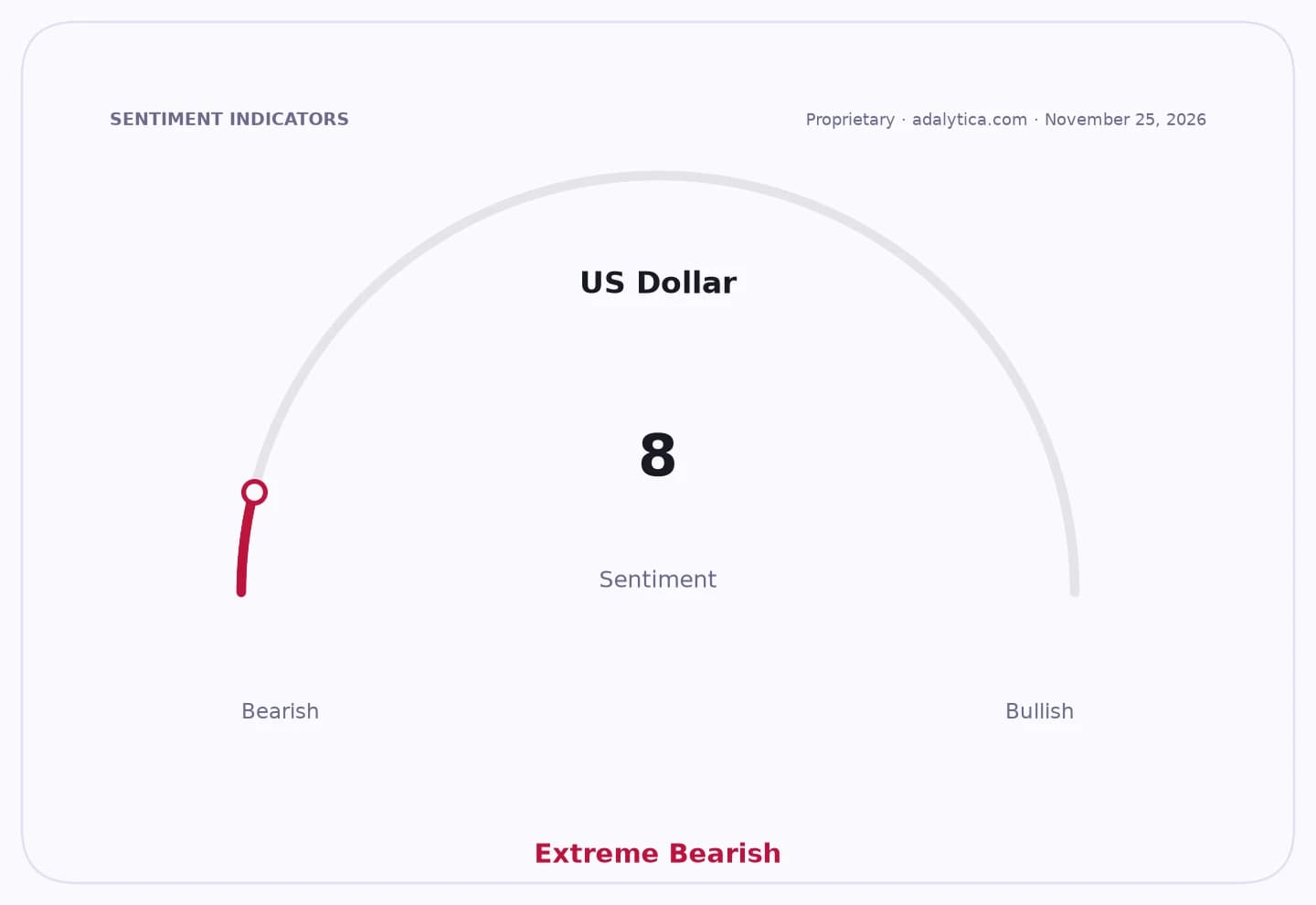
Sentiment Indicators
The significance is bigger than the one-day move. A rupiah trading this close to record lows raises the cost of imported goods, increases pressure on domestic borrowers with dollar liabilities and complicates the policy mix for Bank Indonesia, which must balance growth support against currency stability. For investors, the pace of depreciation matters as much as the level: once a currency enters a zone of repeated record tests, hedging costs rise and sentiment can turn self-reinforcing.
The dollar’s strength was broad even if not universal. It weakened slightly against the Hong Kong dollar and the Japanese yen, but gained against the Canadian dollar and South Korean won. That mixed performance suggests the move is less about a single local catalyst in Indonesia than about a still-supportive backdrop for the dollar versus risk-sensitive Asian currencies.
That backdrop has been reinforced by market pricing for U.S. rates. The fed funds rate was at 3.88% in October, with futures implying 3.89% for November, while the 10-year Treasury yield has remained elevated around 4.9%. Even after a modest pullback, those levels keep U.S. assets relatively attractive versus many emerging-market alternatives and help support dollar demand. A lower U.S. rate path would normally ease pressure on the rupiah, but the market is not seeing enough relief yet to break the dollar’s dominance.
The dollar’s latest leg higher also fits with the broader risk tone. Adalytica’s US Dollar Trade Signals show sentiment at 8, described as “Extreme Fear,” while its Global Stability Sentiment sits at 11, also marked “Extreme Fear.” Meanwhile, FX volatility sentiment is still in fear territory, indicating that investors remain cautious even after the rupiah’s brief rebound. In that environment, short-term relief rallies in the rupiah are vulnerable to being sold if the dollar keeps testing higher levels.
For Indonesian policy makers, the immediate question is whether recent support from officials and external engagement can offset the stronger dollar. Talks with MSCI executives helped the rupiah recover from its lows, but such moves are usually temporary unless global dollar pressure eases. If the currency breaches IDR 18,300 decisively, the focus will shift to whether intervention or policy guidance can slow the move without draining reserves or tightening financial conditions too much.
For investors, the trade is straightforward but uncomfortable: a stronger dollar favors hedged exposure, imported inflation expectations and caution on rupiah assets, while any sustained break in U.S. yields or improvement in global risk sentiment could trigger a fast relief bounce. Until then, the market is likely to keep treating IDR 18,300 as a near-term stress test rather than a ceiling.
| Entity | Gains | Losses |
|---|---|---|
| US dollar | ▲Safe-haven demand | ▼Emerging-market currencies |
| Indonesian importers | ▲None | ▼Higher dollar costs |
| Bank Indonesia | ▲Policy leverage if it intervenes | ▼Room for easing |
| Dollar longs | ▲Mark-to-market gains | ▼Rupiah bulls |