The dollar is extending its climb as global banks lean into a simple but powerful thesis: artificial intelligence is reinforcing U.S. economic outperformance, and that should keep the greenback supported even as other major currencies struggle to find a catalyst.
U.S. Dollar Rises on AI Growth Thesis

That matters because the dollar is not just another asset class trade. A firmer currency tightens financial conditions abroad, pressures commodities and multinational earnings, and forces investors to keep paying up for U.S. growth leadership. The implication is clear: if AI keeps driving capital expenditure, productivity hopes and equity inflows into the U.S., the dollar can stay bid longer than the market expects.
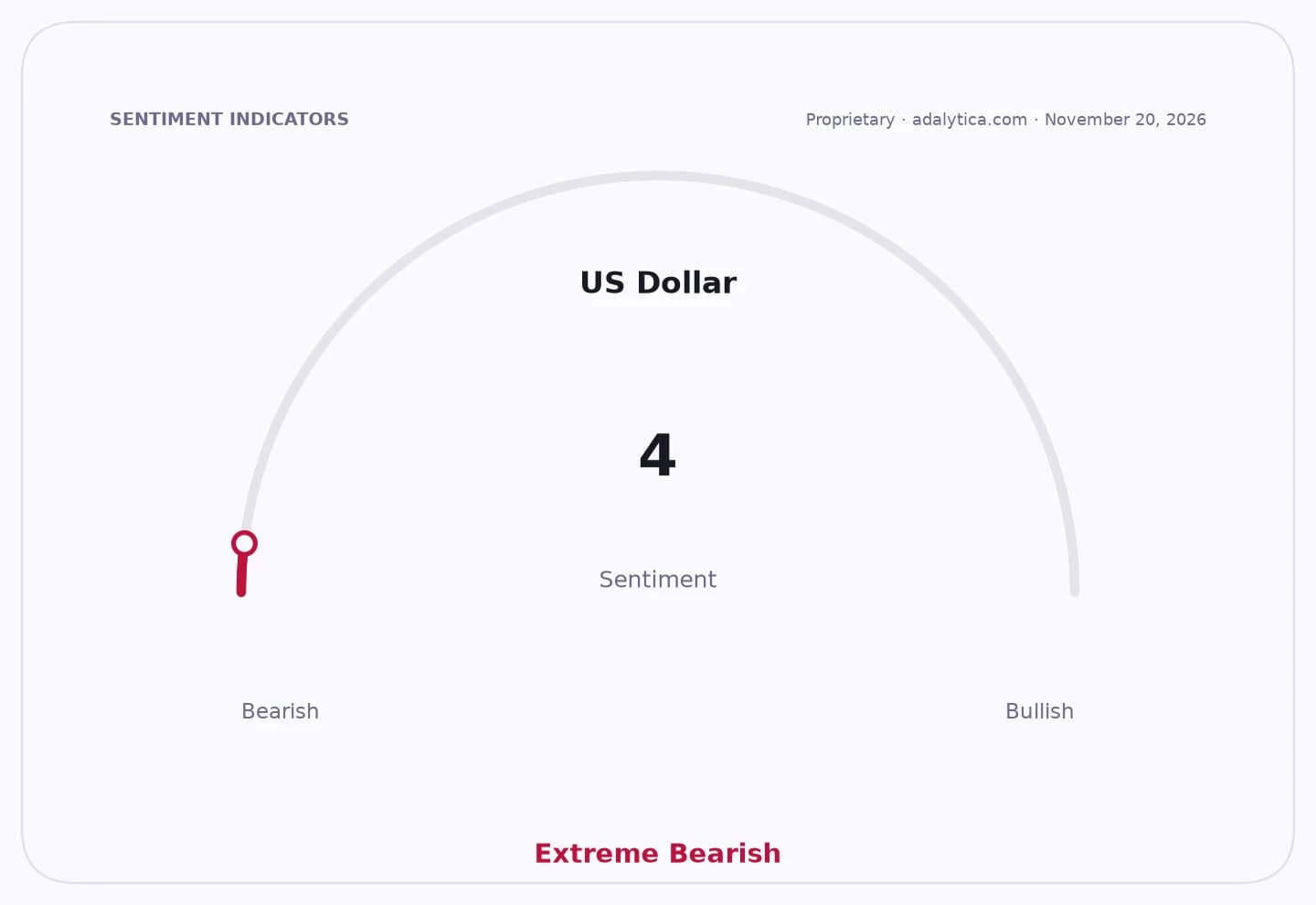
Sentiment Indicators
The move is already showing up in exchange-traded proxies. The Invesco DB U.S. Dollar Index Bullish Fund, or UUP, was last around 29.62, near its highs for the period and well above its 50-day moving average of 28.89 and 200-day average of 28.07. Momentum remains constructive even after a brief stretch of overbought readings, with the fund holding above both long-term trend lines as the market continues to price U.S. strength.
That strength has direct economic consequences. A durable dollar tends to act as a headwind for gold, silver, copper and other dollar-denominated commodities, while also squeezing exporters and emerging-market borrowers with dollar debt. The latest market backdrop fits that script: gold has fallen to the weakest level in more than a year, and risk assets from commodities to cryptocurrencies have felt the pressure as investors rotate toward dollar liquidity.
The foreign exchange picture reinforces the divide. The yen remains weak, with the Invesco CurrencyShares Japanese Yen Trust, or FXY, still near 57.51, below its 50-day average of 58.09 and just above its 200-day average of 57.81. The euro, tracked by the Invesco CurrencyShares Euro Trust, is also under strain at 101.33, below both its 50-day average of 103.78 and 200-day average of 105.91. In other words, this is not a one-off dollar pop; it is a broad currency gap tied to relative growth and policy expectations.
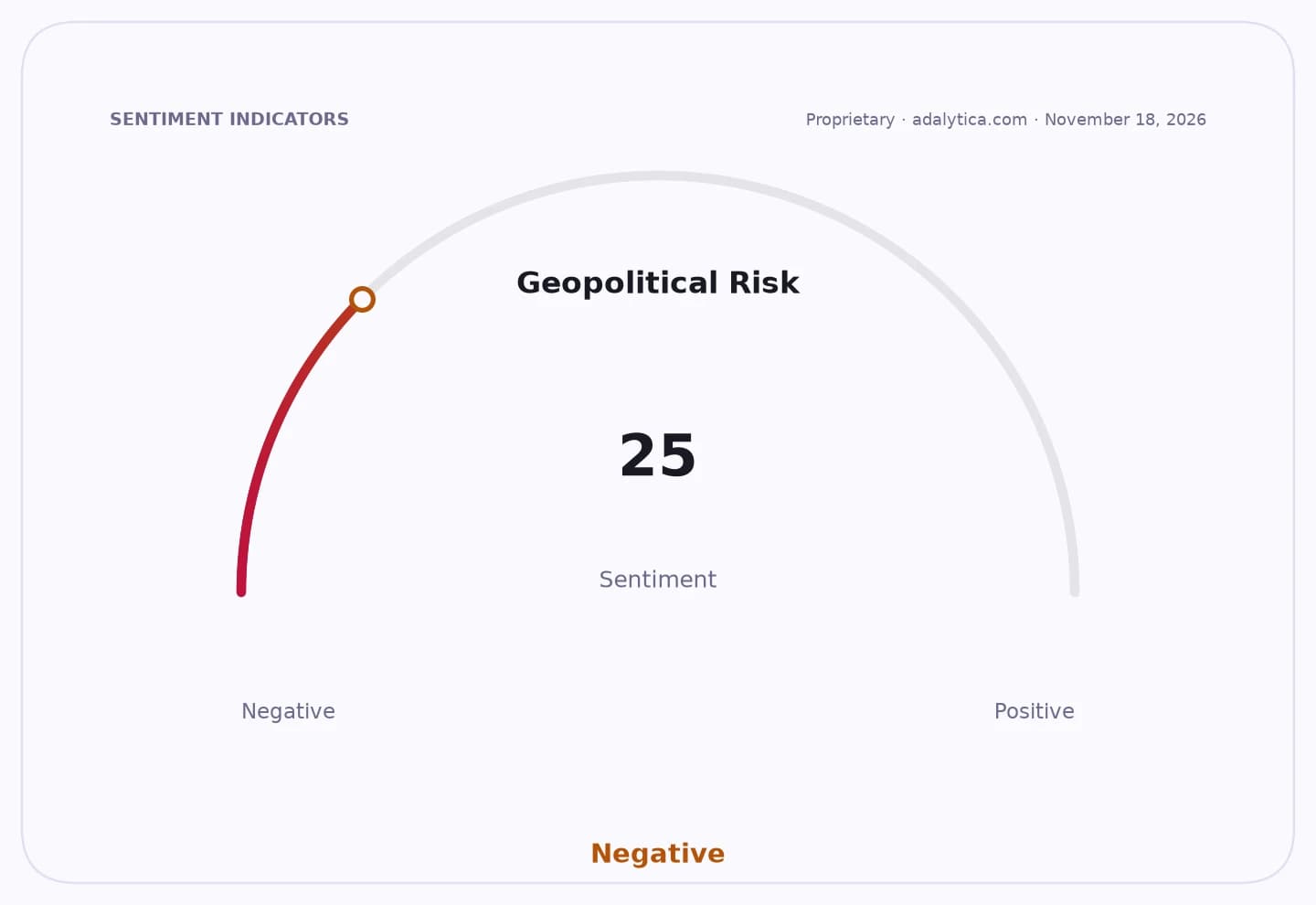
The macro backdrop helps explain why this trade has room to run. Adalytica’s S&P 500 Trade Signals show sentiment in fear territory, even as the equity market remains tied to the AI investment cycle. Consumer confidence readings are deep in recessionary fear, while long-term inflation expectations are subdued enough to give the Federal Reserve room to keep policy restrictive if growth holds up. That combination is ideal for dollar bulls: U.S. assets stay attractive, while overseas economies look more vulnerable to a strong currency and weaker demand.
For investors, the key is to think beyond the obvious FX expression. If AI remains the dominant capital-spending theme, the real winners are the companies and funds selling the infrastructure behind it — from semiconductors and data-center equipment to power, networking and cooling. The dollar itself becomes a macro barometer of that spend, reflecting both stronger U.S. growth and the flow of global capital into American technology leadership.
That is why the market underestimates the persistence of this trend. The dollar does not need a crisis to keep rising; it only needs the U.S. to remain the cleanest growth story in a slowing world. If AI keeps delivering that edge, investors should position for a stronger dollar, weaker commodities and continued pressure on foreign currencies — while staying overweight the U.S. infrastructure and technology names that benefit from the same force.
| Entity | Gains | Losses |
|---|---|---|
| U.S. dollar | ▲Safe-haven demand | ▼Exporters abroad |
| AI infrastructure stocks | ▲Capital inflows | ▼Currency-hedged competitors |
| Gold and commodities | ▲— | ▼Dollar-priced assets |
| Euro and yen | ▲— | ▼Relative growth gap |