The US dollar hovered near a 19-month peak on Thursday, extending its grip on global currency markets as softer-than-expected Australian jobs data pushed the Australian dollar lower and reinforced the view that US rates will stay comparatively restrictive for longer.
US Dollar Near 19-Month High as Aussie Falls
The dollar’s advance matters because it is not just a foreign-exchange move; it is a tightening of financial conditions that feeds through to commodities, trade balances and risk appetite. A stronger greenback makes dollar-priced assets more expensive for non-US buyers, pressures commodity exporters and often leaves emerging-market and cyclical currencies on the defensive. It also tends to raise the hurdle for global central banks that are trying to ease policy without triggering imported inflation or destabilizing their currencies.
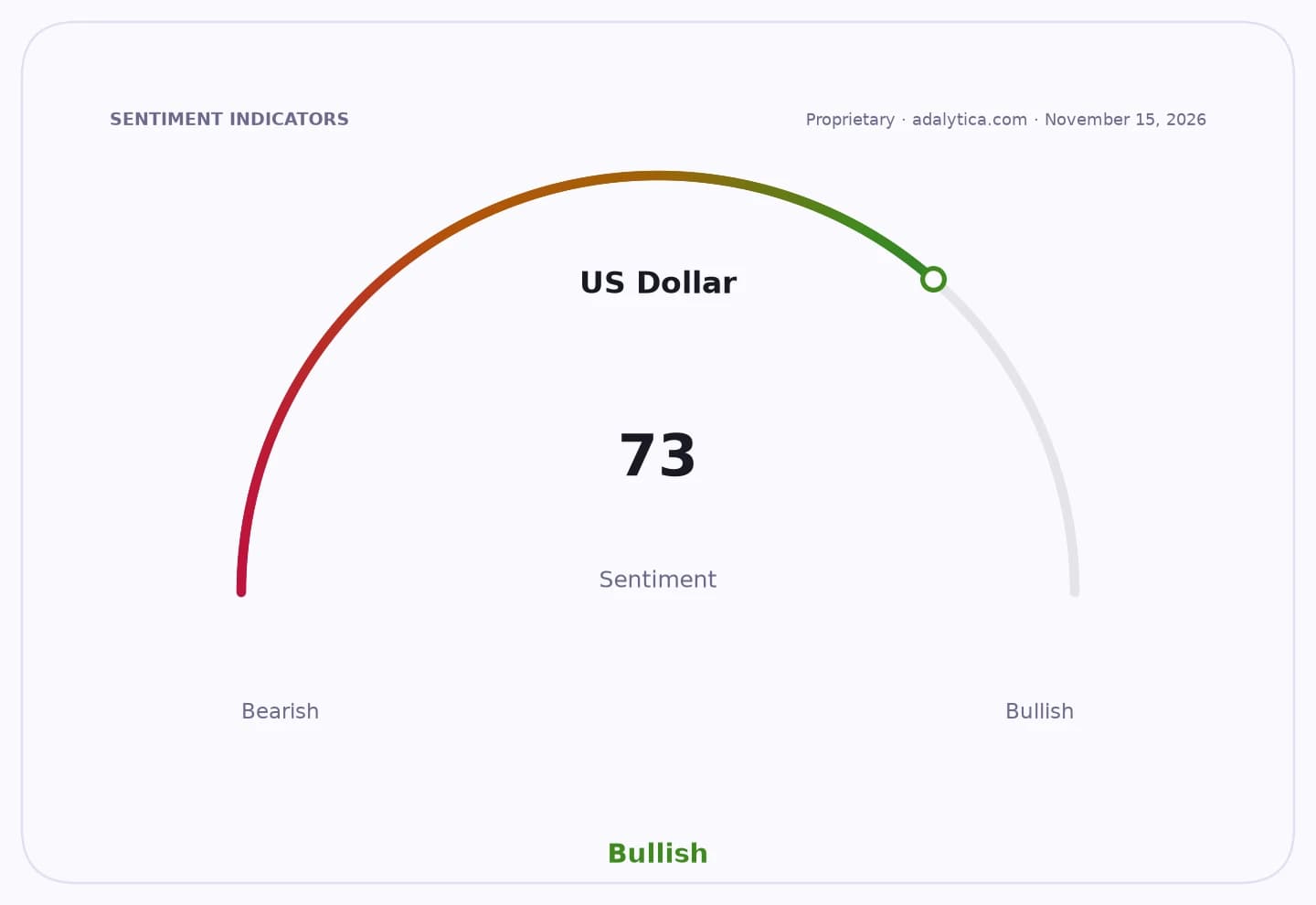
Sentiment Indicators
That backdrop was visible in the Australian dollar, which fell after the latest labor-market figures suggested Australia’s economy is losing momentum. The move adds to pressure on the Reserve Bank of Australia, which has been cautious about cutting rates too quickly while inflation remains sticky. For currency traders, weak domestic data undermines the Aussie’s carry appeal at a time when the US dollar is still being supported by relatively high US interest rates and resilient growth expectations.
The dollar’s strength has also spilled into other markets. Gold has come under pressure from the firmer US currency and expectations of higher-for-longer US rates, while copper has continued to soften, reflecting both dollar headwinds and broader concern about demand. The euro has been pinned near $1.0966 as investors price the likelihood that US policy remains tighter than in Europe for some time, while the yuan has also slipped even as China’s export performance provides some support.
Interest-rate differentials remain the dominant driver. US federal funds are projected to edge up to 3.89% in November from 3.88% in October, according to the data context, keeping the US at the center of the global rates trade. The labor market picture is less straightforward: US unemployment is forecast around 4.11%, only a touch above recent readings, which does not yet point to the kind of deterioration that would force the Federal Reserve into a rapid pivot. That combination — still-elevated US yields, a solid labor market and weaker growth signals elsewhere — has left the dollar with a clear relative advantage.
Technical signals also show a market that remains stretched but not yet exhausted. The US Dollar Index ETF UUP has climbed to 29.63, above its 50-day and 200-day moving averages, while its RSI reading of 74.4 suggests the rally is overbought in the short term. The Australian dollar ETF FXA, by contrast, has slumped to 65.99, below both moving averages, with an RSI of 19.9 indicating deeply oversold conditions. Adalytica’s US dollar trade signals also point to extreme fear, which often appears near momentum peaks even if the broader trend remains intact.
For investors, the key question is whether this is a temporary squeeze or the start of a more durable dollar leg higher. Bulls can argue that US growth still outpaces peers and that the Fed is in no hurry to ease, keeping the dollar supported. Bears point to the crowded nature of the trade, overbought technicals and the risk that any softer US data or dovish shift in Fed guidance triggers a sharp unwind. Near term, the balance of risk remains tilted toward further pressure on the Aussie and other pro-cyclical currencies unless US rate expectations move decisively lower.
| Entity | Gains | Losses |
|---|---|---|
| US dollar | ▲Higher yield support | ▼Overbought positioning risk |
| Australian dollar | ▲— | ▼Soft jobs data, weaker carry appeal |
| Commodity exporters | ▲— | ▼Stronger dollar, softer prices |
| US rate bulls | ▲Policy spread advantage | ▼If Fed turns less hawkish |