Australia’s labour market weakened sharply in October, with the number of employed people falling and the unemployment rate climbing to its highest level in five years, a combination that is likely to intensify speculation the Reserve Bank of Australia is done raising interest rates and may soon have to pivot toward easing.
Australia jobs data weakens; RBA hike odds fall
The deterioration matters because Australia’s central bank has kept policy restrictive to cool inflation, but a softer jobs backdrop raises the risk that higher borrowing costs are beginning to bite more broadly. For investors, the shift changes the balance of risks across bonds, the Australian dollar and rate-sensitive equities, while also strengthening the case for duration exposure if the RBA’s tightening cycle is indeed at an end.
Sentiment Indicators
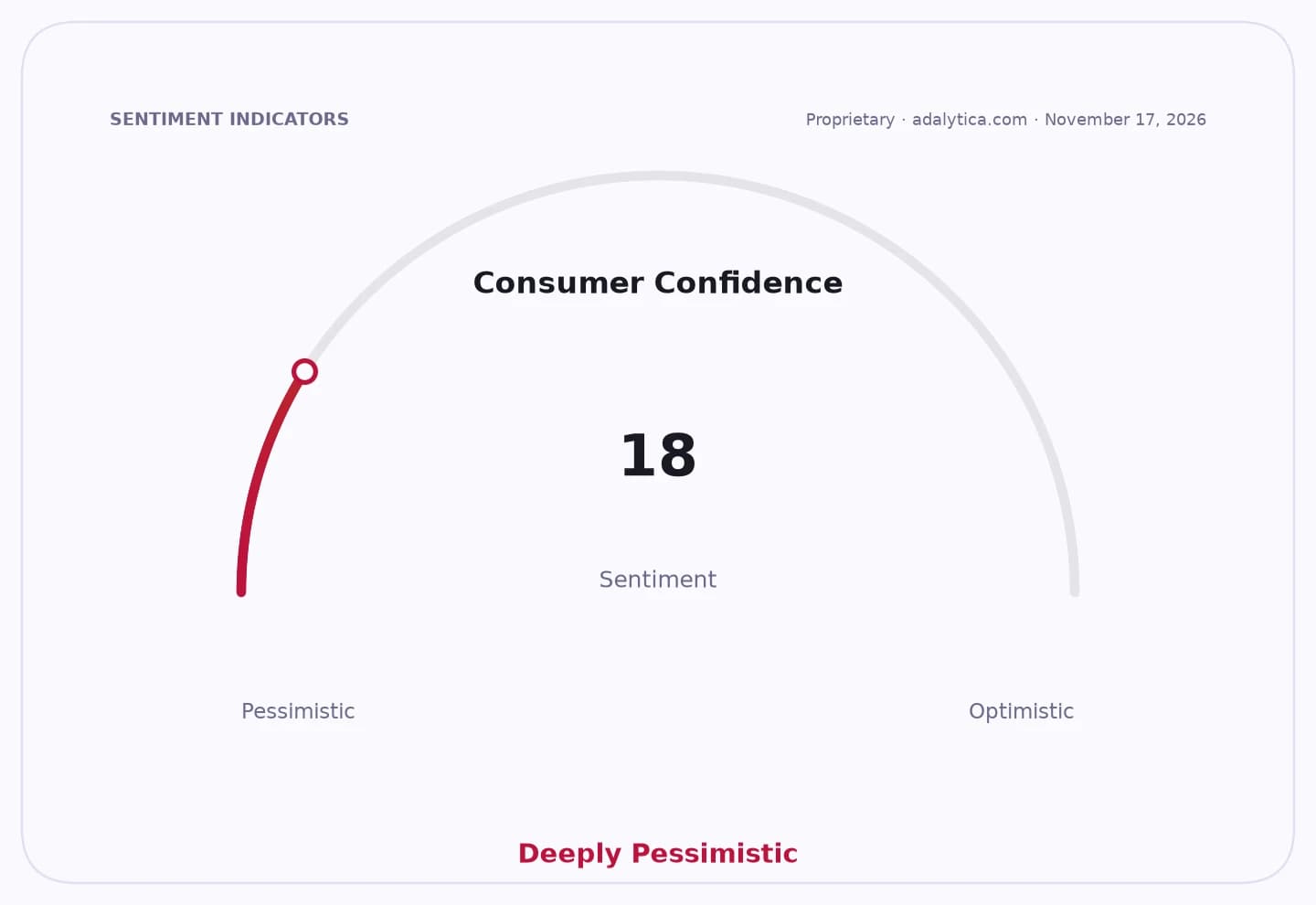
The labour data lands in a market already showing signs of recalibration. The Australian dollar has slipped toward $0.67, with technical indicators pointing to persistent weakness: its price is below both the 50-day and 200-day moving averages and the relative strength index is deeply oversold. That move is consistent with falling expectations for further policy tightening, especially as the US dollar has also weakened sharply in sentiment terms, underscoring a broader repricing of monetary-policy paths.
Australian equities have not been immune. The iShares MSCI Australia ETF, EWA, has dropped to about $27.20 from near $29.86 earlier in the month, with its RSI also in oversold territory and the fund trading below both the 50-day and 200-day moving averages. That suggests investors are already positioning for a slower-growth, lower-yield environment, even before the full policy response is clear.
The jobs weakness also arrives against a backdrop of policy pressure on labour supply. Canberra has been expanding skilled visa access and loosening backpacker work rules to help fill shortages, a sign that labour availability remains a structural issue even as demand cools. That tension leaves the RBA with a more difficult read: the economy may be easing just enough to reduce inflationary pressure, but not enough to eliminate sectoral shortages.
For markets, the immediate implication is that the bar for another rate hike has risen materially. If coming data confirm the labour market is softening rather than merely volatile, attention will shift from how far the RBA still has to tighten to how long it can afford to hold rates at current levels. That would support government bonds, pressure the currency, and favour sectors that benefit from lower discount rates, while banks and other domestic cyclicals could face a tougher earnings backdrop.
| Entity | Gains | Losses |
|---|---|---|
| Borrowers | ▲Relief from peak-rate pressure | ▼Less rate-tightening support |
| Bond investors | ▲Higher odds of lower yields | ▼Less upside if data rebound |
| Australian dollar | ▲Lower rate expectations can stabilise later | ▼Near-term policy-driven weakness |
| Rate-sensitive equities | ▲Easier financing conditions | ▼Growth concerns dominate first |