Australians’ weakening confidence that the Reserve Bank can get inflation back to target is raising the odds that borrowing costs stay higher for longer, and could force the central bank into another rate hike even after five increases this year.
RBA Inflation Expectations Weaken in Australia

That matters because expectations can become self-fulfilling: if households and businesses think prices will keep rising, they tend to spend sooner and push up wages and prices in turn, making the RBA’s job harder. The central bank wants underlying inflation in its 2% to 3% band, but headline consumer prices are still running at 4.3%, above the level that tends to sharpen public attention and influence expectations.
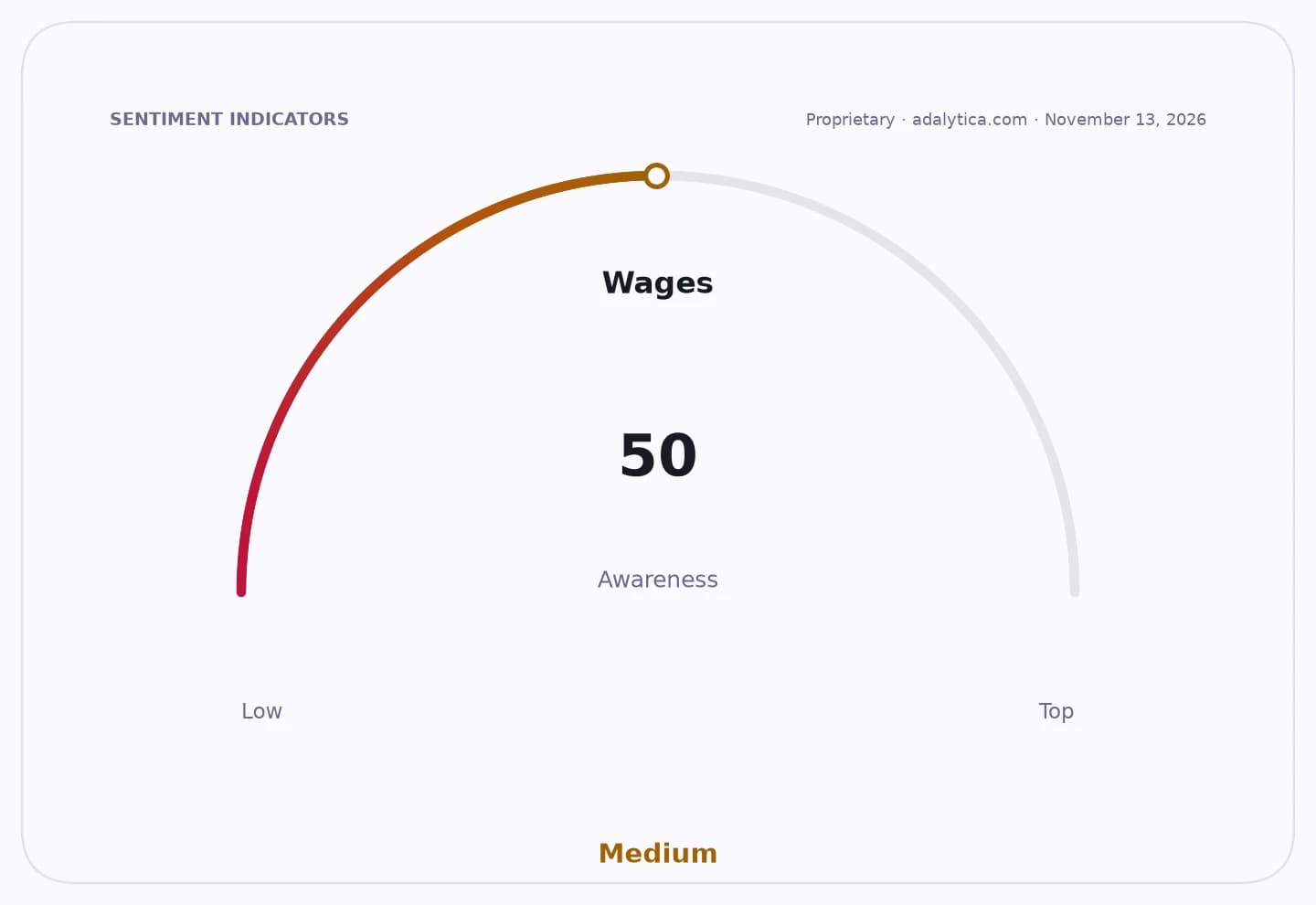
Sentiment Indicators

The risk is especially acute for wages. At 3.5% inflation, some enterprise bargaining agreements allow workers to seek a cost-of-living payment, and that can feed into a wage-price spiral if businesses pass on higher labor costs. RBA Deputy Governor Andrew Hauser has already warned that an increasing share of firms see 3% to 3.5% inflation as the new normal, which he called a central banker’s nightmare.
The latest surveys suggest that belief is spreading. The Melbourne Institute’s November reading showed households expecting 5.3% inflation over the next year for a second straight month, above current inflation, while the RBA’s own polling shows confidence in its ability to return inflation to target has fallen sharply. Public trust in the bank remains above that of any level of government, but the decline comes as price pressures prove stickier than expected and after the RBA’s latest rate move.
For markets, the immediate question is not whether the RBA is done, but how long it will need to keep policy tight to restore credibility. Financial markets still see the December 8 meeting as a hold, and major banks expect rates could start falling again as early as August next year, but that path depends on inflation expectations staying anchored.
If confidence keeps deteriorating, the RBA may conclude that more restraint is needed to convince Australians the inflation fight is being won — even if that means more pain for mortgage holders, small businesses and the broader economy.
| Entity | Gains | Losses |
|---|---|---|
| RBA | ▲Credibility if inflation cools | ▼Policy pressure if trust erodes |
| Mortgage holders | ▲Lower rates if cuts arrive | ▼Higher repayments if hikes continue |
| Businesses | ▲Easier pricing if expectations anchor | ▼Higher wage and funding costs |
| Australian consumers | ▲Relief if inflation slows | ▼More cost-of-living pain |