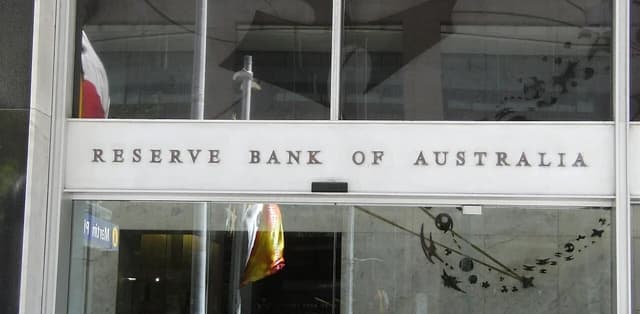
The Reserve Bank of Australia says its battle to bring inflation back to target will be harder if households and businesses lose trust in the central bank’s ability to do the job.
RBA says trust matters for inflation fight

Deputy Governor Andrew Hauser’s remarks on Thursday came just days after the RBA lifted interest rates to their highest level in 18 years, underscoring how much of the inflation fight now depends not only on borrowing costs but on credibility. With annual inflation at 4.3% in September, still well above the RBA’s 2% to 3% target band, the bank is trying to prevent elevated prices from feeding into wage demands, pricing decisions and longer-term expectations.
Sentiment Indicators
Hauser’s message was as much about economics as communications. He argued that trust is “integral” to how monetary policy works because policy is more effective and less costly when the public believes the central bank will deliver on its mandate. That matters because inflation has stayed above target for most of the post-pandemic period, and the longer that lasts, the greater the risk that businesses and households stop believing price growth will return to normal.
That shift is already showing up in sentiment. While Hauser said surveys suggested trust in the RBA has remained “surprisingly stable” despite the rapid tightening cycle, businesses have been telling the bank they are increasingly unsure inflation will be back at target in five to 10 years. Markets, by contrast, still appear to believe the bank can contain inflation expectations, which is crucial for keeping policy transmission intact.
For investors, the stakes are clear. If credibility holds, the RBA can do less to achieve the same disinflation, limiting the risk of an even deeper slowdown in domestic demand. If it slips, the bank may be forced to keep policy tighter for longer, increasing pressure on households, mortgage holders and rate-sensitive sectors such as property and retail. That would also complicate the outlook for the Australian dollar, which has remained soft around $0.69 even as technical indicators show it trading near its 50-day and 200-day moving averages.
The broader lesson is that inflation is no longer just a function of current price data. It is also a test of institutional trust. Hauser’s intervention suggests the RBA is aware that credibility, once damaged, can make the final stretch of the inflation fight more painful and more expensive for the real economy.
| Entity | Gains | Losses |
|---|---|---|
| RBA | ▲Policy credibility if trusted | ▼Effectiveness if trust erodes |
| Households | ▲Clearer inflation guidance | ▼Higher borrowing costs |
| Businesses | ▲Anchored expectations | ▼Wage and pricing uncertainty |
| Rate-sensitive assets | ▲Relief if tightening ends sooner | ▼Pressure if rates stay high |