The Reserve Bank of Australia has lifted interest rates for a fifth straight meeting, taking the cash rate to its highest level since 2008 and deepening the squeeze on mortgage holders as inflation remains well above target.
RBA raises rates for fifth straight meeting

The move matters because the RBA is now trying to cool demand without pushing the economy into a sharper slowdown. With headline inflation running at 4.3% in September and the trimmed mean at 3.6%, both still above the central bank’s 2% to 3% target band, Michele Bullock’s board judged that price pressures remain too persistent to pause. The decision also raises the odds that borrowing costs will stay elevated into year-end, keeping pressure on household spending, housing activity and retail demand.
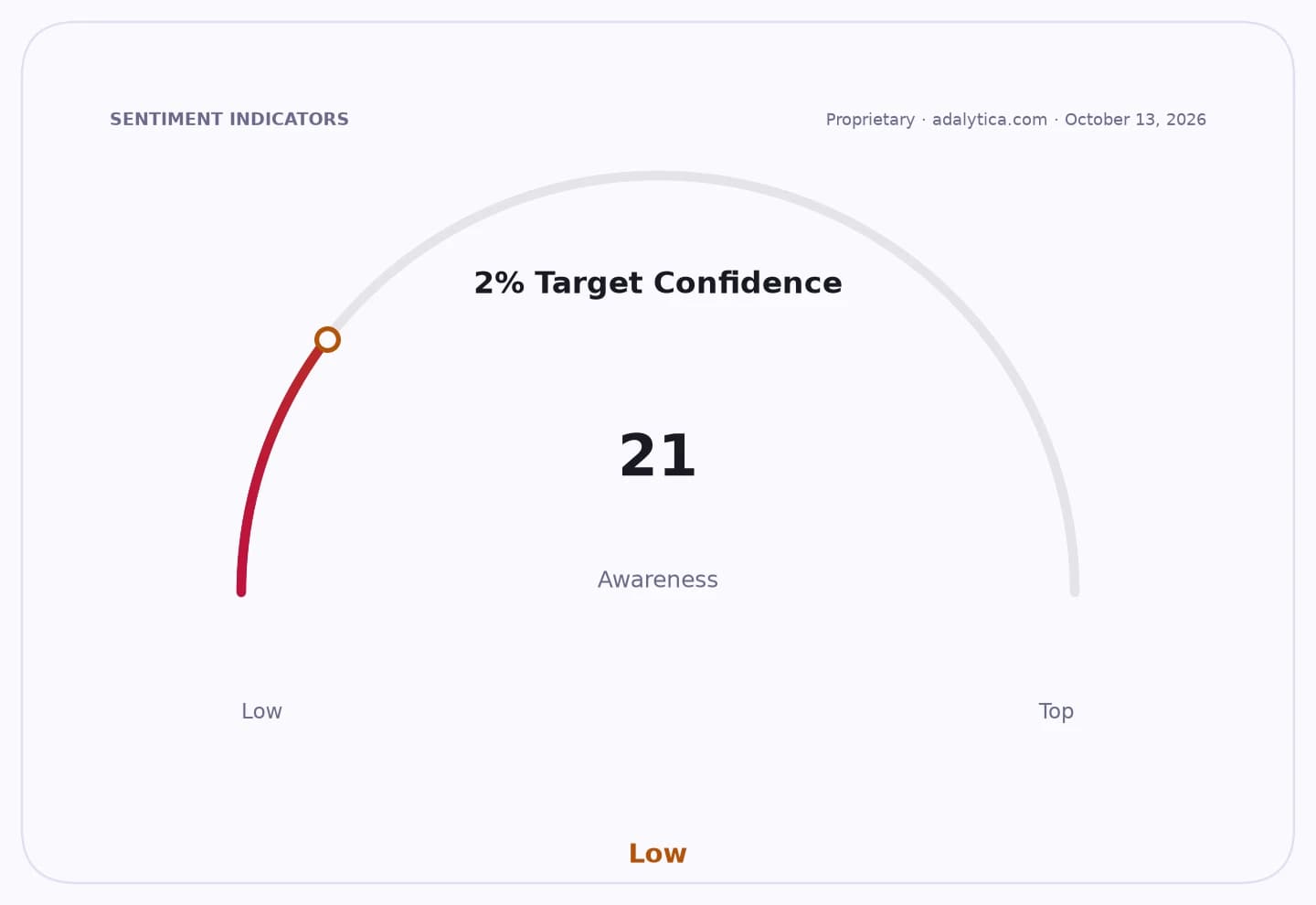
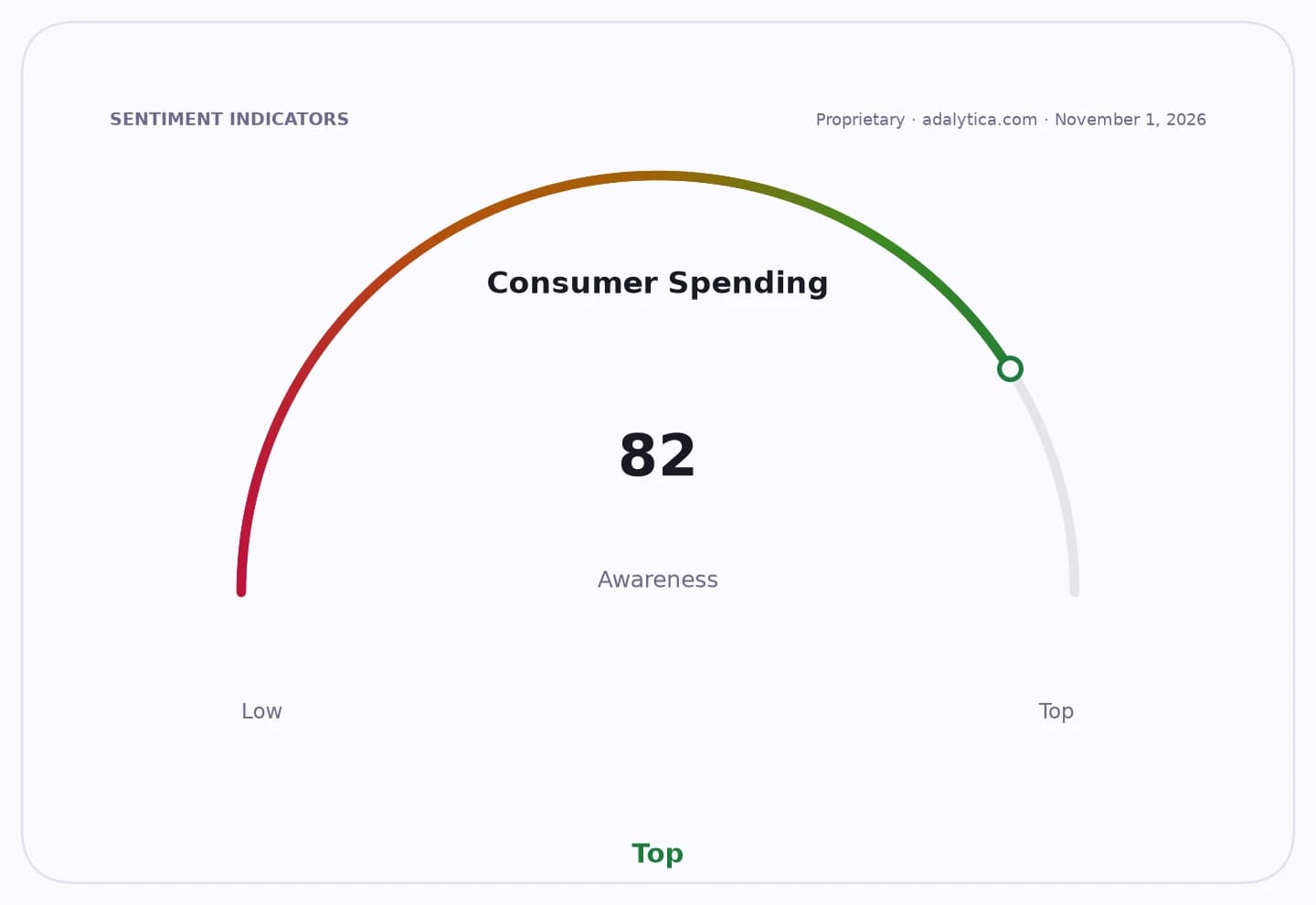
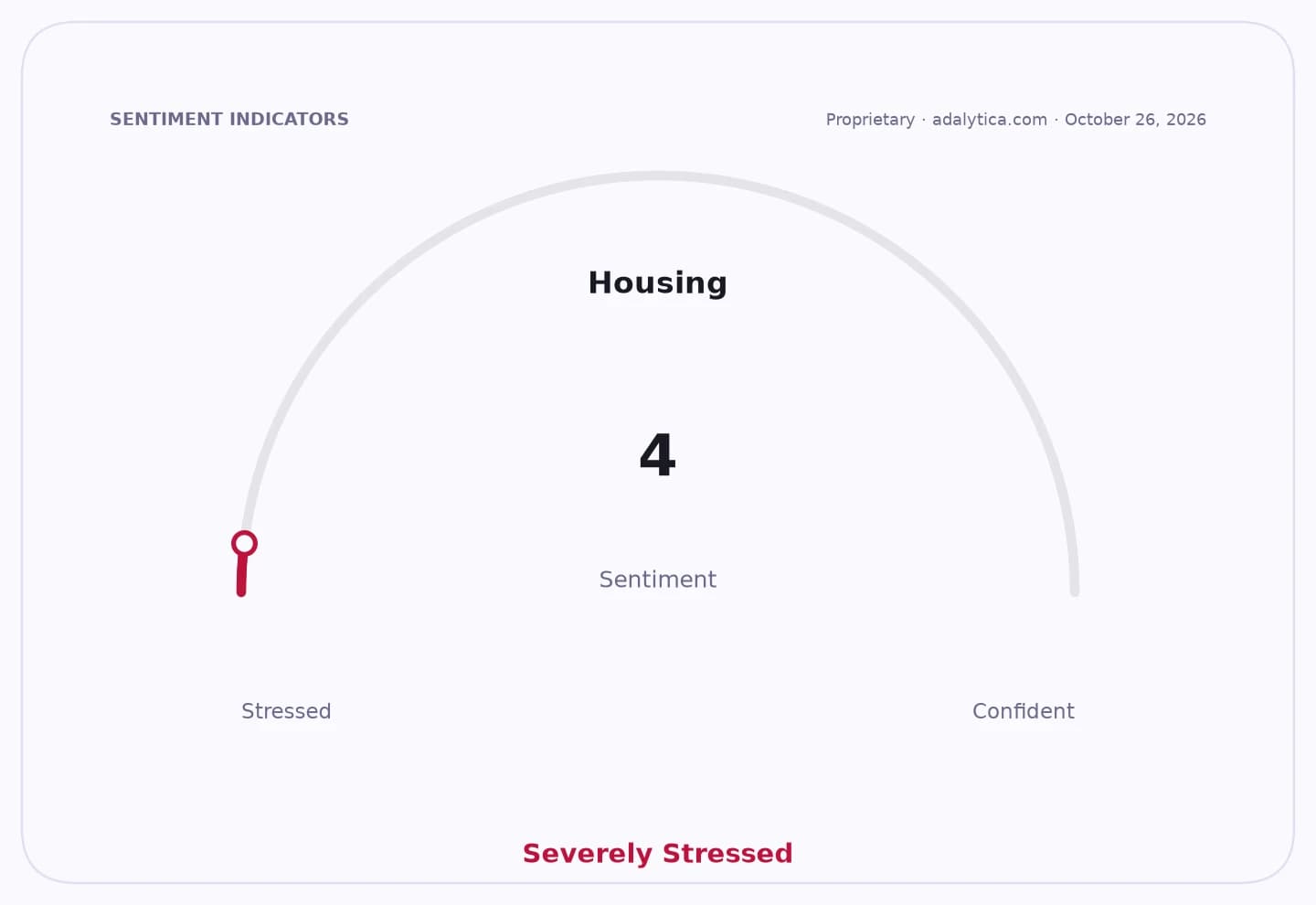
Sentiment Indicators
For borrowers, the impact is immediate and measurable. A household with a $500,000 mortgage and 25 years left would face about $77 more a month from today’s move, or $380 across five hikes this year. On a $700,000 loan, the extra monthly payment would be about $92, while a $1 million mortgage would now carry roughly $759 more in monthly interest costs than before the tightening cycle began. That is why the RBA’s policy stance is feeding directly into recession risk: the more households divert income to debt service, the less they can spend elsewhere in the economy.
Markets had broadly priced in the risk of another increase, but the bigger question for investors is how much further the RBA can go before financial strain becomes macroeconomic damage. Australia’s economy is already showing signs of slowing, and the central bank’s dilemma is now symmetrical: stop too early and inflation expectations may become entrenched; tighten too far and the slowdown could turn into a deeper contraction.
The wider global backdrop is not helping. Westpac chief economist Luci Ellis said fuel prices linked to the Middle East conflict had added to inflation pressure, underscoring how imported energy costs can complicate domestic monetary policy. That makes the RBA’s next move heavily data-dependent, with labour market readings, consumer spending and the next inflation prints likely to determine whether this was the last hike of the year or a pause before more restraint.
For investors, the message is straightforward: the policy peak may be close, but the cost of money is now high enough to matter for earnings, credit quality and valuations across interest-sensitive sectors. Banks, retailers and residential property remain most exposed, while savers and cash-heavy balance sheets benefit from the higher-rate environment.
| Entity | Gains | Losses |
|---|---|---|
| RBA / inflation hawks | ▲Stronger anti-inflation stance | ▼Higher recession risk |
| Mortgage borrowers | ▲— | ▼Higher repayments |
| Banks / savers | ▲Wider lending margins, better deposit returns | ▼Credit stress if economy slows |
| Retailers / housing | ▲— | ▼Softer spending and demand |