Brazil’s inflation outlook for 2026 climbed to 5.22%, the fourth straight increase and another signal that price pressures remain sticky even as the market still expects the central bank to begin cutting borrowing costs next year.
Brazil inflation forecast rises to 5.22% for 2026
The new projection, published in the Banco Central’s weekly Focus survey, moved further above the 4.5% ceiling of the inflation target band, underscoring the challenge facing policymakers as they try to ease financial conditions without reigniting inflation. The target is 3%, with a tolerance range of 1.5 percentage points either side, which means anything above 4.5% is formally outside the band.
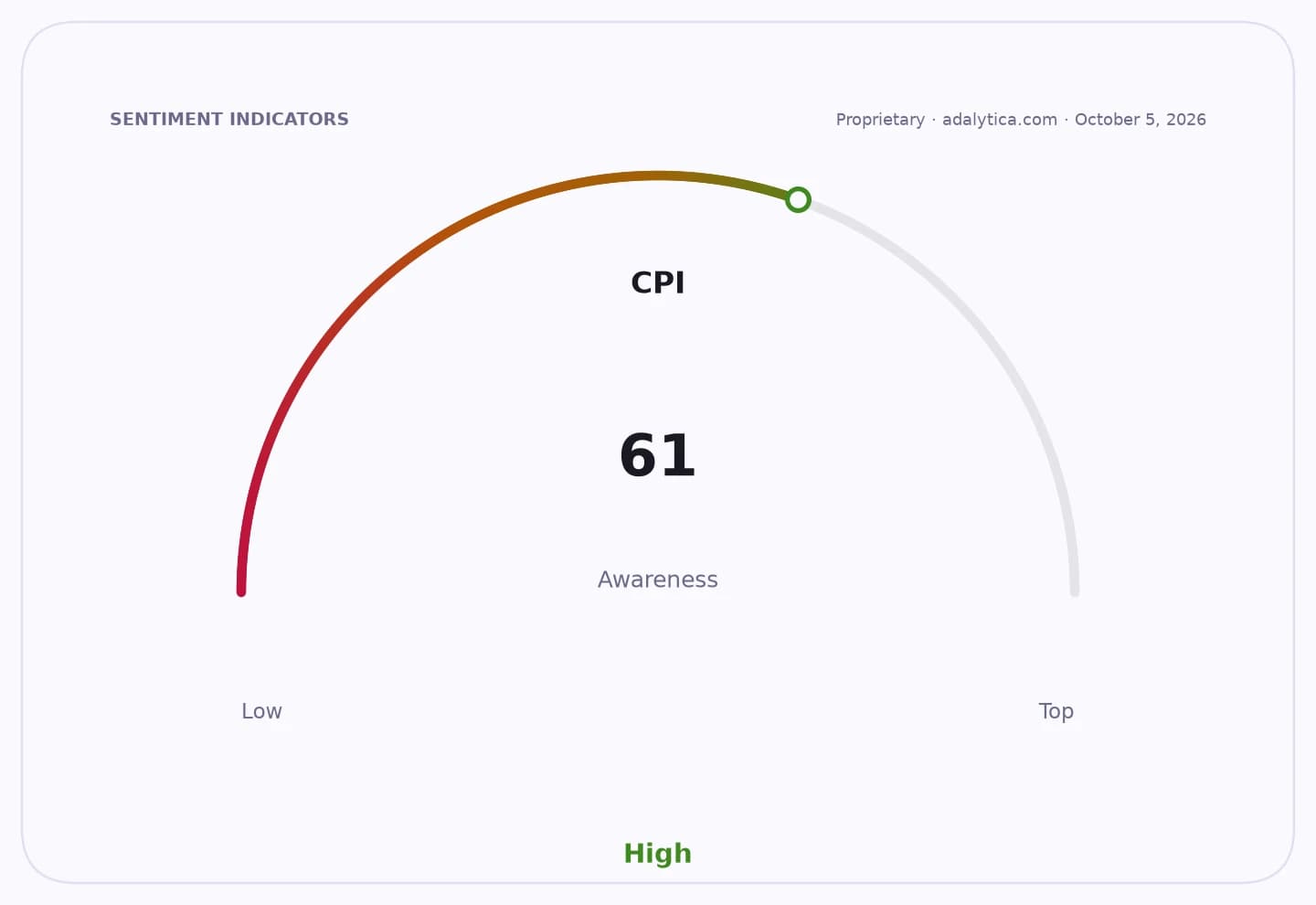
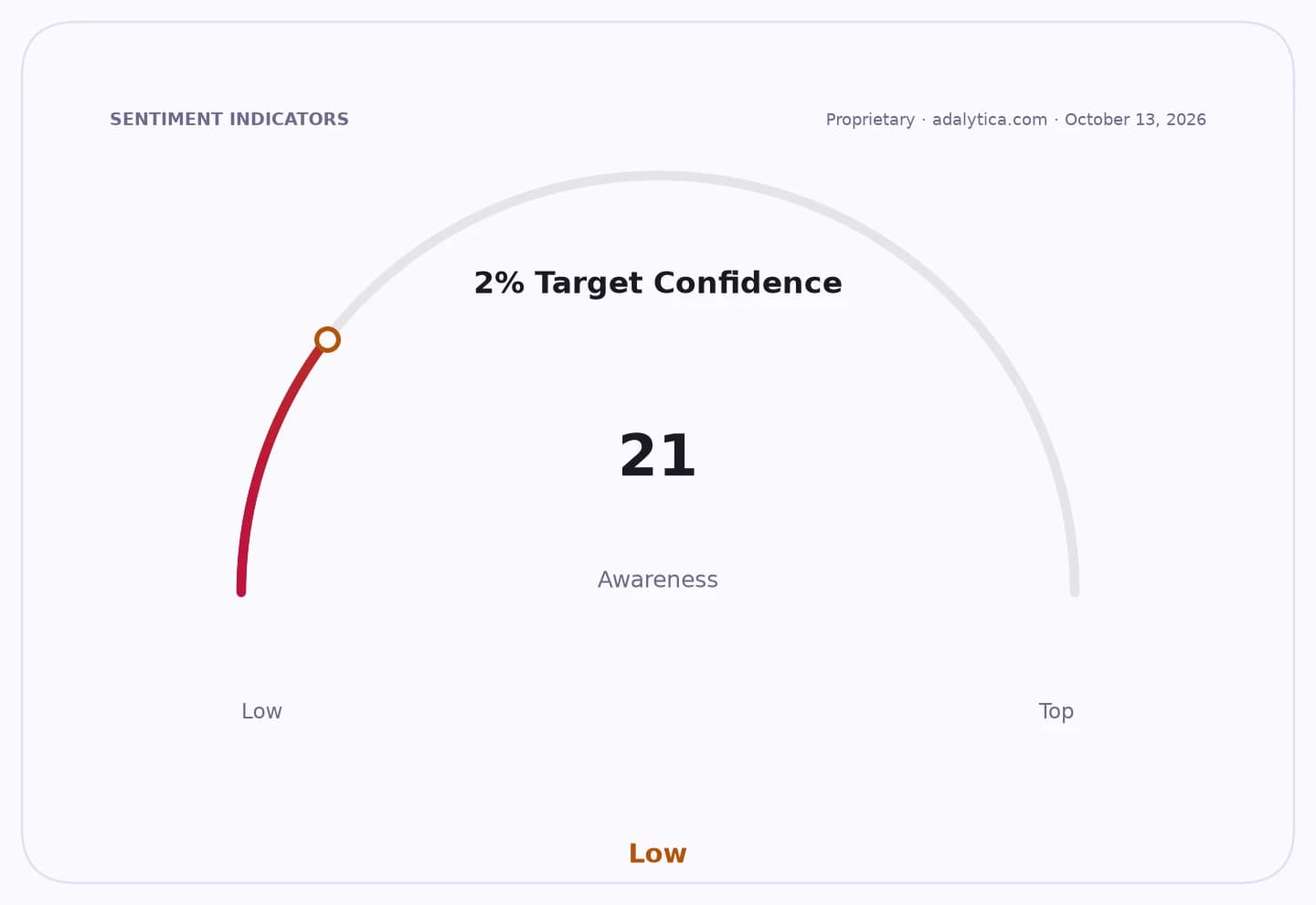
Sentiment IndicatorsⓘProprietary · adalytica.com · October 13, 2026
This is a snapshot — live sentiment, awareness and momentum for 130+ markets update continuously in the dashboard.Open AlphaPulse
That combination matters for the economy because it points to slower disinflation than the central bank needs to confidently loosen policy. Brazil’s monetary authority has already said in recent minutes that the lagged effects of higher rates are filtering through credit and demand, but that inflation expectations remain above target. The market’s latest revision suggests those expectations are not yet anchored enough for comfort.
At the same time, the survey shows investors are not betting on a prolonged hold. The expected Selic rate at the end of 2026 was trimmed to 13.25% from 13.50%, even though the benchmark is currently 13.75%. That implies the market still sees room for easing, but only gradually and from a restrictive level. For rate-sensitive assets, the message is mixed: inflation remains too hot for an aggressive dovish shift, yet growth is weak enough that some cuts are still embedded in pricing.
The broader macro picture is one of a slow-growth, high-rate economy. Forecasts for GDP in 2026 were unchanged at 1.85%, reinforcing the view that Brazil is likely to grow modestly while carrying a real policy burden to suppress prices. The projected dollar rate for end-2026 also eased to 5.15 reais from 5.20, a sign that currency assumptions are not deteriorating even as inflation expectations rise.
For investors, the key issue is whether the inflation overshoot becomes entrenched. If it does, the central bank could be forced to keep rates higher for longer, pressuring domestic credit, consumer spending and rate-sensitive equities. If price pressures ease faster than expected, the current market view of eventual Selic cuts could still prove right. For now, the balance of risk remains tilted toward caution.
| Entity | Gains | Losses |
|---|---|---|
| Central bank hawks | ▲Policy credibility | ▼Faster rate cuts |
| Savers / fixed-income holders | ▲Higher real yields | ▼Lower deposit returns |
| Borrowers / leveraged firms | ▲Easier credit if cuts arrive | ▼Prolonged high funding costs |
| Consumer-facing stocks | ▲Support from eventual easing | ▼Slower demand from tight policy |