Brazil’s inflation accelerated more than expected in September, a move that strengthens the case for the central bank to keep policy tight as electricity, transport and food prices all moved higher.
Brazil Inflation Rises Above Forecast in September
The IPCA consumer price index rose 0.82% in the month, the national statistics agency IBGE said Friday, above the 0.73% expected by economists in a Reuters poll. The 12-month rate reached 4.58%, while the year-to-date increase stood at 3.95%, keeping inflation above the central bank’s 3% target and outside the upper end of its 1.5 percentage-point tolerance band.
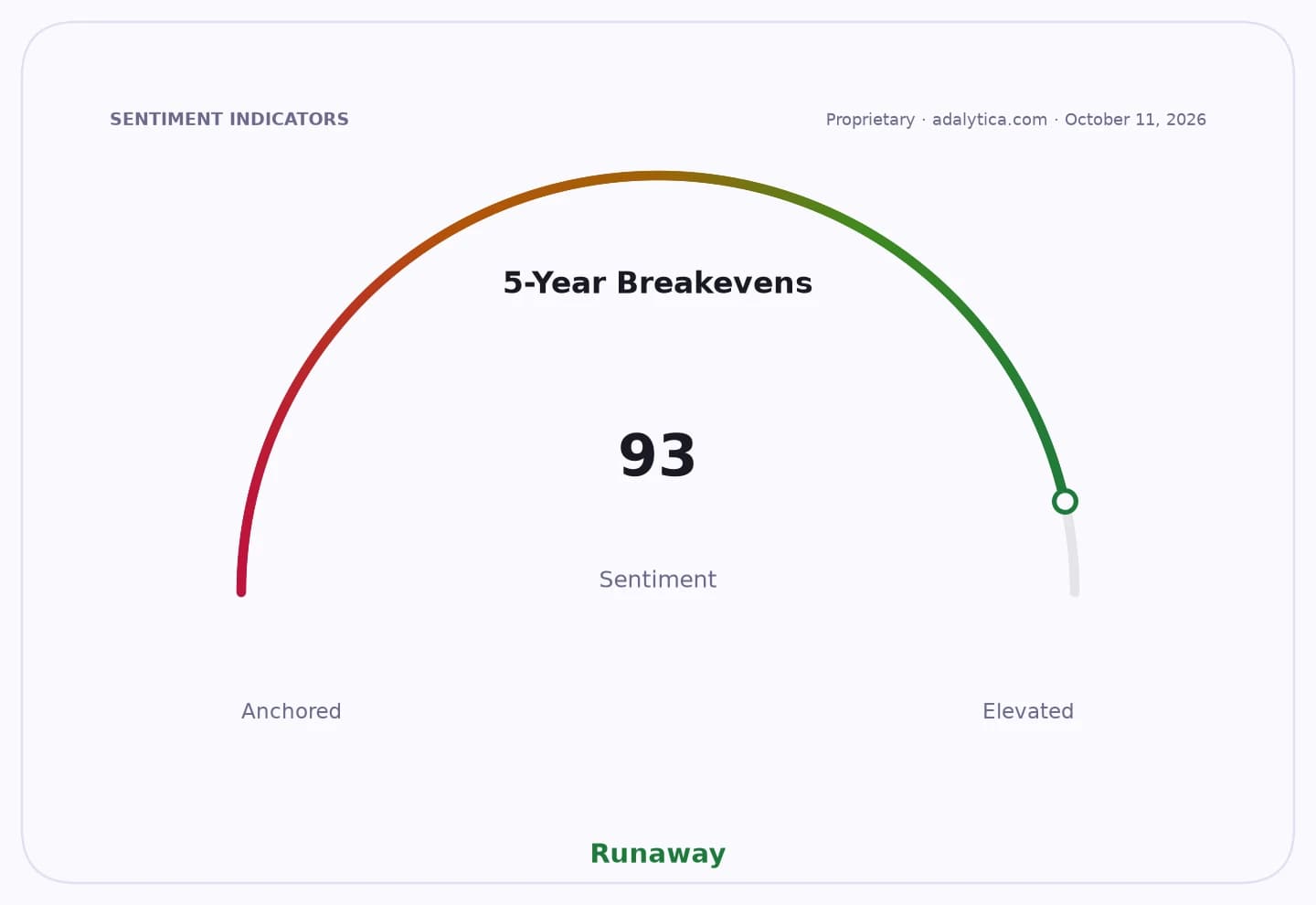
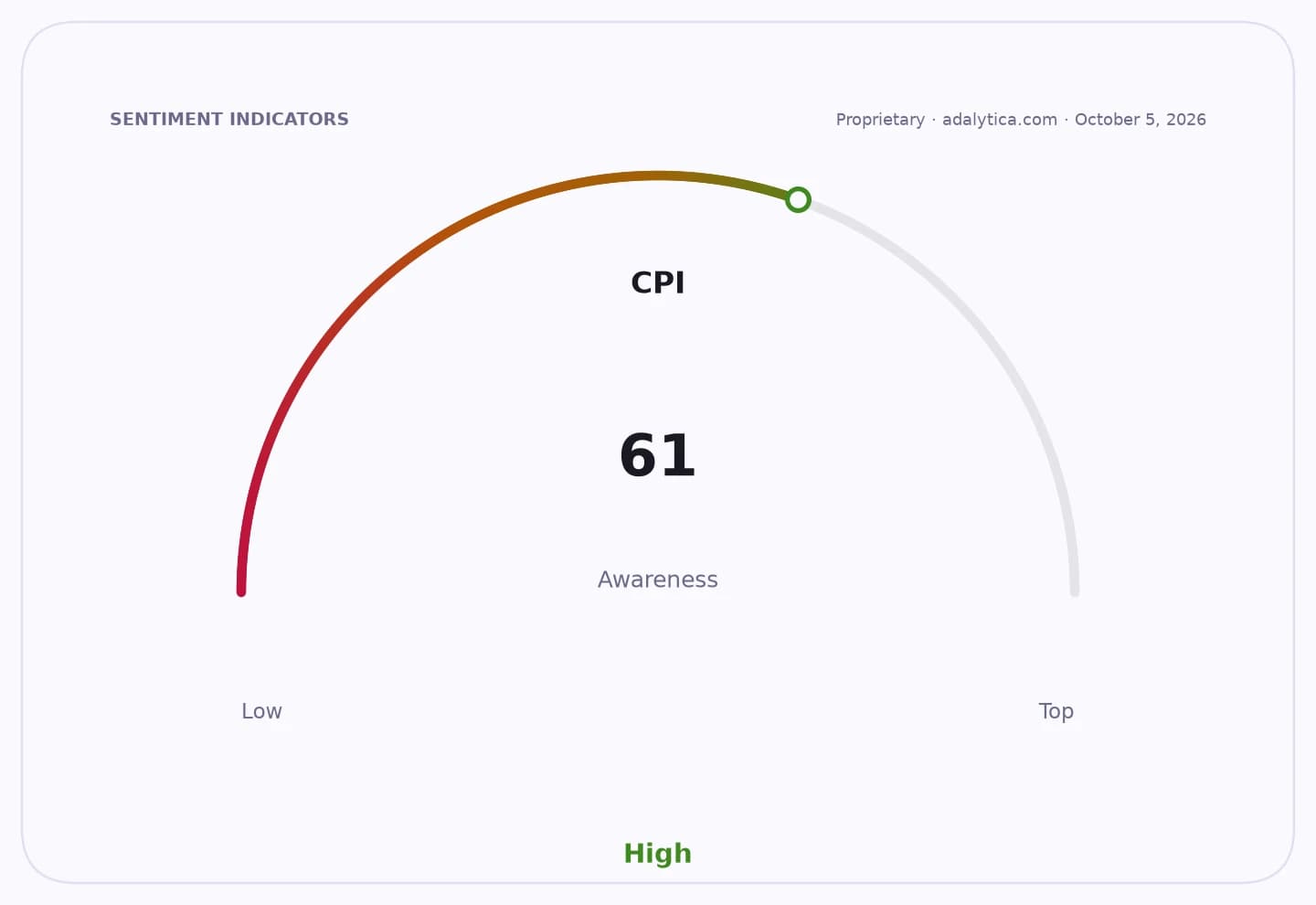
Sentiment IndicatorsⓘProprietary · adalytica.com · October 11, 2026
This is a snapshot — live sentiment, awareness and momentum for 130+ markets update continuously in the dashboard.Open AlphaPulse
Energy was the main driver. Electricity prices climbed 7.98% after the expiration of the Itaipu Bonus credited to August bills, and housing led all groups with a 2.31% increase. Transport rose 0.89%, helped by a 9.66% jump in airline fares and higher fuel prices, while food and beverages increased 0.83% after three straight monthly declines.
The data complicates the outlook for monetary easing in Latin America’s largest economy. The Central Bank of Brazil has been trying to anchor inflation expectations after a period of sticky price growth, and the latest reading adds pressure at a time when the market is already pushing up forecasts. The Focus survey now shows 2026 inflation at 5.01%, its third consecutive weekly revision higher.
For investors, the report reinforces the challenge facing Brazilian assets: even as economic activity and the currency have offered some support, elevated inflation keeps real rates high and limits room for policy relief. That tends to favor fixed income over rate-sensitive equities in the near term, while sectors exposed to household spending could face margin pressure if prices keep rising faster than incomes.
Brazil’s monthly inflation print now sets up the next round of policy and market scrutiny as traders watch whether energy pass-through, transport costs and food prices keep annual inflation pinned above target into year-end.
| Entity | Gains | Losses |
|---|---|---|
| Brazilian central bank | ▲Credibility for tight policy | ▼Scope for rate cuts |
| Brazilian fixed income holders | ▲Higher real yields | ▼Inflation erosion |
| Rate-sensitive equities | ▲Price discipline if policy stays tight | ▼Easier-credit tailwind |
| Brazilian consumers | ▲— | ▼Higher electricity and food bills |