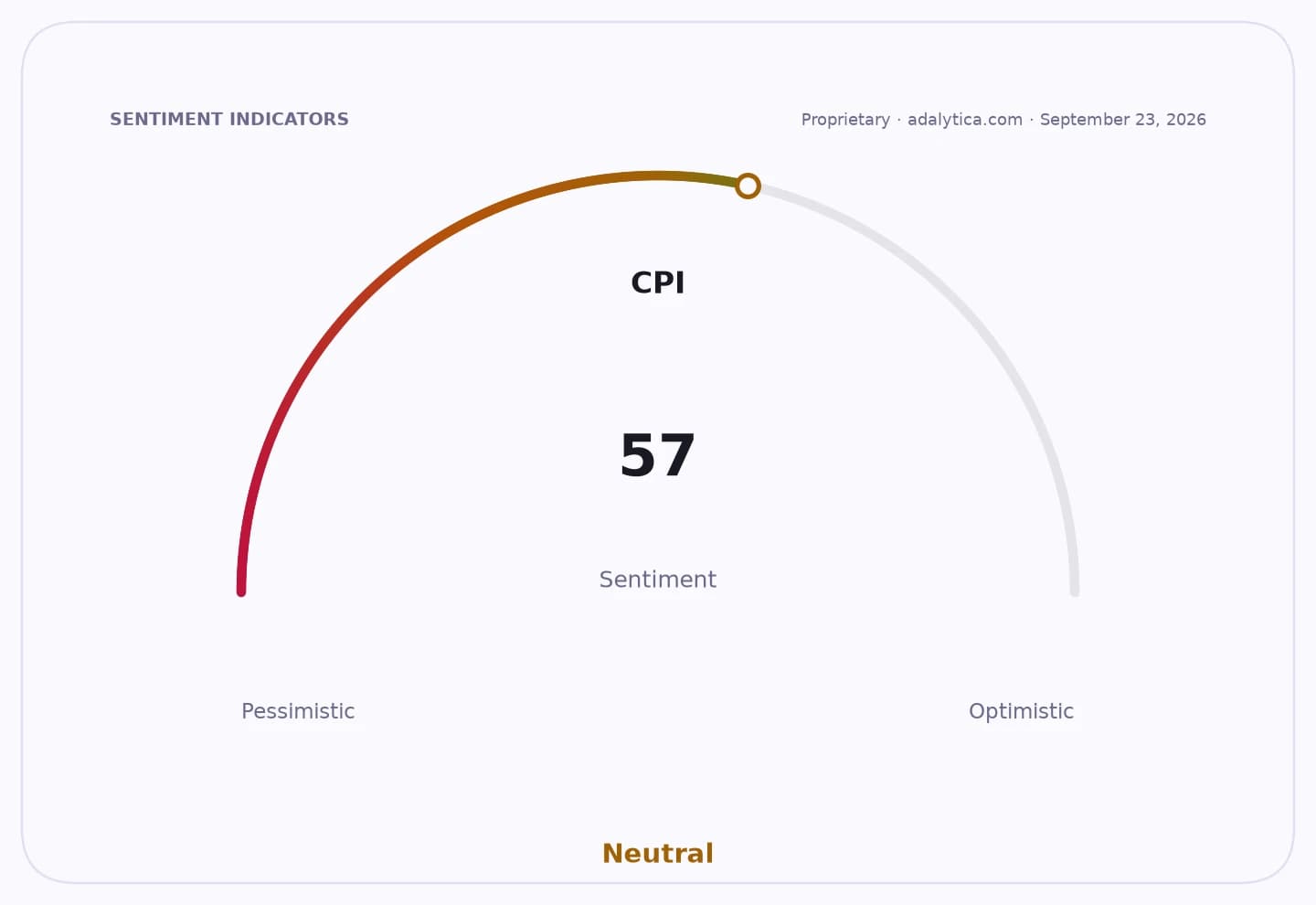
The public’s view of inflation over the next year jumped in September to the highest level in more than three years, underscoring why the Federal Reserve is likely to keep policy tight even as households grow more cautious about credit and their finances.
New York Fed Inflation Expectations Rise in September

The New York Fed’s Survey of Consumer Expectations showed one-year inflation expectations rising to 3.9% from 3.6% in August, the highest since May 2023. Expectations three years ahead edged up to 3.3% from 3.2%, while five-year inflation expectations held at 3%. The report matters because consumer expectations can shape wage demands, pricing behavior and spending, making them an important input for policymakers already worried that inflation remains above the Fed’s 2% target.
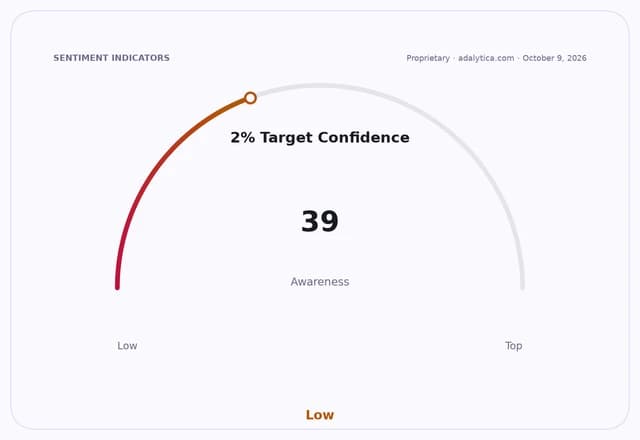
Sentiment IndicatorsⓘProprietary · adalytica.com · October 9, 2026
This is a snapshot — live sentiment, awareness and momentum for 130+ markets update continuously in the dashboard.Open AlphaPulse

The deterioration in the inflation outlook came alongside a broad souring in household sentiment. Respondents marked down their current and future financial situations and said credit access had worsened, even as worries about missing a debt payment eased. That combination suggests households are feeling the squeeze from still-elevated prices but are not yet seeing a broad-based rise in near-term default stress.
For the Fed, the report reinforces the case for caution. Officials last month lifted the policy rate by a quarter point to 3.75%-4% and have signaled they may raise rates again before year-end, with markets watching the December meeting. The survey adds weight to the argument that inflation is not yet fully under control and that easing too soon could entrench higher price expectations.
The details were mixed. Households expected higher prices across the categories the Fed tracks, including gas, food, rent, medical care and college costs. Yet their labor market views improved somewhat, with lower expectations for unemployment and involuntary job loss and more confidence in finding work if displaced. They also planned to increase future spending, the strongest reading since May 2023, suggesting consumers remain resilient enough to keep demand from weakening abruptly.
That tension matters for investors because it points to a Fed that is more likely to stay restrictive for longer, which tends to keep pressure on rate-sensitive assets such as Treasuries, growth stocks and housing-related equities. At the same time, the willingness of households to keep spending could support corporate revenues in the near term, limiting the risk of an immediate downturn even as margins remain exposed to higher input costs.
The broader backdrop is an economy still wrestling with affordability concerns tied to tariffs, energy prices and heavy investment demand in the tech sector. With inflation still above target and political pressure building over living costs, the report suggests price expectations remain a central risk for monetary policy and for markets that had hoped for a faster path to lower rates.
| Entity | Gains | Losses |
|---|---|---|
| Federal Reserve | ▲More cover to stay restrictive | ▼Pressure to cut rates early |
| Bond bears / cash holders | ▲Higher-for-longer yields | ▼Duration-sensitive investors |
| Consumers with wage gains | ▲Resilient spending power | ▼Real purchasing power |
| Rate-sensitive sectors | ▲Stable demand if spending holds | ▼Valuation support from lower rates |