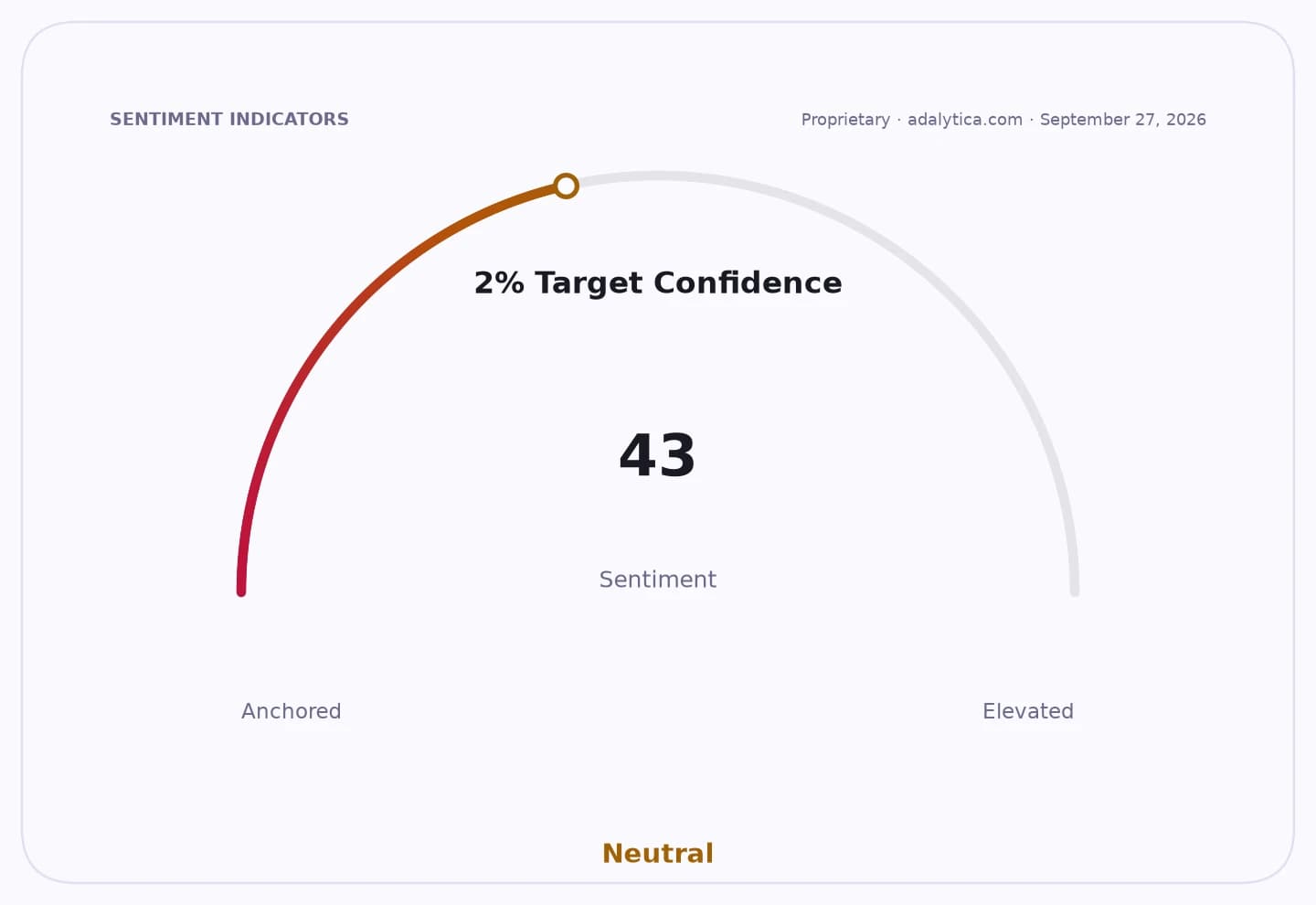
Consumers in Nigeria turned sharply more cautious in September as intensifying price pressures and weak buying power kept households focused on essentials and away from big-ticket spending.
Nigeria household sentiment falls in September survey
The Central Bank of Nigeria said its Household Expectation Survey showed the Consumer Sentiments Index fell to -18.7 points in September from -9.9 in August, a steep deterioration that underscores how inflation is feeding directly into household behaviour. The average price sentiment index rose to 33.5 points from 23.0, while 61.1% of respondents said faster price increases would weaken the economy.
Sentiment IndicatorsⓘProprietary · adalytica.com · October 6, 2026
This is a snapshot — live sentiment, awareness and momentum for 130+ markets update continuously in the dashboard.Open AlphaPulse
That matters because household sentiment is a forward-looking gauge of consumption, and consumption is one of the main supports for growth in Africa’s most populous economy. When confidence falls this hard, families typically delay purchases, trim non-essential outlays and preserve cash for food, transport and utilities. The CBN said food remained the top spending priority, followed by household goods, education, transportation and utilities — a clear sign that inflation is still dictating the allocation of spending rather than discretionary demand.
The survey points to a broader squeeze on domestic demand. The Buying Conditions Index and Buying Intention Index were both deeply depressed, at 24.4 and 16.6 respectively, far below the neutral 50-point threshold. Households, the central bank said, remained reluctant to buy houses, vehicles, investments and consumer durables. For retailers, lenders and consumer-facing companies, that combination usually means softer volumes, tighter margins and slower credit growth.
The inflation backdrop helps explain the mood. The data context shows consumer prices were still elevated in August and household expectations about future inflation remained entrenched, even if the monthly pace of headline inflation was forecast to ease slightly. When inflation expectations become sticky, the risk is that firms keep pricing aggressively, workers push for higher wages and consumers stay defensive — a cycle that makes it harder for policy makers to restore confidence quickly.
There is also a policy tension in the survey. A majority of respondents, 62.2%, wanted lower lending rates to ease borrowing costs, but 45.1% still favoured higher rates, reflecting a public split between relief for strained borrowers and a desire to contain inflation. For investors, that matters because it leaves the CBN with limited room: easing too soon could worsen price expectations, while holding rates high risks prolonging the drag on consumption and private-sector credit.
The near-term outlook is still fragile, even if households see some improvement ahead. The CBN said respondents expect sentiment to recover to -8.7 next month, -0.4 in three months and 7.1 in six months. That suggests consumers are not yet abandoning hope for stabilization, but they are not behaving as though it has arrived. Until inflation cools decisively and borrowing costs become more manageable, Nigerian households are likely to remain defensive — a headwind for growth, corporate earnings and bank loan demand.
| Entity | Gains | Losses |
|---|---|---|
| Savers with cash buffers | ▲Preserve purchasing power | ▼Limited returns if inflation stays high |
| Essential-goods retailers | ▲Steady demand for basics | ▼Weak discretionary sales |
| Banks/lenders | ▲Higher rates support margins | ▼Softer loan demand and credit risk |
| Consumers/borrowers | ▲Potential relief from lower rates | ▼Eroded real incomes and spending power |