Chile’s inflation accelerated sharply in August, with consumer prices rising 0.6%, almost twice the market expectation and one of the biggest monthly increases of 2026, underscoring how quickly price pressures are reasserting themselves after a brief midyear lull.
Chile August Inflation Rises 0.6% Above Forecast
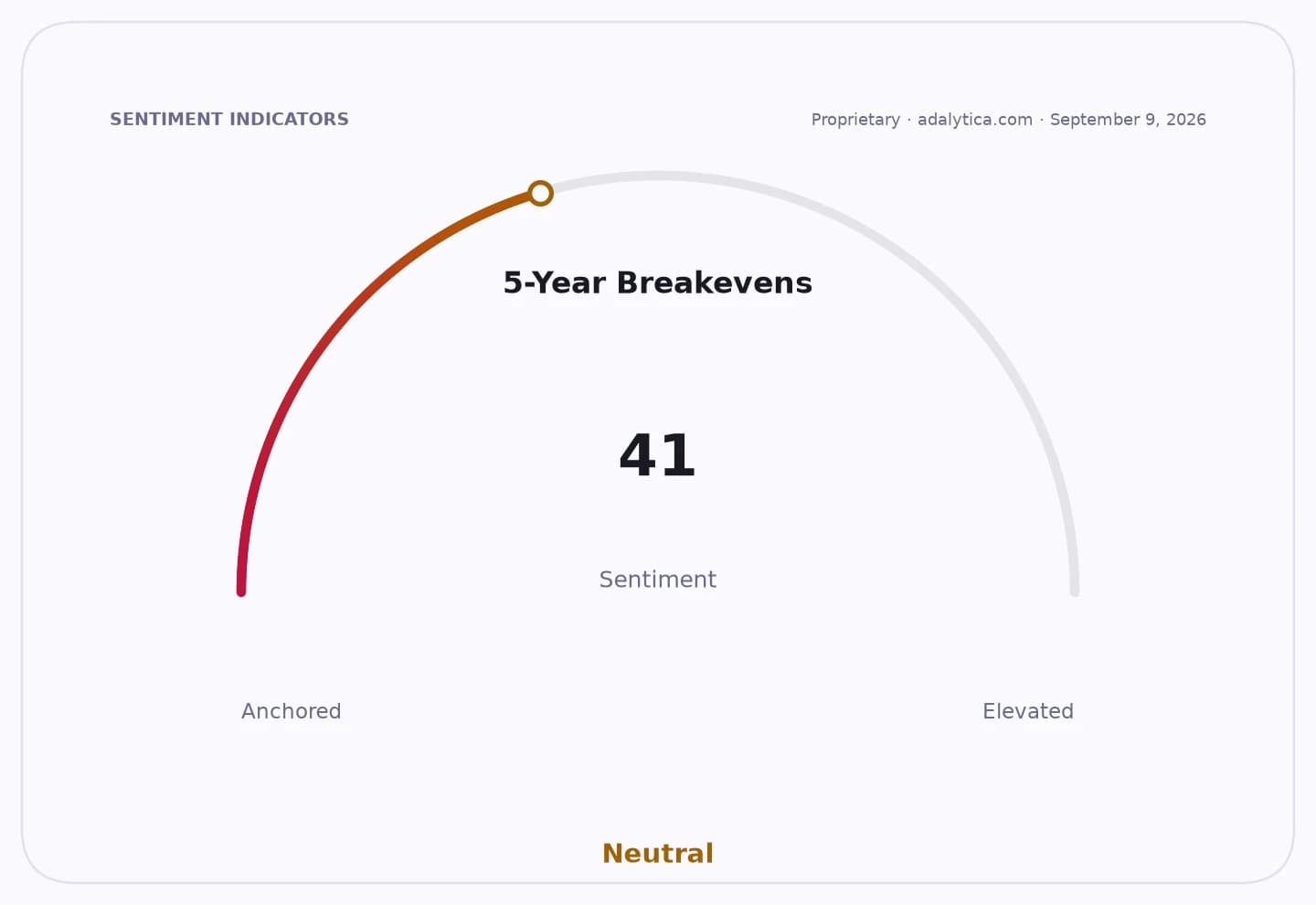
The reading matters because it weakens the case for near-term monetary easing and keeps pressure on households, businesses and policymakers alike. Annual inflation now stands at 4.1%, above the central bank’s 3% target, while prices are up 3.6% so far this year. For an economy still sensitive to borrowing costs and domestic demand, that combination leaves little room for complacency.
Sentiment IndicatorsⓘProprietary · adalytica.com · September 9, 2026
This is a snapshot — live sentiment, awareness and momentum for 130+ markets update continuously in the dashboard.Open AlphaPulse
The data also showed the breadth of the shock was not limited to a single category. Nine of the 13 divisions in the consumer basket rose, with food and non-alcoholic beverages up 1.4% and transport climbing 1.6%. The biggest drivers included a 32.6% jump in international air travel and a 17.8% rise in potatoes. Those increases point to a mix of seasonal, supply-side and demand-related pressures rather than a narrow one-off distortion.
For markets, the main implication is that Chilean rates may need to stay restrictive for longer. A higher-than-expected print typically lifts expectations for a more cautious central bank, supporting the peso at the margin but weighing on rate-sensitive assets and domestic cyclicals. The message is especially relevant for consumers, who are already facing higher costs in food and transport, and for lenders, retailers and utilities that depend on the pace of household spending.
The inflation surprise also arrives at a moment when global price dynamics remain sensitive to energy and transportation costs, reinforcing the broader story that disinflation is proving uneven. In Chile, the fact that gasoline fell 0.9% in the month was not enough to offset the surge in travel and staple foods, leaving the overall index materially hotter than economists anticipated.
Investors will now focus on whether this is the start of a broader reacceleration or simply a volatile monthly spike. If upcoming data show the pressure spreading into more persistent categories, the central bank may be forced to keep policy tight well into next year. If not, August may be remembered as a warning shot rather than a trend change — but one that briefly shifts the balance back toward inflation hawks.
| Entity | Gains | Losses |
|---|---|---|
| Chilean peso | ▲firmer rate expectations | ▼domestic growth-sensitive sectors |
| Central bank hawks | ▲stronger case for caution | ▼doves seeking faster cuts |
| Banks | ▲wider-for-longer margins | ▼borrowers facing higher costs |
| Consumers | ▲none | ▼food and transport budgets |