Chile’s listed companies took a $334.9 billion hit from higher inflation and a weaker peso in the first half, a macro cost that erased part of the recovery in corporate earnings and underscored how quickly domestic price pressures and currency moves are feeding into results.
Chile listed firms hit by inflation and weaker peso
The impact matters because it is not just an accounting line. For the IPSA, the combined drag from inflation and exchange-rate effects equaled 8.8% of profits, hitting cash flow, valuation multiples and near-term guidance at a time when the Central Bank of Chile has kept rates unchanged and growth forecasts have been cut.
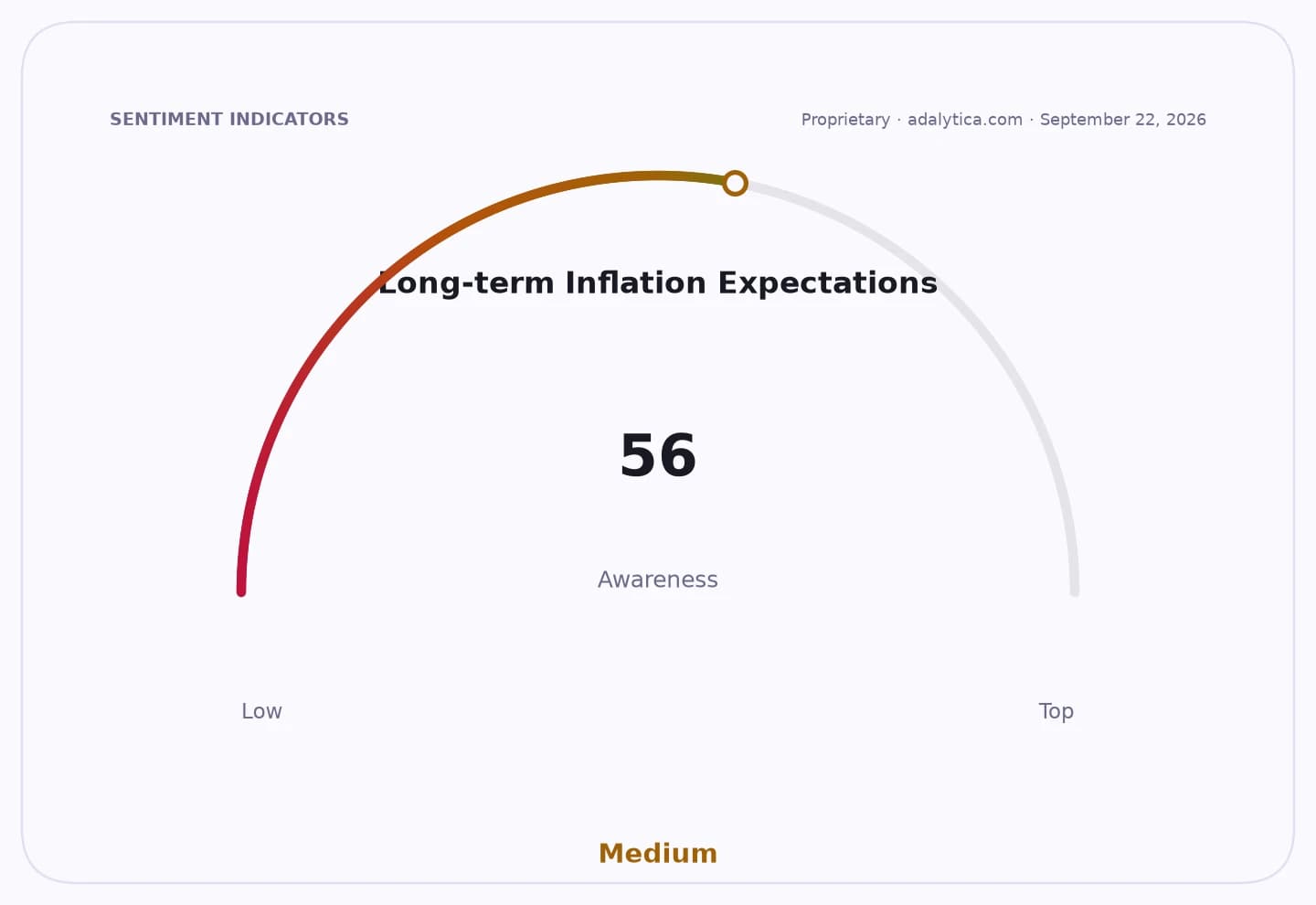
Sentiment IndicatorsⓘProprietary · adalytica.com · September 19, 2026
This is a snapshot — live sentiment, awareness and momentum for 130+ markets update continuously in the dashboard.Open AlphaPulse
The shock comes after a sharp turn in the macro backdrop. Inflation accelerated from 2.4% in February to 4.3% in June, while the peso weakened to almost a one-year low this week after trading above 960 per dollar. That renewed strain has reversed the improvement Chilean corporates had seen as pandemic distortions faded.
Retail was the most exposed sector overall, with $87.7 billion of combined inflation and currency costs, followed by transport at $78.1 billion. Sanitary services, telecoms and holding companies also showed meaningful pressure, but the biggest dollar exposure was in transport, where Latam Airlines accounted for almost the entire $78.9 billion FX hit after booking a $77.7 billion foreign-exchange loss.
Inflation hurt retail especially hard because many companies carry real-estate assets financed in UF-linked instruments, which reprice with inflation. That same mechanism can lift revenue through rent indexation, but it also raises costs and debt service, leaving margins under pressure when consumer demand is weak.
Measured against EBITDA, the pain was concentrated in smaller names rather than the index heavyweights. ILC absorbed 21.7% of its first-half EBITDA, followed by Parque Arauco at 19.4% and Aguas Andinas at 17.7%, showing that the macro hit is biting hardest where indexation and dollar-linked costs are most embedded in the business model.
The numbers also break a multi-year easing trend. The macro bill for industrial issuers had fallen steadily from $1.1 trillion in 2022 to $647.3 billion in 2023, $513.5 billion in 2024 and $296.3 billion in 2025, before climbing back to $416.0 billion on a trailing 12-month basis through June 2026.
For investors, the message is that the earnings recovery in Chile remains hostage to inflation and the exchange rate. Companies with UF-linked liabilities, imported input costs or dollar-denominated debt remain vulnerable, while those able to reprice contracts, such as malls and some insurers, may partially offset the hit.
The next catalyst is whether inflation cools enough to ease UF pressure and stabilize the peso. Santibañez of Vantrust Capital said the worst of the financial-cost spike could be passing, while the Central Bank expects inflation to return to 3% only by mid-2027.
| Entity | Gains | Losses |
|---|---|---|
| Exporters and UF-linked landlords | ▲Higher peso-indexed revenues | ▼Higher local financing costs |
| Retail and transport firms | ▲Some inflation pass-through on rents | ▼Bigger UF and FX losses |
| Latam Airlines and import-heavy issuers | ▲None from the move | ▼Largest FX translation hit |
| Chilean equity investors | ▲Potential relief if inflation normalizes | ▼Lower margins and weaker earnings |