Wall Street’s tone has improved as investors rotate back into risk assets, the dollar remains relatively steady and Argentina’s government moves to refinance more than 5 trillion pesos of dollar-linked debt that could otherwise pressure the exchange rate.
Argentina seeks to swap 5 trillion pesos in debt
That mix matters because it links three of the market’s main fault lines: global risk appetite, currency stability and sovereign funding. A calmer dollar tends to ease stress across emerging markets, while Argentina’s debt operation is aimed at preventing a maturity wall from turning into a fresh bout of FX volatility. For investors, the key question is whether the rebound in equities and the cooling in the greenback can last long enough to absorb a new round of local refinancing risk.
Sentiment IndicatorsⓘProprietary · adalytica.com · September 25, 2026
This is a snapshot — live sentiment, awareness and momentum for 130+ markets update continuously in the dashboard.Open AlphaPulse
In Buenos Aires, the Economy Ministry will this week seek to swap more than 5 trillion pesos of dollar-linked bills due at the end of the month, an operation designed to push out maturities and reduce immediate pressure on reserves and the peso. The previous exchange of similar paper drew only 34% acceptance, a reminder that investors have been selective about extending exposure when policy credibility and currency expectations remain fragile.
The dollar was quoted at 1,514.5 pesos wholesale, 1,535 pesos at Banco Nación and 1,550 in the parallel market, levels that show the local currency remains under strain even as broader market nerves have eased. The government’s incentive is straightforward: if it can avoid a concentrated rollover problem, it reduces the risk of a sharper FX move that would feed inflation and complicate monetary management. For bondholders, the trade-off is equally clear: rolling exposure may preserve value if policy holds, but failing to participate can leave investors exposed to more abrupt currency adjustments.
The backdrop in global markets is more constructive. The S&P 500 ETF, SPY, closed at 767.18, above its 50-day moving average of 759.46 and well above its 200-day average of 714.36, while RSI readings of 46.6 suggest the rally has recovered from recent oversold conditions without yet looking stretched. Small-cap proxy IWM also stabilized, though it remains below its 50-day average, a sign that risk appetite is improving unevenly rather than in a clean break higher.
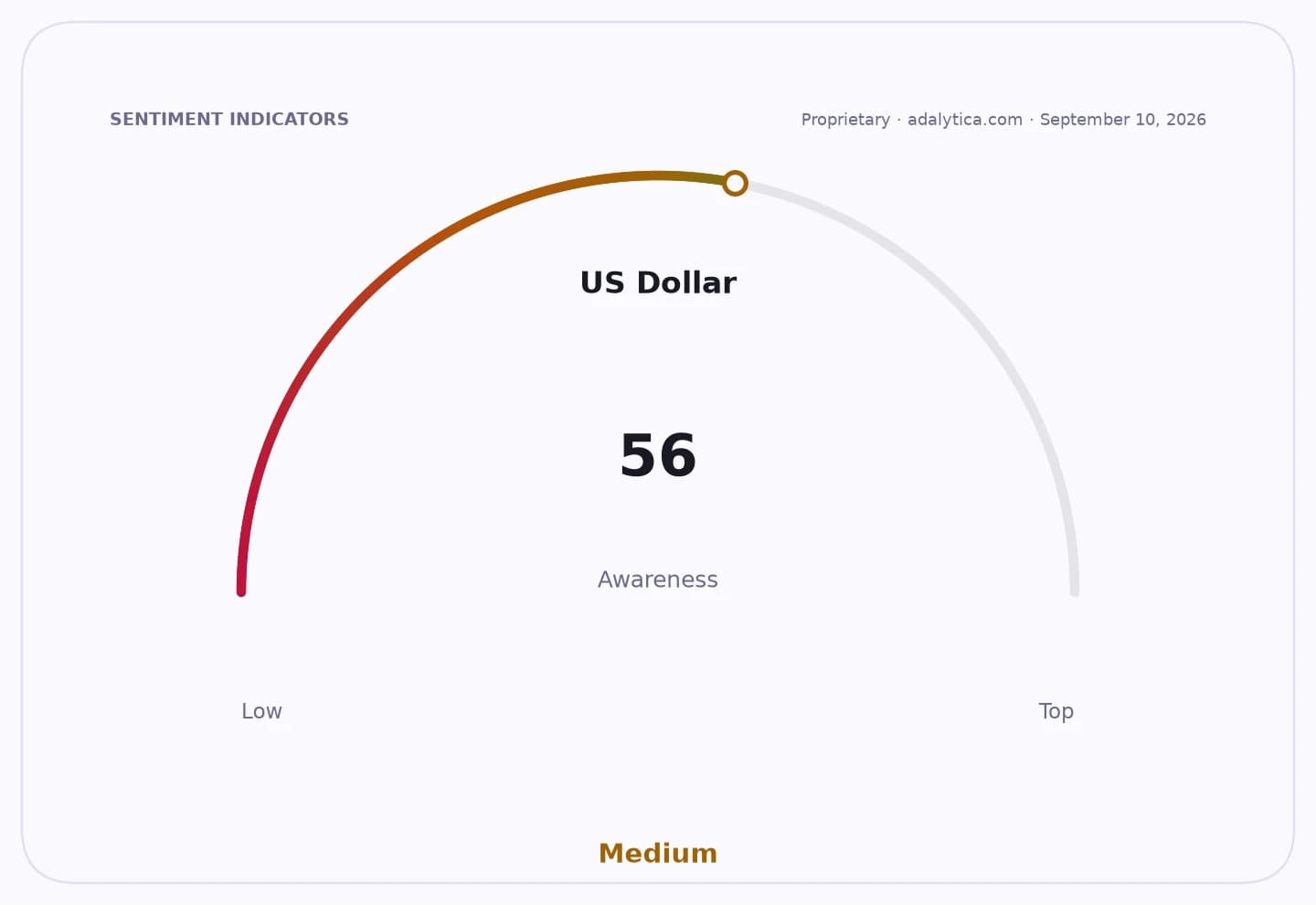
That split matters for positioning. Stronger large-cap equity performance typically reflects investors becoming more comfortable with growth and liquidity, but the lag in small caps suggests caution is still present beneath the surface. In currency markets, Adalytica’s US dollar trade signals show sentiment still in “Extreme Greed,” but awareness has fallen to “Extreme Fear,” implying the dollar remains supported even as near-term momentum cools. That combination fits a market that is no longer in panic mode but still highly sensitive to policy headlines and funding flows.
For Argentina, the swap is also a political and macroeconomic test. A successful rollover would buy time, reduce near-term refinancing needs and help authorities argue that domestic debt management is improving. A weak take-up would do the opposite: it would signal that investors still demand a premium for duration and currency risk, forcing the state to rely more heavily on short-term liquidity management.
The broader narrative is one of tentative stabilization rather than resolution. Global markets are showing a better tone, the dollar has stopped accelerating, and equities are recovering from recent turbulence. But in Argentina, country risk remains front and center, and the success or failure of this week’s debt exchange will help determine whether the current calm translates into a more durable easing of financial pressure or merely another pause before the next bout of volatility.
| Entity | Gains | Losses |
|---|---|---|
| Argentina government | ▲Buys time on maturities | ▼Faces rollover risk if take-up is weak |
| Peso-linked debt holders | ▲Preserve exposure if swap is attractive | ▼Risk currency stress if they stay in |
| Global equities | ▲Benefit from calmer risk tone | ▼Lose if dollar or sovereign stress returns |
| Dollar bulls | ▲Keep broader support | ▼Lose if calm extends and FX pressure fades |