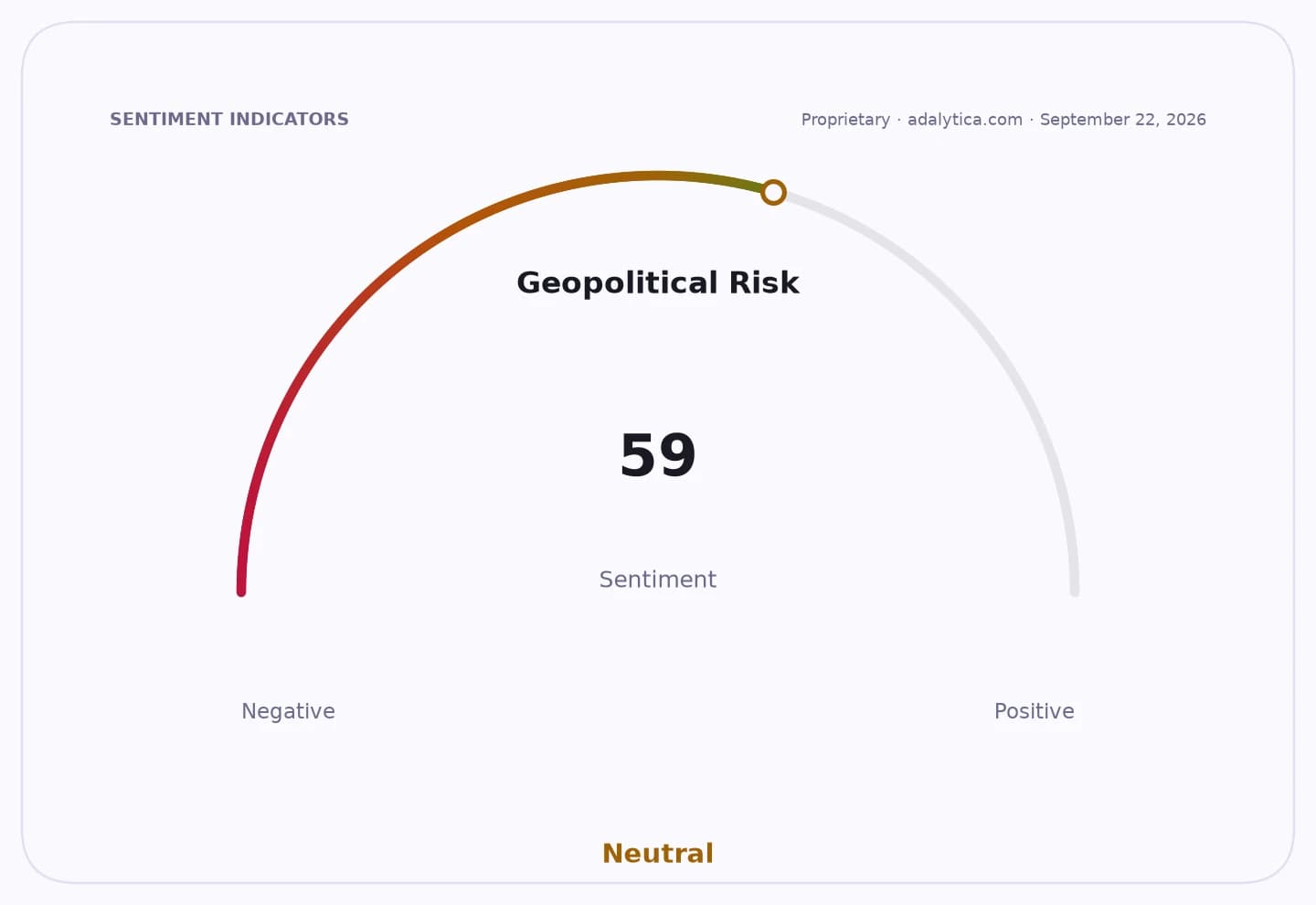
Argentina’s stock market slipped Thursday, but the bigger story is that local equities are still trading close to their recent highs, leaving investors to weigh whether the latest pause is just noise or the start of a broader cooling phase.
Argentina Stocks Slip as ARGT Holds Above Averages
The Buenos Aires Stock Exchange closed down 0.79% on Aug. 27, a modest setback that comes after a strong run in Argentine shares. In dollar terms, the Argentina ETF ARGT finished the session at $94.15, a small decline from $94.46 the day before, but still above both its 50-day moving average and 200-day moving average. That matters because it suggests the long-term trend remains constructive even as momentum eases.
For investors, the key question is not whether Argentine stocks can move lower on any given day — they can, and often do — but whether the market’s underlying thesis is still intact. Right now, the technical picture says it mostly is. ARGT is still trading well above its 200-day average of $91.96, and its RSI of 54.5 points to a market that is neither overbought nor broken. The ETF also remains below its recent upper Bollinger Band, which is consistent with a market digesting gains rather than collapsing.
That pattern is important economically because Argentine equities are often a fast-moving proxy for confidence in the country’s policy direction, growth outlook and access to capital. When the market can hold near highs after a rally, it usually means investors are still willing to look past near-term volatility and price in a better medium-term environment. When it cannot, capital tends to get more selective very quickly.
There is also a broader lesson here for long-term investors: markets rarely move in straight lines, especially in countries with Argentina’s macro history. The best returns often come from tolerating these pullbacks while focusing on whether earnings, inflation, the currency backdrop and policy credibility are improving over time. A one-day drop of less than 1% does not change that larger picture.
Still, investors should not get complacent. Argentine equities are vulnerable to swings in risk appetite, and any setback in policy momentum or macro stability could quickly push the market back toward support levels. But for now, Thursday’s decline looks more like a rest than a reversal.
For patient investors, that is exactly the kind of setup worth watching. If Argentina can keep its market above key longer-term averages, the recent dip may end up looking like an entry point rather than a warning sign.
| Entity | Gains | Losses |
|---|---|---|
| Long-term Argentina bulls | ▲Better entry points | ▼Short-term paper gains |
| Short-term traders | ▲Volatility to trade | ▼Clear trend momentum |
| Argentine exporters | ▲Stronger equity valuation | ▼Day-to-day sentiment swings |
| Risk-averse investors | ▲Proof of resilience if support holds | ▼Confidence in a straight-line rally |