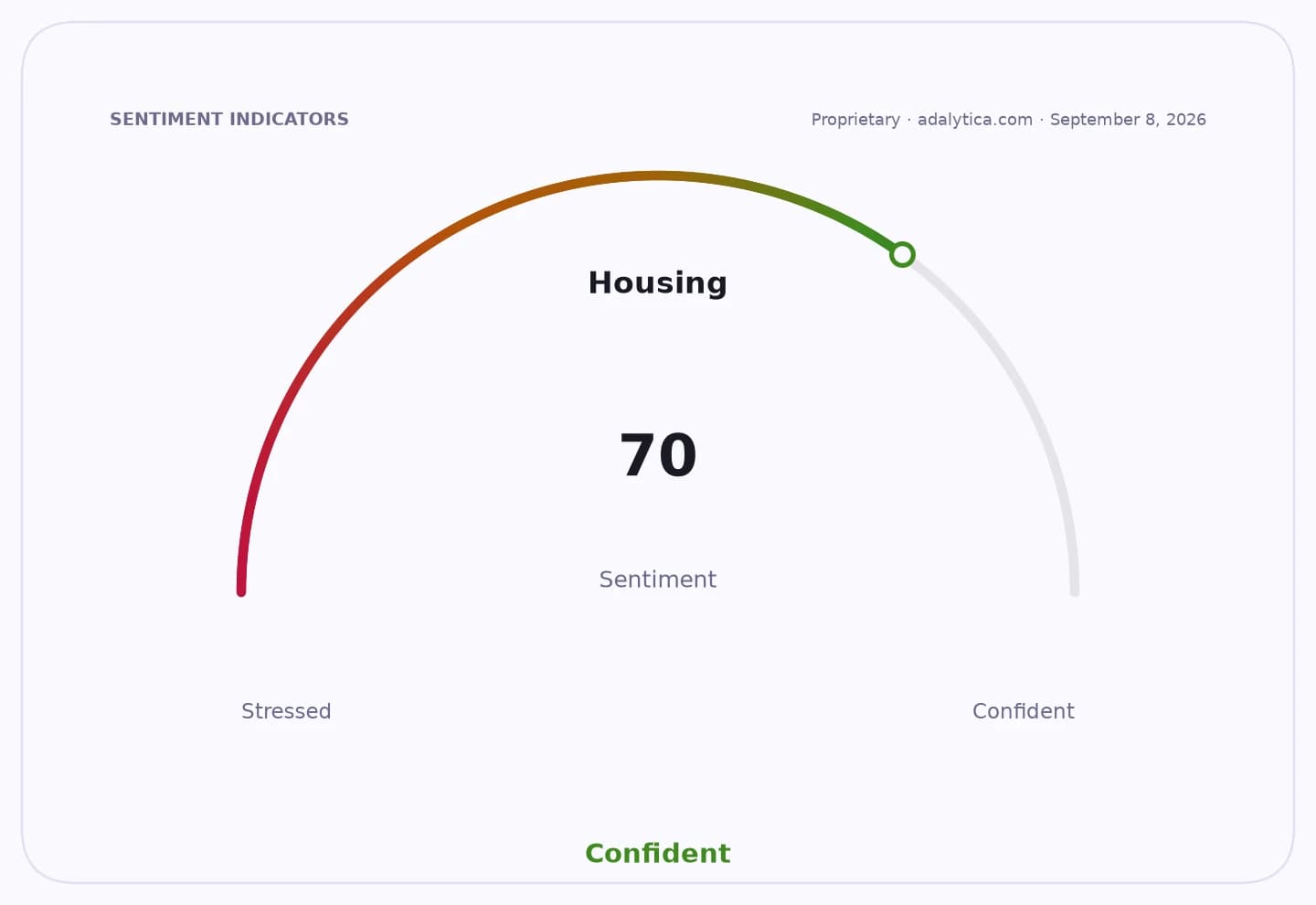
Argentina’s financial markets are moving toward a fragile new equilibrium: the peso is steady around 1,510 per dollar, short-term rates are easing, and country risk is falling, but not enough to reopen the sovereign market or calm investors for long.
Argentina peso, rates and bank lending outlook
That balance matters because it is the core of Javier Milei’s stabilization playbook. The government wants to anchor inflation with a firm exchange rate, yet that policy only works if demand for dollars stays contained and liquidity does not force rates too low. If either side breaks, the trade-off flips quickly into renewed pressure on prices, reserves and financing.
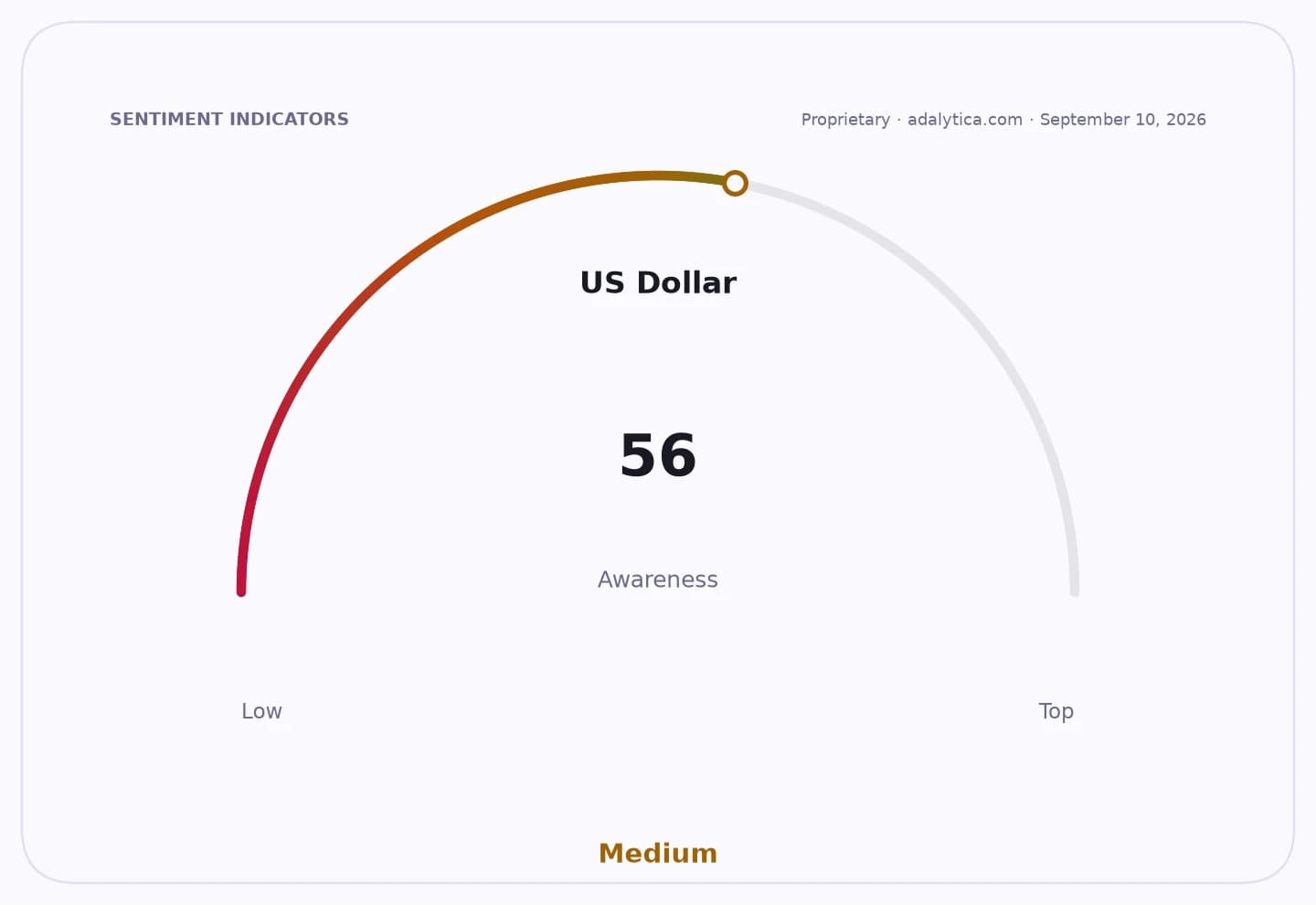
Sentiment IndicatorsⓘProprietary · adalytica.com · September 10, 2026
This is a snapshot — live sentiment, awareness and momentum for 130+ markets update continuously in the dashboard.Open AlphaPulse
The biggest warning sign is in Argentina’s external funding cost. The country risk index closed at 490 basis points, above the 450-point level often seen as the threshold for meaningful market access. At that spread, Cohen Aliados says borrowing would still cost about 9.7% a year in dollars, effectively shutting Argentina out of the international bond market. In practical terms, that leaves the Treasury and central bank dependent on domestic financing and makes every hard-currency payment a drag on reserves.
The market is also telling investors that politics will dominate pricing well before the 2027 presidential election. Fundación Capital said the implied country risk on dollar bonds remains below 100 basis points through October 2027, but rises to about 1,000 basis points in the 12 months after the election, underscoring how sharply investors are discounting post-election policy uncertainty. That is a powerful signal: the market is willing to finance Argentina only within the current framework, not to price a durable regime shift.
Rates are easing, but not because confidence has improved. The overnight caución rate finished at 19% annualized, down from 21% at the end of August and roughly 28% a month earlier, while the fixed-rate curve compressed to 26.6% effective annual rate through November. With expected inflation at 1.6% to 1.8% a month, those levels are barely positive in real terms, and Cohen argues they reflect liquidity rather than a conviction that disinflation is secure. That leaves the carry trade exposed if consumer prices surprise or if the peso starts to weaken again.
For investors, that is exactly where the opportunity and the danger sit. A stable dollar and falling short rates can support local banks, peso assets and selective sovereign debt, but only if the central bank can keep absorbing liquidity without reigniting currency demand. Romano Group said the BCRA has been taking pesos through daily repo operations at about 20%, with roughly 1.4 trillion pesos absorbed in the first week of September — enough to loosen conditions, but not enough to make the market comfortable. The result is a thin, tactical rally rather than a durable re-rating.
Banco BBVA Argentina’s latest filing shows where the cycle is starting to matter on the ground. Mortgage lending grew 76.4% year on year in the second quarter, a sign that lower inflation and more predictable FX can revive long-dormant credit demand. That is the kind of second-order beneficiary investors should watch: if Milei’s stabilization holds, banks with mortgage and consumer lending exposure could see a powerful earnings inflection. BBVA Argentina and peers such as Banco Macro are the obvious leverage plays to a firmer macro backdrop.
But the same setup makes the system vulnerable if dollar demand accelerates. Romano said the government is still leaning on dollar-linked and futures supply to keep the exchange rate stable, while Cohen warned the calm depends on the absence of fresh demand rather than on abundant supply. Once the market stops believing the peg is effortless, the peso can move quickly, rates can reprice, and the entire carry structure can unravel.
My view is that Argentina is still in the early stage of a high-risk, high-reward stabilization trade. The market underestimates how much upside remains in banks, mortgage origination and selective peso assets if inflation keeps slowing and the dollar stays contained. But it also underestimates how quickly that trade can reverse if the government loses control of liquidity or if the political discount for 2027 starts to pull forward.
For now, the winning strategy is to stay constructive on the banks and on assets tied to domestic credit creation, while treating sovereign dollar access as a later-cycle call, not a near-term expectation. In Argentina, the next inflection will come from whether stability becomes self-reinforcing — or whether the market again forces Milei to choose between the peso, rates and reserves.
| Entity | Gains | Losses |
|---|---|---|
| Argentine banks | ▲Mortgage and loan growth | ▼Funding costs if FX pressure returns |
| Peso assets | ▲Lower rates and stability | ▼Selloff if dollar demand heats up |
| Treasury / MECON | ▲Cheaper local financing | ▼Market access remains closed |
| Dollar holders | ▲Protection in renewed stress | ▼Carry trades and bond longs |