Brazil’s inflation outlook for 2026 ticked higher for the first time in four weeks, reinforcing the view that price growth is still running above the central bank’s comfort zone and keeping interest rates elevated for longer.
Brazil inflation expectations rise for 2026
Economists surveyed in the Focus bulletin now see the IPCA rising 4.92% next year, up from 4.90% a week earlier and 0.42 percentage point above the Banco Central’s 4.50% ceiling. The move snaps a three-week decline and comes even as the bank has kept policy tight to steer inflation back toward its 3% target under the new continuous framework.
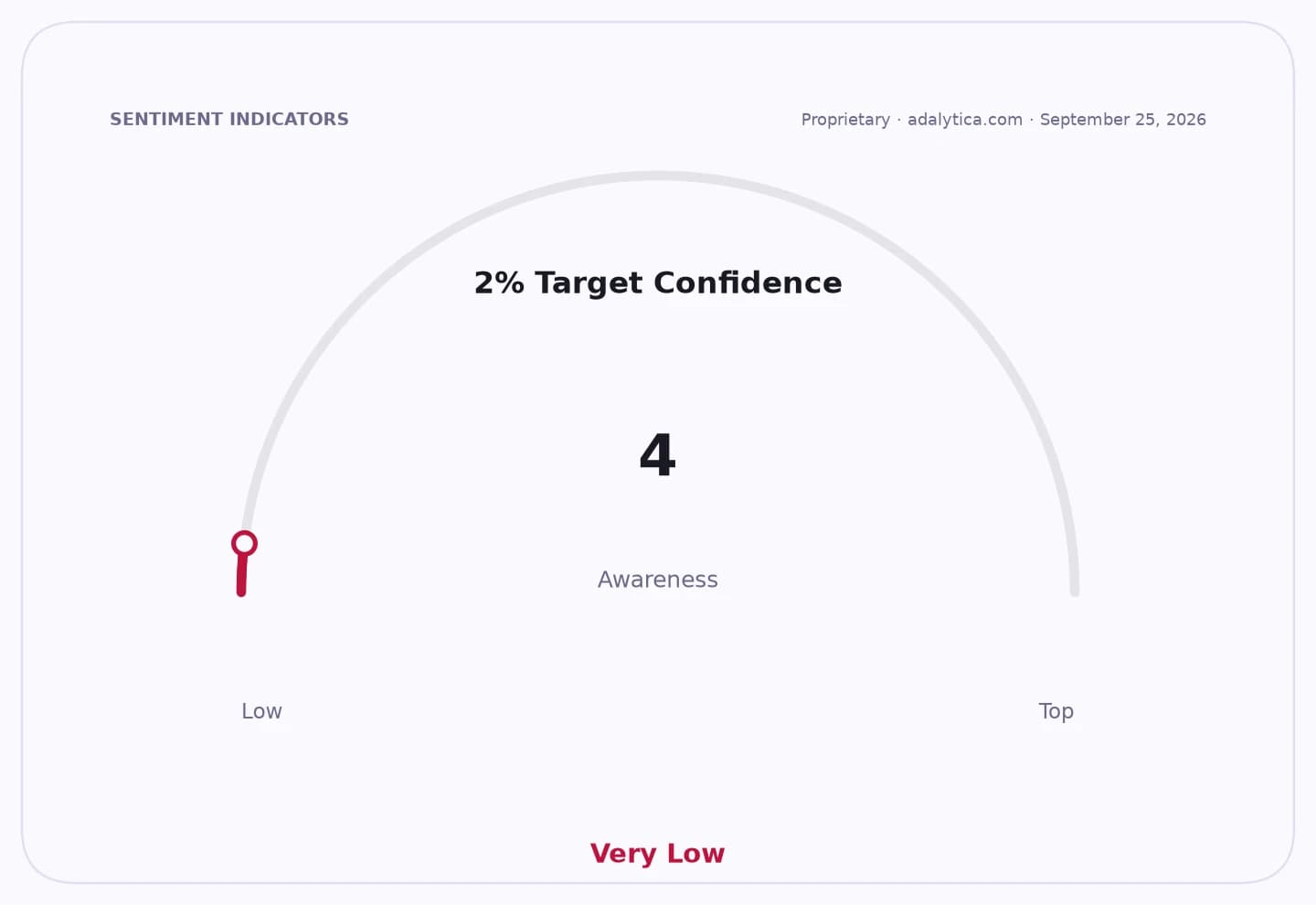
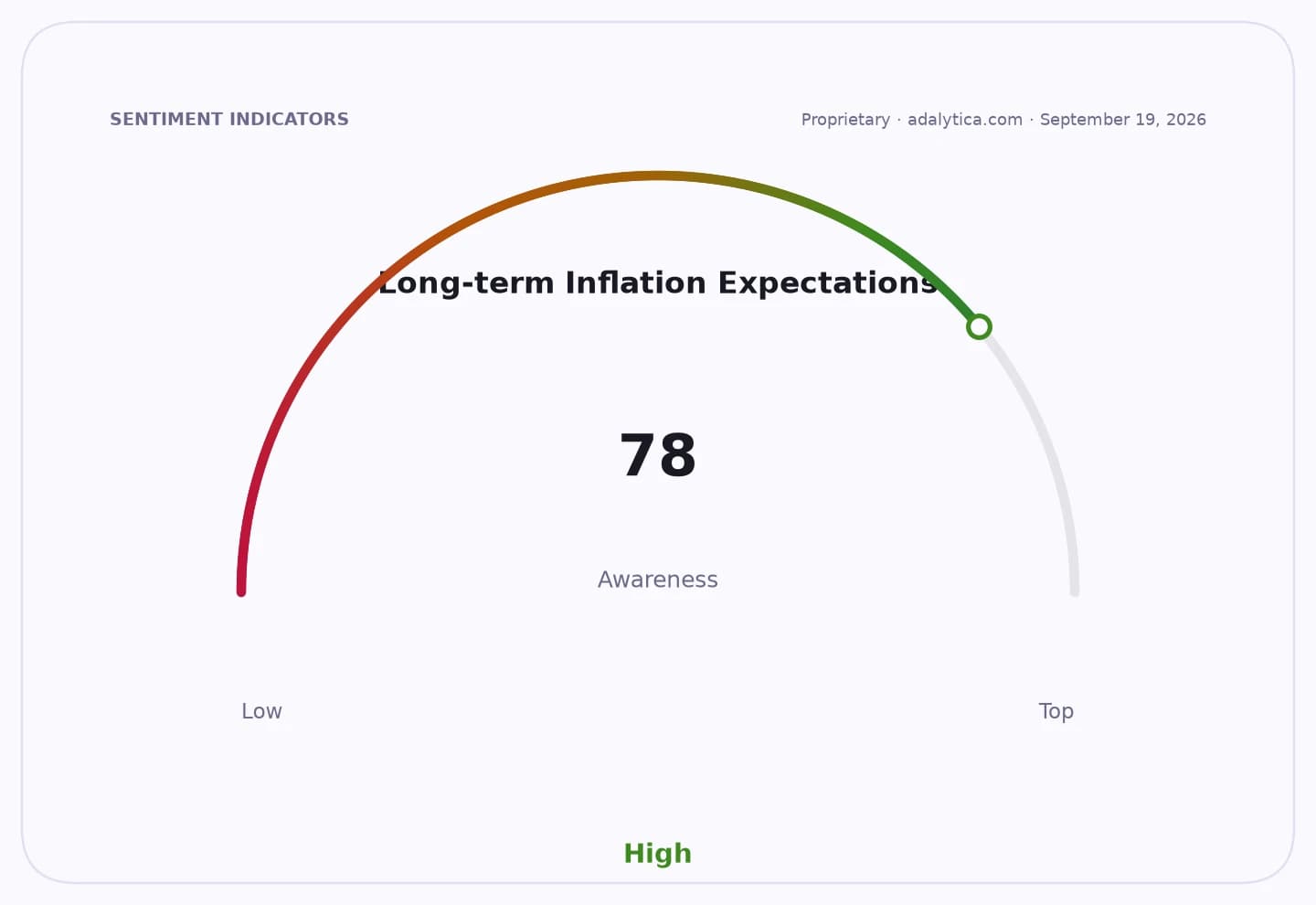
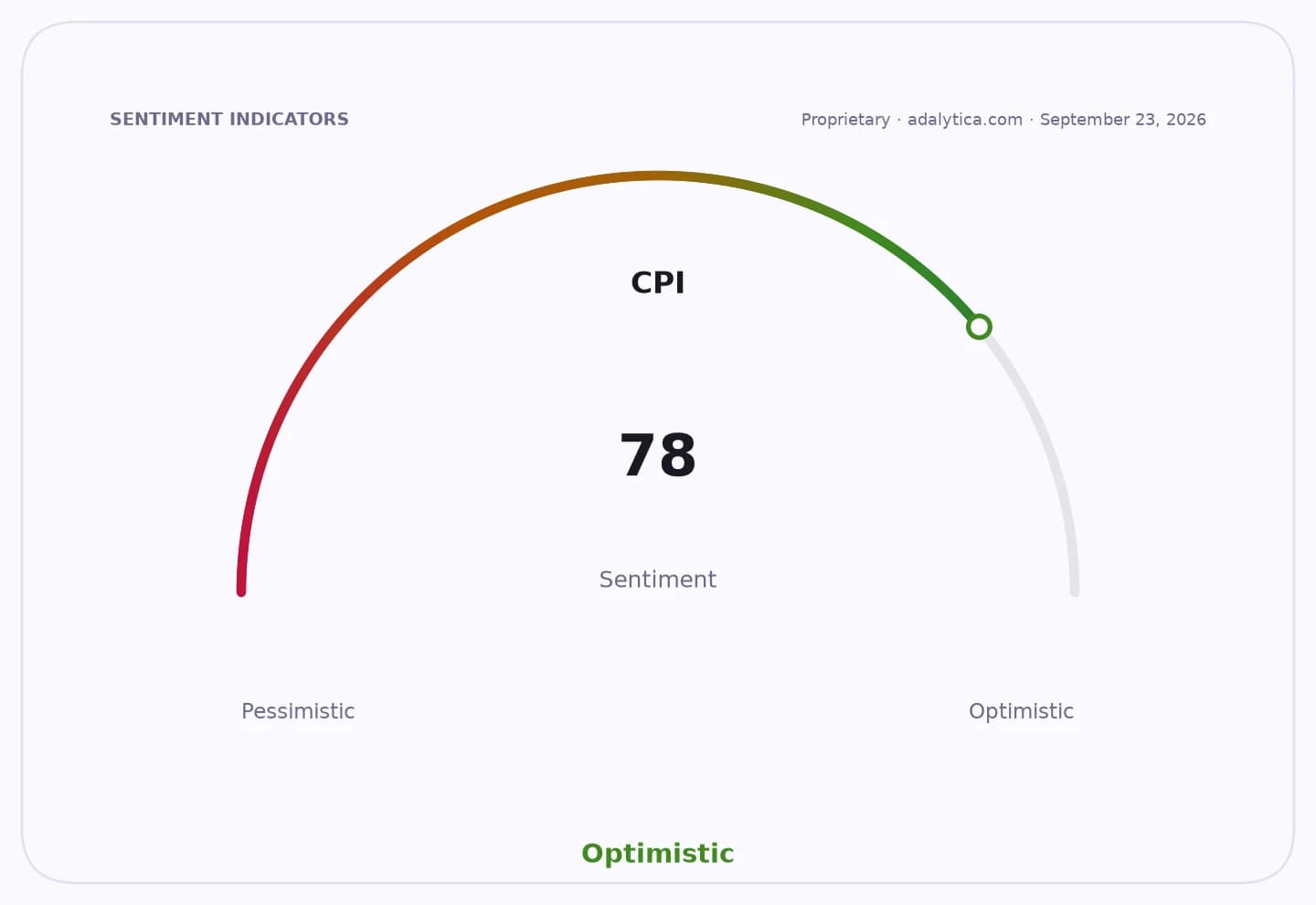
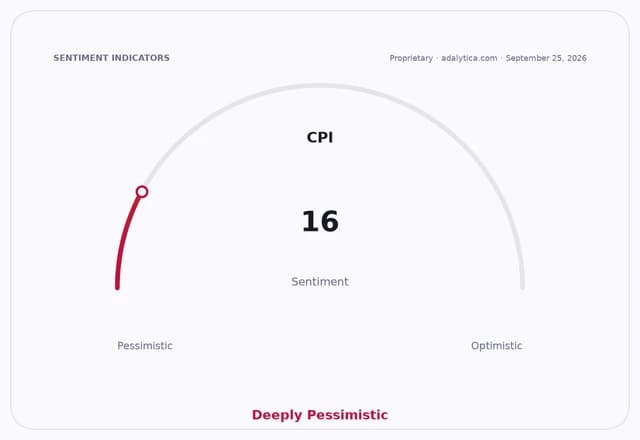
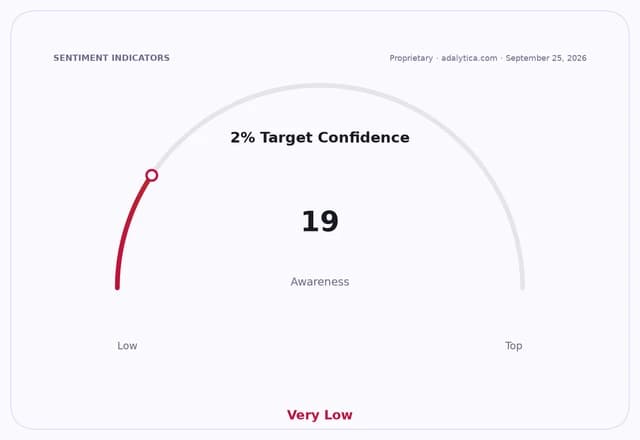
Sentiment IndicatorsⓘProprietary · adalytica.com · September 25, 2026
This is a snapshot — live sentiment, awareness and momentum for 130+ markets update continuously in the dashboard.Open AlphaPulse
The latest update is small, but it matters because expectations are a key part of Brazil’s inflation fight. When forecasts stop drifting down, it becomes harder for policymakers to argue that disinflation is firmly anchored, especially with the central bank itself projecting 5.2% inflation in 2026 and 3.9% in 2027.
The more reactive slice of the survey was even firmer: among the 91 estimates updated in the last five business days, the median for 2026 rose to 4.97% from 4.95%. For 2027, the market estimate held at 4.30%, while the shorter-dated subset moved up to 4.35% from 4.31%.
That keeps the inflation debate squarely in focus for Brazilian assets. A stubborn forecast profile supports the case for a higher-for-longer Selic path, which is a drag on credit growth, household demand and rate-sensitive sectors, but can help the real by preserving carry.
Brazil-linked assets have already reflected some of that tension. The EWZ Brazil ETF slipped to $36.91 on Thursday from $38.61 earlier in the month, while the real traded around 5.19 per dollar, having strengthened modestly from 5.10 a day earlier. For investors, the next catalyst is the pace of incoming price data and whether the Focus consensus resumes easing or starts to harden around the central bank’s forecast band.
| Entity | Gains | Losses |
|---|---|---|
| Banco Central do Brasil | ▲Policy credibility from tight stance | ▼Pressure to keep rates high |
| Brazilian real | ▲Support from higher carry | ▼Risk if inflation expectations rise |
| Borrowers and consumers | ▲Lower inflation if disinflation resumes | ▼Higher financing costs now |
| EWZ holders / Brazilian equities | ▲Potential upside if inflation cools | ▼Slower growth and earnings pressure |