Nigeria’s central bank is finding that the country’s inflation fight is far from won, even after the official numbers have softened.
Nigeria CBN Survey Shows Inflation Still Feels High
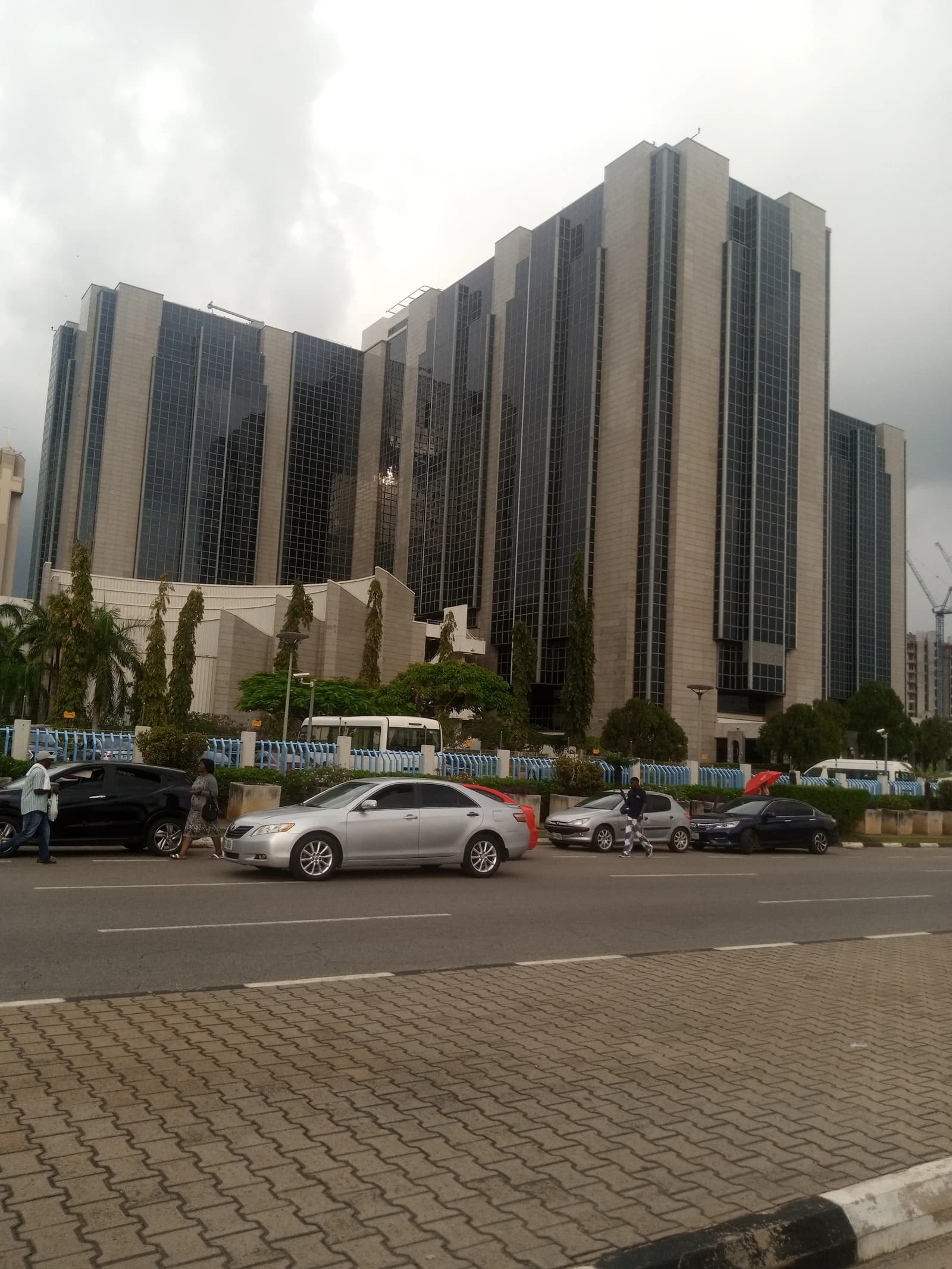
A new survey from the Central Bank of Nigeria shows the share of households that view inflation as high jumped to 77.2% in September from 67.2% in August, sharply diverging from the National Bureau of Statistics, which said headline inflation edged down to 15.39% in August from 15.43% in July.
Sentiment IndicatorsⓘProprietary · adalytica.com · October 4, 2026
This is a snapshot — live sentiment, awareness and momentum for 130+ markets update continuously in the dashboard.Open AlphaPulse
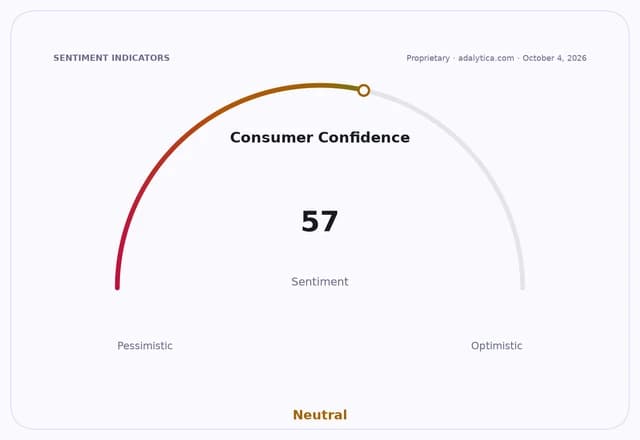
That gap matters because inflation is not just a statistic for consumers — it shapes spending, wage demands, business planning and policy credibility. When households still feel prices are climbing quickly, they typically stay cautious, delay discretionary purchases and press harder for higher pay, even if the official rate is cooling. For investors, that means the underlying demand recovery in Africa’s biggest economy may remain uneven, especially in consumer-facing sectors.
The CBN’s Inflation Perception Index rose to 43.1 points in September from 39.6 in August, while the share of all respondents who said inflation was high climbed to 69.5% from 64.3%. Households were more downbeat than businesses, but firms were not much more optimistic, with 62.6% saying inflation was high versus 61.8% a month earlier.
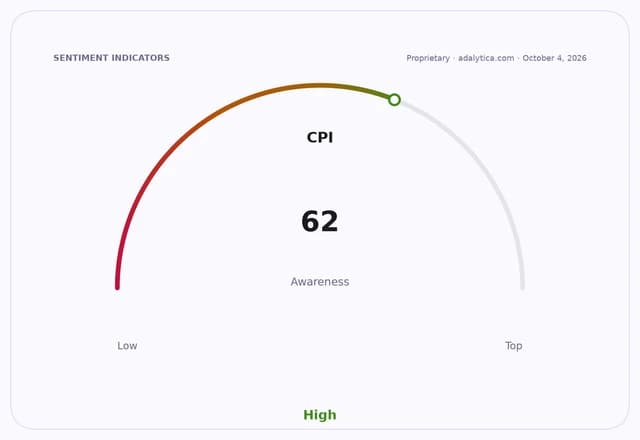
CPI — 30-day sentimentadalytica.com
Explore this data interactively — full history, time series and cross-market comparisons.Open AlphaPulse
The survey suggests inflation pain is still spreading unevenly across the economy. Rural households reported a higher perception of inflation than urban ones, at 79.1% versus 76.2%, while lower-income families felt the squeeze most acutely. Among households earning below 70,000 naira a month, 80.0% said inflation was high, underscoring how food, transport and utility costs continue to hit the most vulnerable hardest.
Businesses are feeling the pressure too. More firms than households said inflation had lifted their spending, with 62.3% of businesses reporting higher expenditure because of inflation compared with 58.8% of households. Micro enterprises were the most squeezed among firms, with 67.3% describing inflation as high. That matters for employment and output because smaller companies tend to have the thinnest margins and the least pricing power.
Respondents pointed to energy costs, interest rates, exchange rates and insecurity as the main drivers of their inflation perception. That mix is important: it shows Nigeria’s inflation problem is not simply about one-off food shocks, but about a broader cost structure tied to power, financing, currency weakness and security frictions. In other words, even if the headline inflation rate keeps easing, everyday price pressure can remain stubborn.
There is, however, a more encouraging message in the survey. Households and businesses expect inflation to moderate gradually over the next three and six months, and the CBN said inflation-related spending pressures should ease over that horizon. The Inflation Expectations Index at 25.1 points sat well below the perception index, suggesting respondents see near-term pain easing even if they do not yet feel relief.
For long-term investors, that combination is the key takeaway. Nigeria is still in a transition phase: official inflation is improving, but consumer confidence remains fragile and pricing behavior has yet to fully normalize. That usually favors patience over aggressive extrapolation. If inflation expectations keep drifting lower and the naira stays more stable, the payoff could eventually show up in consumer spending, bank asset quality and corporate margins. For now, though, the CBN survey says the household economy is still under strain, and that makes this one worth watching closely.
| Entity | Gains | Losses |
|---|---|---|
| Consumers | ▲eventual easing hopes | ▼higher living costs now |
| Businesses | ▲clearer near-term outlook | ▼margin pressure and higher costs |
| CBN / policymakers | ▲evidence expectations may cool | ▼credibility gap with official data |
| Retailers / lenders | ▲benefit if inflation eases | ▼suffer if spending stays weak |