Ethiopia’s fight to bring inflation down is being hampered by a credibility crisis around official data and the central bank, according to a new Ethiopian Economics Association survey that shows most experts do not trust the policy framework guiding the effort.
Ethiopia inflation survey flags data and credibility gap

The report, “The Anatomy of Inflation in Ethiopia: Structural Shocks, Policy Credibility, and the Path to Price Stability,” found 60.9% of respondents rated the National Bank of Ethiopia’s commitment to single-digit inflation as low or very low credibility, while 52.3% said the central bank lacks operational independence. More than half, 57.2%, said official Consumer Price Index data from the Ethiopian Statistical Service is unreliable, and 85.9% said the data gap weakens the central bank’s ability to communicate policy and anchor expectations.
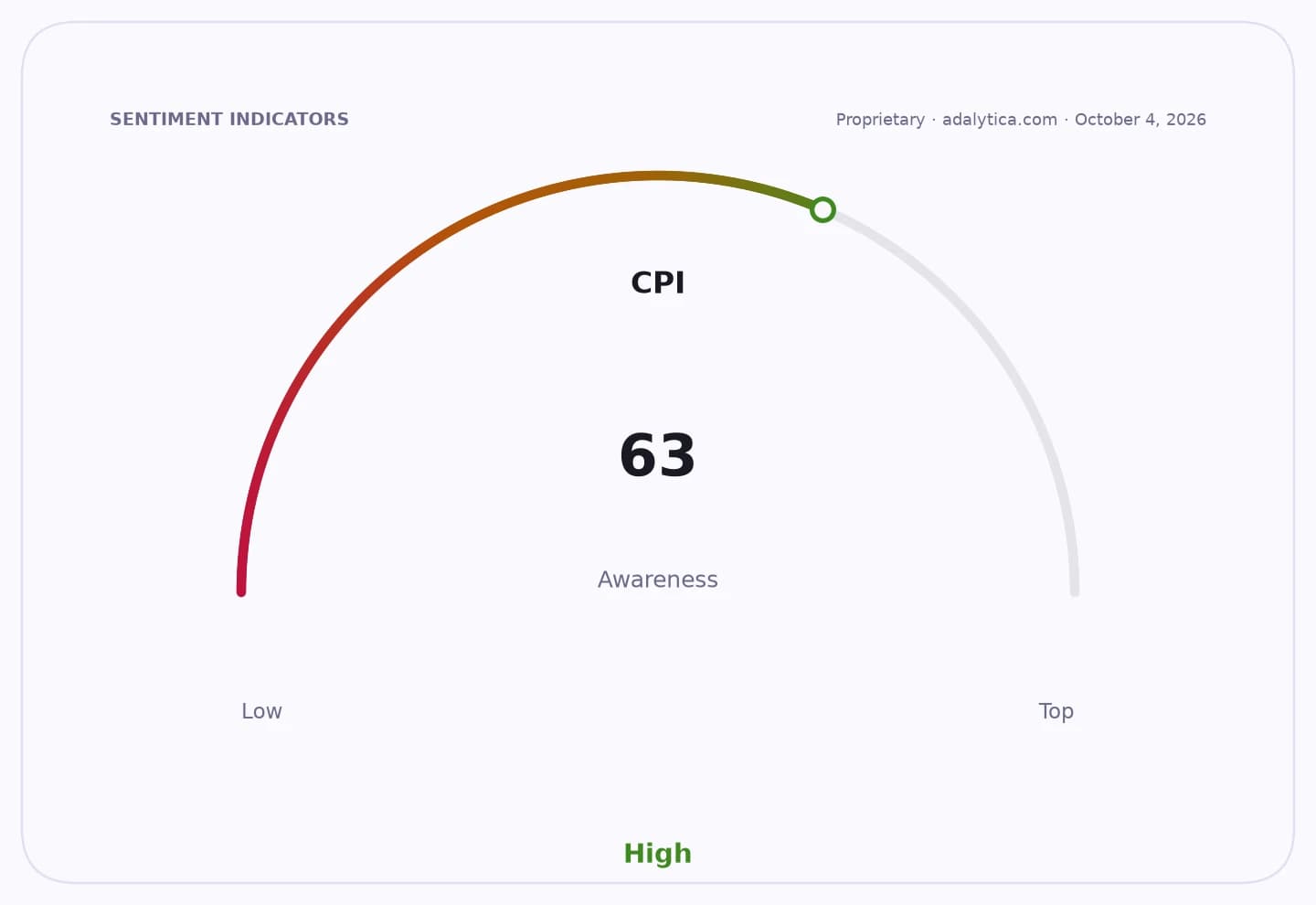
Sentiment IndicatorsⓘProprietary · adalytica.com · October 3, 2026
This is a snapshot — live sentiment, awareness and momentum for 130+ markets update continuously in the dashboard.Open AlphaPulse
That matters because inflation in Ethiopia is not just a pricing problem but a confidence problem. If businesses, households and even officials do not believe the numbers or the policy response, monetary tightening becomes harder to transmit through the economy and harder to sell politically. The survey suggests the authorities are trying to stabilize prices without the trust needed to make that stabilization stick.
The findings also point to a broader policy mix under strain. Asked about the source of persistent inflation, 71.4% of experts cited political or institutional pressure, while 47.3% gave the government’s commitment to fiscal discipline, especially avoiding central bank financing, low or no credibility. Another 33.1% blamed NBE monetary policy shortcomings and 27.4% pointed to fiscal management by the Ministry of Finance.
The skepticism extends to the currency. About 70.7% of respondents said confidence in the birr as a store of value has deteriorated since the July 2024 foreign-exchange reforms. That is a warning sign for import costs, savings behavior and price-setting in a country where supply shocks and exchange-rate moves feed quickly into inflation.
The report comes from a panel of 266 professionals spanning academia, government agencies, banks, international organizations and consultancies, making the distrust especially notable because it comes from within Ethiopia’s own policy and economic establishment. The divide over inflation estimates was stark: 60% of private-sector respondents and 35.1% of academics said actual inflation was 35% or higher, while 75% of respondents from the Ministry of Planning and Development put it below 20%.
The EEA said the inflation surge is structurally driven rather than purely demand-led, with 83.5% of respondents citing exchange-rate reform and birr depreciation as a major factor, followed by domestic supply shocks at 73.1% and global commodity volatility at 68.8%. Headline inflation has eased from a peak of 34.04% in 2022 to 13.21% in 2025, but regional gaps remain wide and conflict-hit areas still face severe price pressure.
For investors, the implication is that Ethiopia’s macro stabilization path remains vulnerable even after recent reforms. A weaker credibility backdrop raises the risk of sticky inflation, more volatile currency pricing and slower gains from fiscal and monetary normalization. The immediate focus now turns to whether the government can rebuild trust in the statistics agency, grant the central bank more room to operate, and show enough fiscal restraint to convince markets that price stability is more than a policy slogan.
| Entity | Gains | Losses |
|---|---|---|
| Ethiopian government | ▲If credibility reforms succeed | ▼If inflation expectations stay unanchored |
| National Bank of Ethiopia | ▲Clearer policy transmission | ▼Perception of weak independence |
| Businesses and households | ▲Better data and price stability | ▼Higher pricing uncertainty |
| Birr bulls | ▲Stronger reform credibility | ▼Continued store-of-value erosion |