Australia's hotter-than-expected inflation print has revived the case for further Reserve Bank tightening just as Governor Michele Bullock faces lawmakers in Canberra, sharpening investor focus on whether borrowing costs will need to stay restrictive for longer.
Australia inflation print lifts RBA tightening bets
Consumer Spending
Headline inflation rose to 4.3% in September, above forecasts and still well above the RBA's 2% to 3% target band, underscoring that price pressures have not eased evenly enough for policymakers to declare victory. The central bank has already signaled it is “not quite yet” done fighting inflation, and the latest number strengthens the argument that policy may need to remain tight even as growth slows.
Sentiment Indicators
That matters economically because persistent inflation keeps real incomes under pressure, squeezes household spending and raises the risk that the RBA has to choose between keeping rates high and protecting activity. The market backdrop suggests investors are already bracing for that trade-off: the Australian dollar has held around 70 US cents and the ASX 200 has recovered toward 8,900, but both remain sensitive to any shift in the expected path for rates.
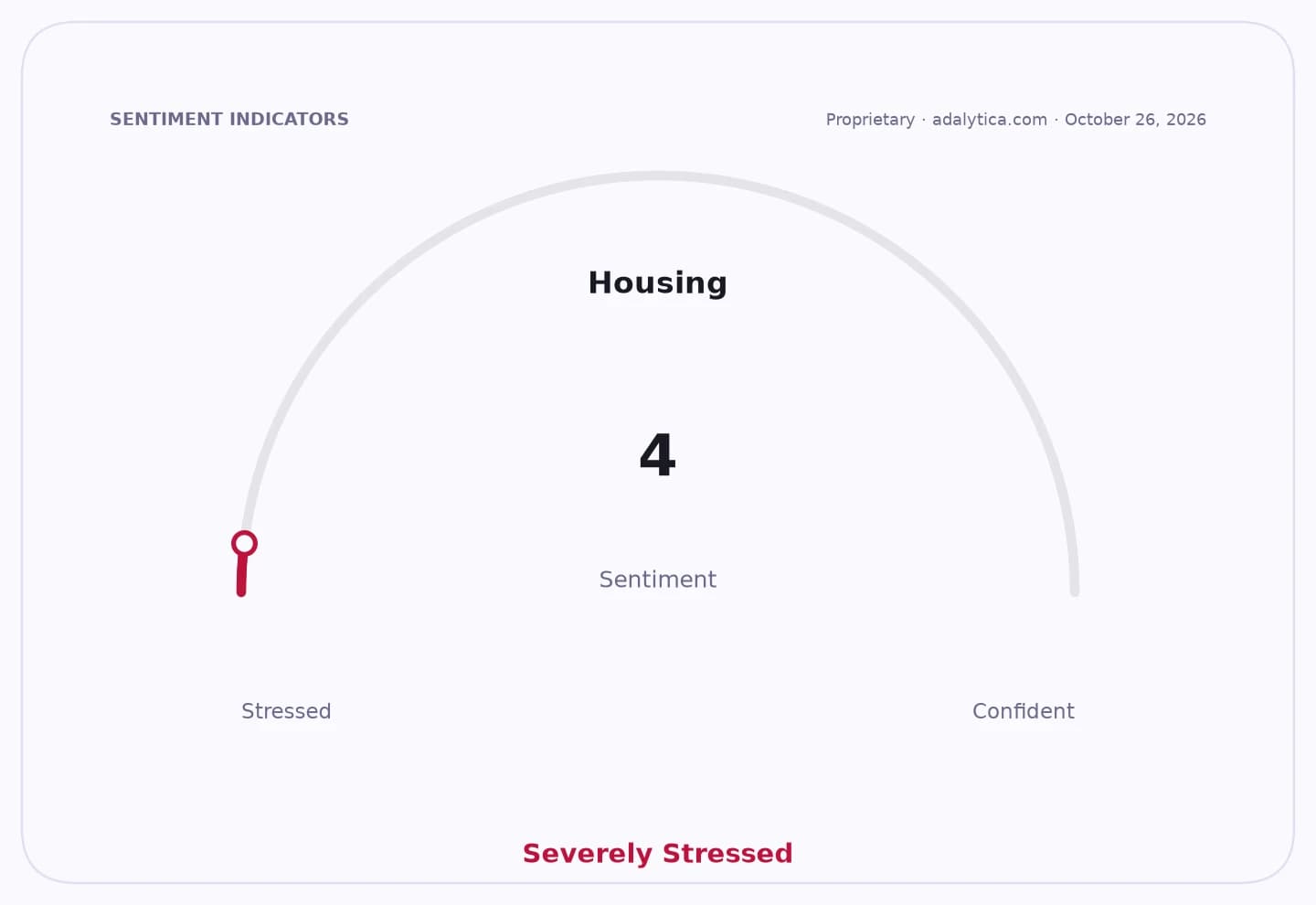
For borrowers, the implications are immediate. A longer period of high rates would add to mortgage stress and extend the drag on discretionary spending, which is already a concern for consumer-facing companies. That helps explain why investor attention is also turning to company annual meetings this week, including Cochlear and Nick Scali, where management commentary on demand, margins and pricing power will be parsed for signs of how households are coping.
The inflation print also reinforces the split between beneficiaries and losers in the equity market. Banks may continue to enjoy support from wider lending margins, but retailers, furniture sellers and other rate-sensitive sectors face a tougher outlook if the RBA keeps policy restrictive into year-end. By contrast, businesses with stronger pricing power or export earnings may be better placed to absorb weaker domestic demand.
Bullock's Canberra appearance now lands at a critical moment: if the RBA doubles down on its anti-inflation message, rate-cut hopes will be pushed further out and bond markets may have to reprice. If it sounds more confident that inflation is moving back toward target, investors may gain some relief — but only if the next data prints confirm that September was an exception rather than a warning.
| Entity | Gains | Losses |
|---|---|---|
| RBA / bond market hawks | ▲higher confidence in tighter policy | ▼risk of slower growth |
| Banks | ▲wider lending margins | ▼credit demand if rates stay high |
| Rate-sensitive consumers | ▲limited relief if inflation cools later | ▼mortgage and living-cost pressure |
| Retailers / furniture sellers | ▲stronger pricing if demand holds | ▼softer discretionary spending |