U.S. inflation remains stuck well above the Federal Reserve’s 2% goal even as the economy grows at a solid pace, leaving policymakers with little room to ease and households facing another stretch of elevated living costs.
U.S. inflation stays above Fed target

Consumer prices are running at a 3.6% annual pace in September, while the core measure that strips out food and energy is still advancing at 3.3%. That is high enough to keep pressure on wages and budgets, but not so extreme as to force an abrupt policy response — instead, it points to a prolonged period of restrictive rates and sticky costs across housing, services and borrowing.
Sentiment Indicators
The inflation backdrop matters economically because it is colliding with momentum that is still strong: the U.S. economy expanded at a 3.4% annualized rate in the third quarter, powered by investment and household spending. That combination is awkward for the Fed, which typically needs cooling growth to help inflation ease, and for consumers, who are getting hit by higher prices even as output remains firm.
For investors, the message is straightforward: inflation is not yet back in the rearview mirror, so rate cuts may stay limited and longer-dated yields can remain volatile. Treasury prices have reflected that tension, with the iShares 20+ Year Treasury ETF, TLT, rebounding to $81.52 on Oct. 30 after trading as low as $79.46 a week earlier, but still sitting below its 200-day moving average of $83.22.
Gold is also being pulled into the same macro crosscurrents. GLD fell to $356.93 on Oct. 30, well under its 200-day moving average of $412.93, suggesting investors are rotating away from defensive inflation hedges even as price growth remains above target.
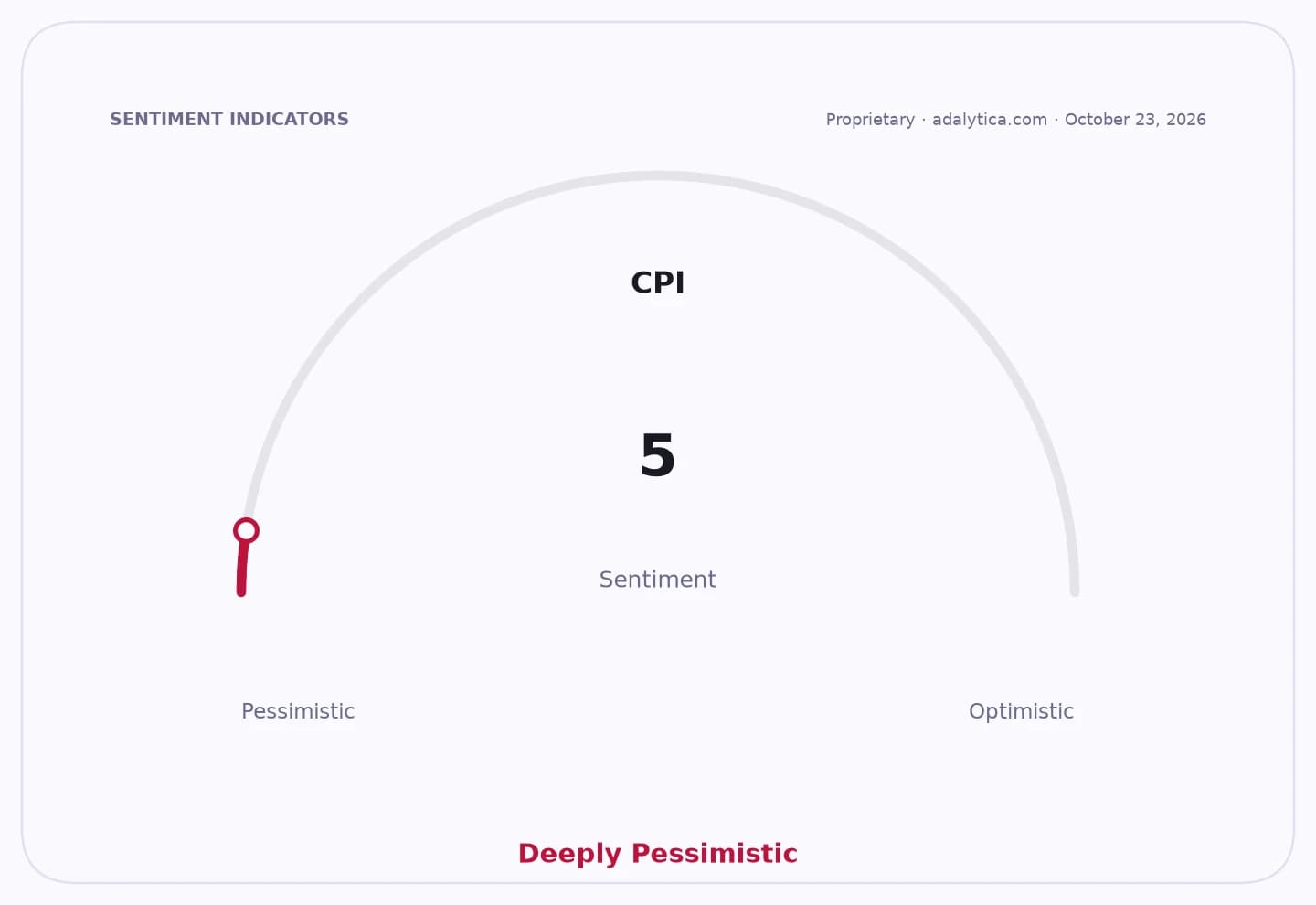
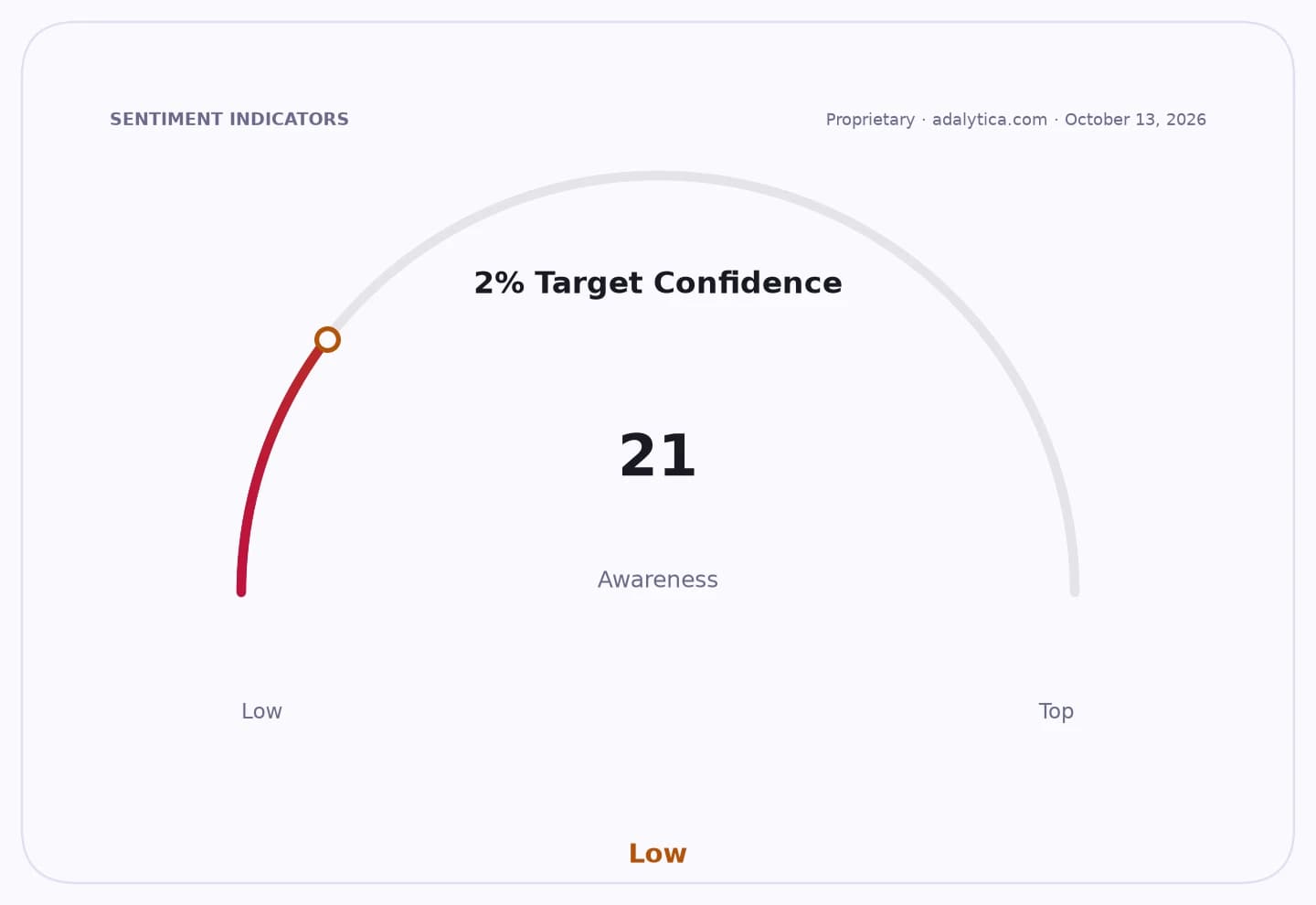
Adalytica’s CPI sentiment reading sits at 38, marked neutral but with awareness still in fear territory, while confidence in the Fed’s 2% inflation target remains elevated at 82 on the same proprietary gauge. That split underscores the market’s central dilemma: inflation is no longer spiraling, but it is still persistent enough to shape policy, earnings and voter sentiment.
The next catalyst is the October CPI reading, forecast to show a slight 0.14% monthly dip, but any upside surprise would reinforce the case for higher-for-longer rates and keep pressure on bonds, rate-sensitive equities and consumers heading into the election cycle.
| Entity | Gains | Losses |
|---|---|---|
| Fed hawks | ▲Higher-for-longer case | ▼Faster easing hopes |
| Borrowers | ▲None | ▼Higher financing costs |
| Treasury bulls | ▲Safe-haven demand | ▼Yield volatility |
| Households | ▲Strong wage support | ▼Persistent price pressure |