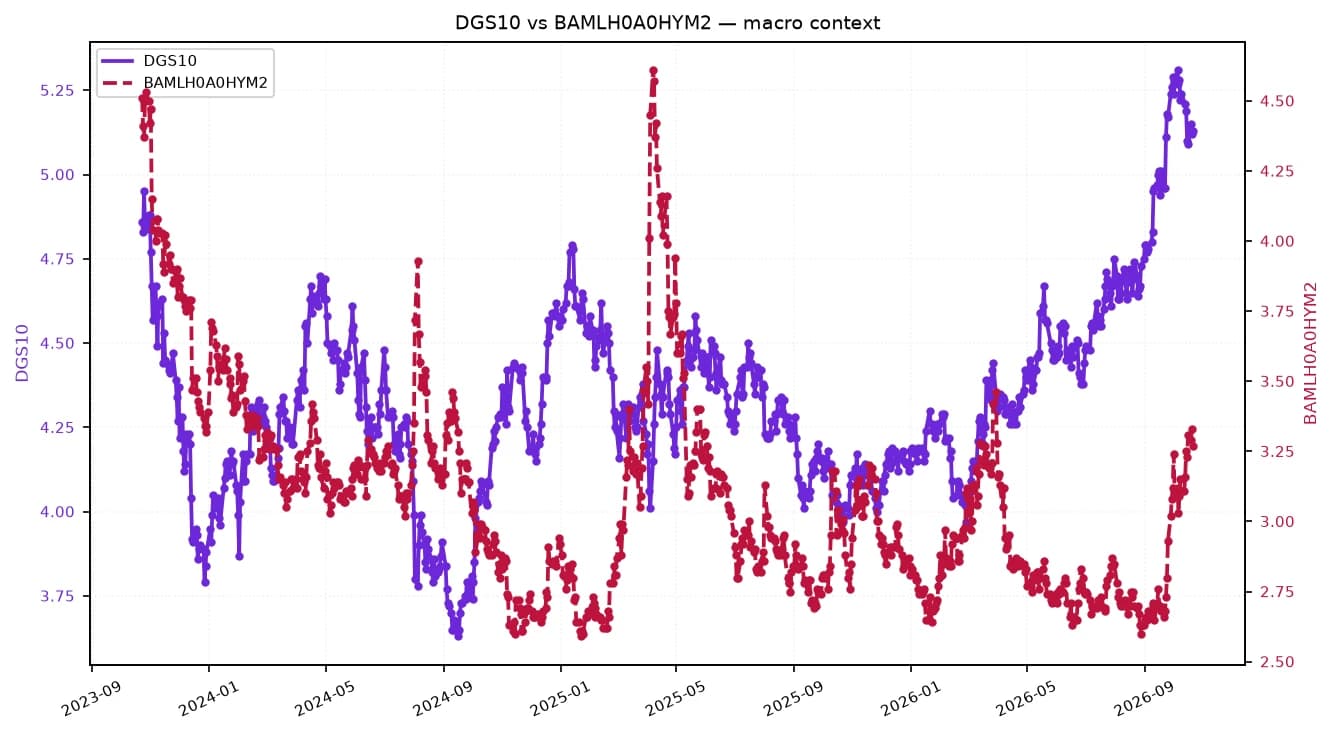
U.S. Treasury yields tumbled on Friday, pulling the 10-year note back below 5% for the first time since late September as investors sought safety from a selloff in technology stocks, fresh unease over massive AI-related capital spending and rising geopolitical risk in the Middle East.
U.S. 10-Year Yield Falls Below 5% on Safe-Haven Demand
The benchmark 10-year yield fell more than 17 basis points to 4.972%, its biggest one-day drop since March 2023, after briefly touching 5% earlier this week. The move matters well beyond the bond market: the 10-year rate is a reference point for mortgages, auto loans and credit-card borrowing, so a sustained retreat would ease financial conditions at the margin and could help support rate-sensitive assets.
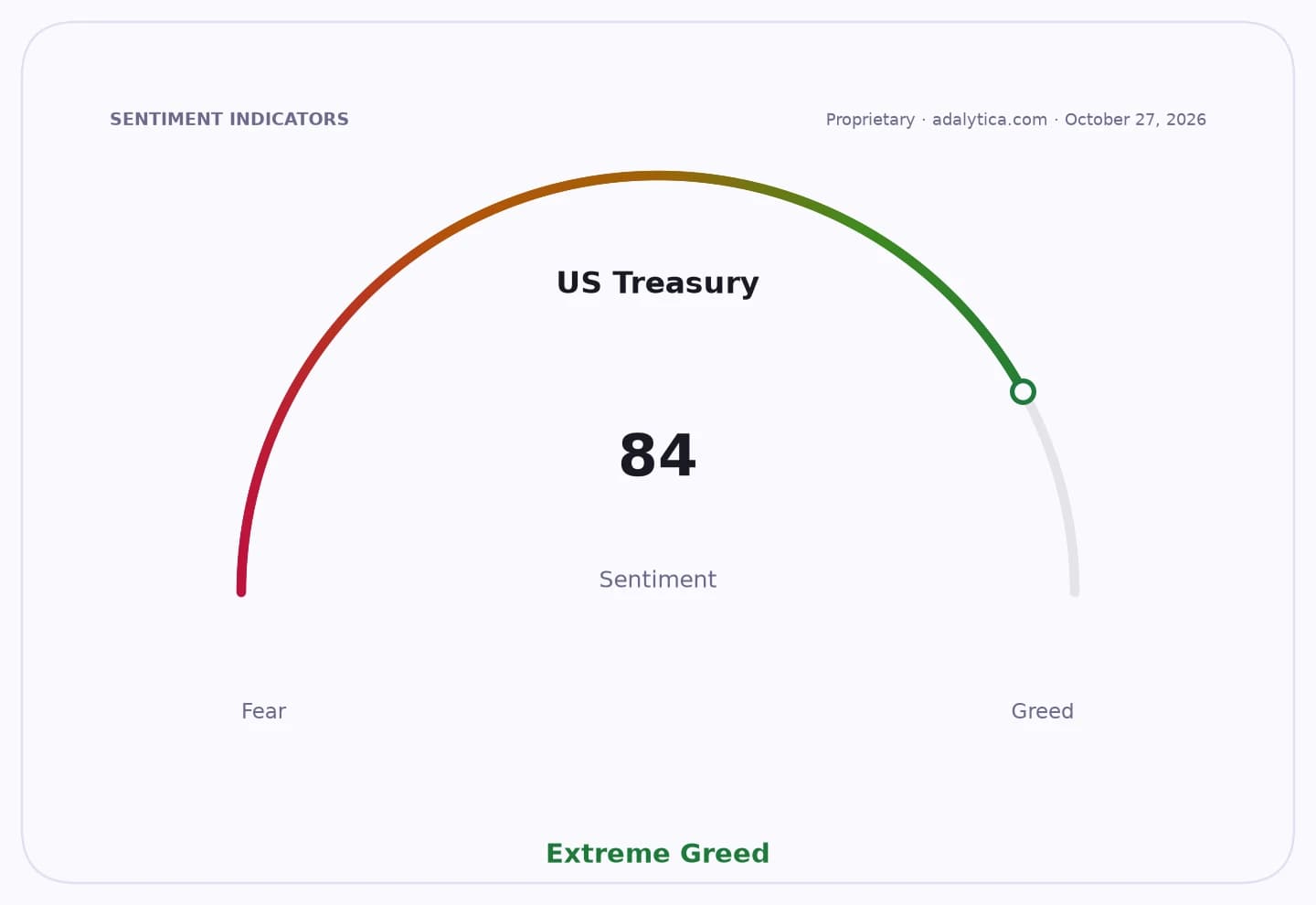
Sentiment Indicators
Shorter-dated Treasuries also rallied, with the 2-year yield down more than 16 basis points to 4.659%, as traders added to bets that the Federal Reserve may not need to keep policy as restrictive for as long if growth slows and risk appetite remains fragile. The 30-year yield slipped more than 14 basis points to 5.296%, underscoring a broad-based bid for government debt rather than a narrow move at the front end of the curve.
The catalyst was as much about market psychology as it was about rates. Investors have been questioning whether hundreds of billions of dollars flowing into AI infrastructure can be financed at a time when borrowing costs are still high and returns remain uncertain. Mitch Goldberg, president of ClientFirst Strategy, said the move reflected a rush to safety as concerns mounted over the volume of debt issued by AI-linked companies. Larry Holzenthaler, senior fixed-income portfolio manager at Catalyst Funds, said Treasuries were once again acting as a haven as megacap technology shares weakened, Middle East tensions escalated and oil prices climbed.
DGS10 vs USRECM — macro contextadalytica.com
Explore this data interactively — full history, time series and cross-market comparisons.
That backdrop has important macro implications. Higher energy costs can keep inflation sticky even as growth concerns intensify, complicating the Fed’s task. Yet when the 10-year yield was above 5%, the market was also signaling that investors demanded more compensation for inflation risks above 3%. The latest drop suggests that threshold may have become painful enough to draw real money back into duration, at least temporarily.
The shift also highlights the tension inside the market’s biggest secular theme. Nvidia chief executive Jensen Huang said demand for “neocloud” providers — specialized cloud firms building high-performance AI infrastructure — is running ahead of forecasts, even as funding has tightened. That combination points to a more selective phase for the AI trade: winners with balance sheets and cash flow may still attract capital, but speculative financing could become costlier and more vulnerable if yields stay elevated.
For equity investors, the Treasury rally is a mixed signal. Lower long-end yields can support valuations for growth stocks and reduce discount-rate pressure, but the fact that money rushed into government bonds after a tech-led selloff suggests confidence in the AI trade is becoming more fragile. Energy producers stand to benefit from firmer oil prices, while highly leveraged borrowers and companies dependent on cheap funding face a tougher backdrop if credit spreads widen.
The key question now is whether Friday’s move marks a durable turn lower in yields or just a temporary flight to quality. If geopolitical tensions intensify and technology shares remain under pressure, Treasuries could keep gaining as the market rethinks growth and inflation assumptions. If oil eases and risk appetite stabilizes, the 10-year may drift back toward 5%, keeping pressure on borrowers and forcing investors to weigh attractive yields against a more uncertain macro outlook.
| Entity | Gains | Losses |
|---|---|---|
| U.S. Treasury bulls | ▲Safer haven demand | ▼Less need for duration protection |
| Borrowers and homebuyers | ▲Lower benchmark rates | ▼Less relief if yields rebound |
| Tech and AI equities | ▲Easier valuation support from lower yields | ▼Financing scrutiny and tighter funding |
| Energy producers | ▲Higher oil prices | ▼Consumers and airlines facing higher costs |