AI infrastructure investors are confronting a sharper financing squeeze as benchmark Treasury yields hold above 5% and high-yield credit risk edges higher, lifting the cost of funding the data centre buildout just as companies rush to add capacity for cloud and AI demand.
AI Data Center Stocks Face Higher Financing Costs
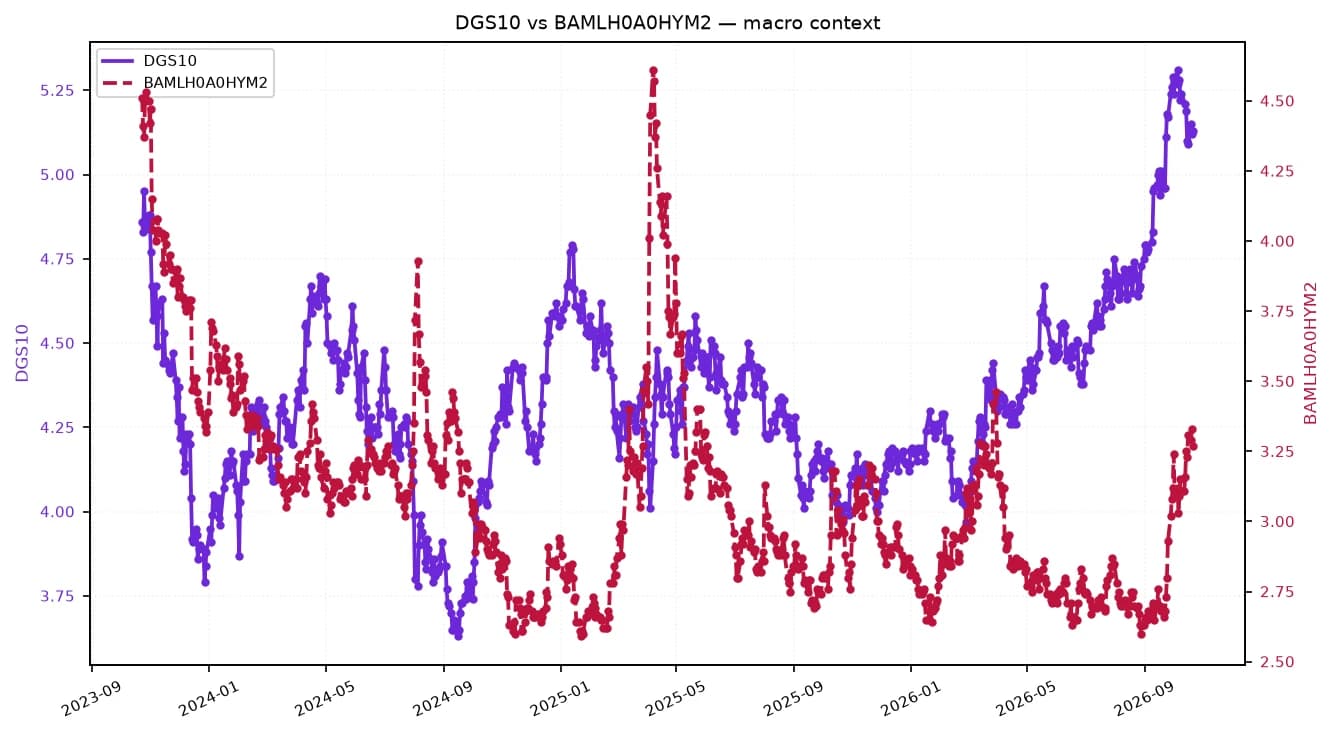
The 10-year US Treasury yield is forecast at 5.145%, near 5.15% and close to recent highs, while the high-yield bond spread sits at 3.316 percentage points, up from 3.27 points a day earlier. That combination keeps borrowing costs elevated for capital-intensive operators that rely on debt markets to finance land, power, cooling and server infrastructure.
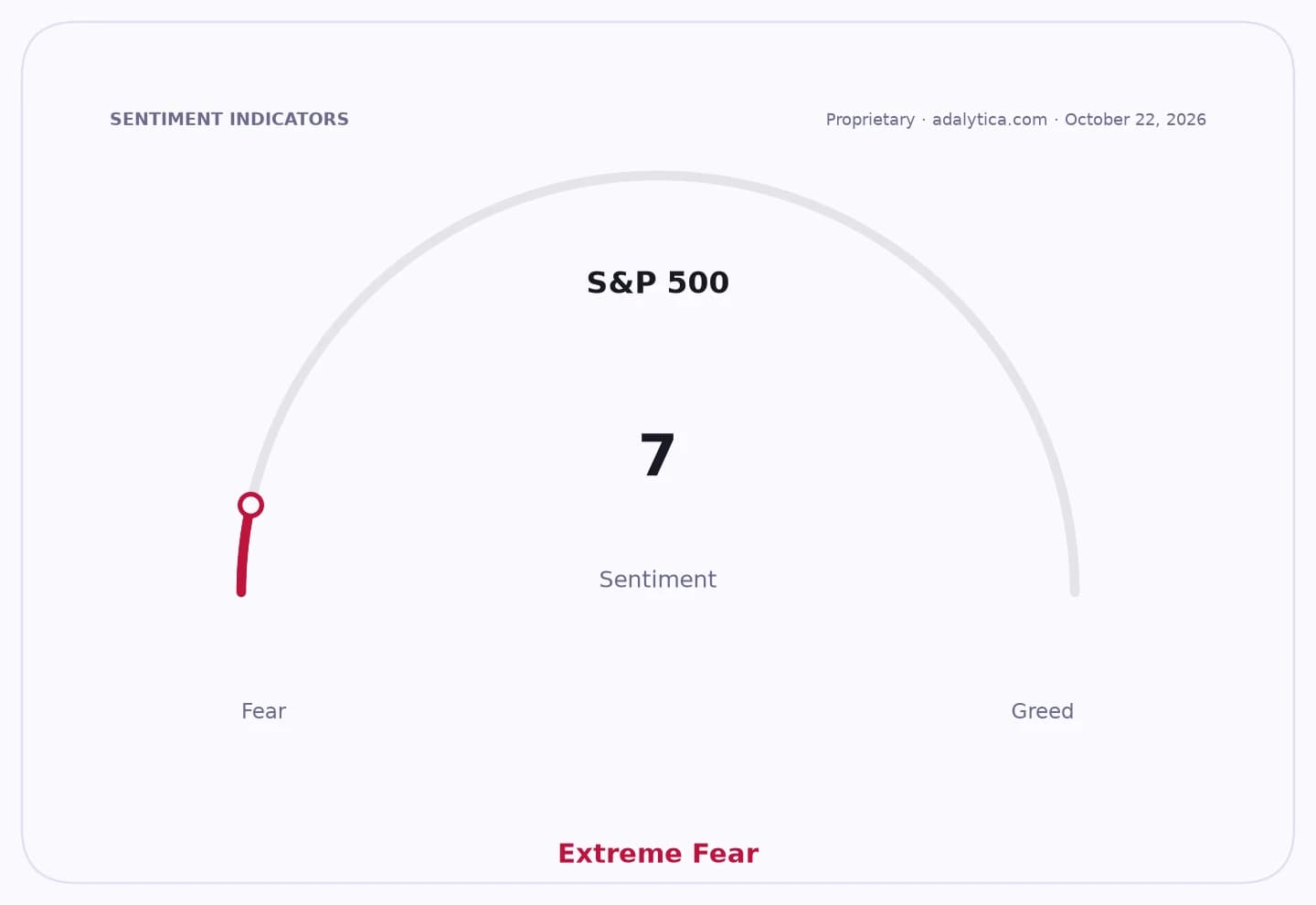
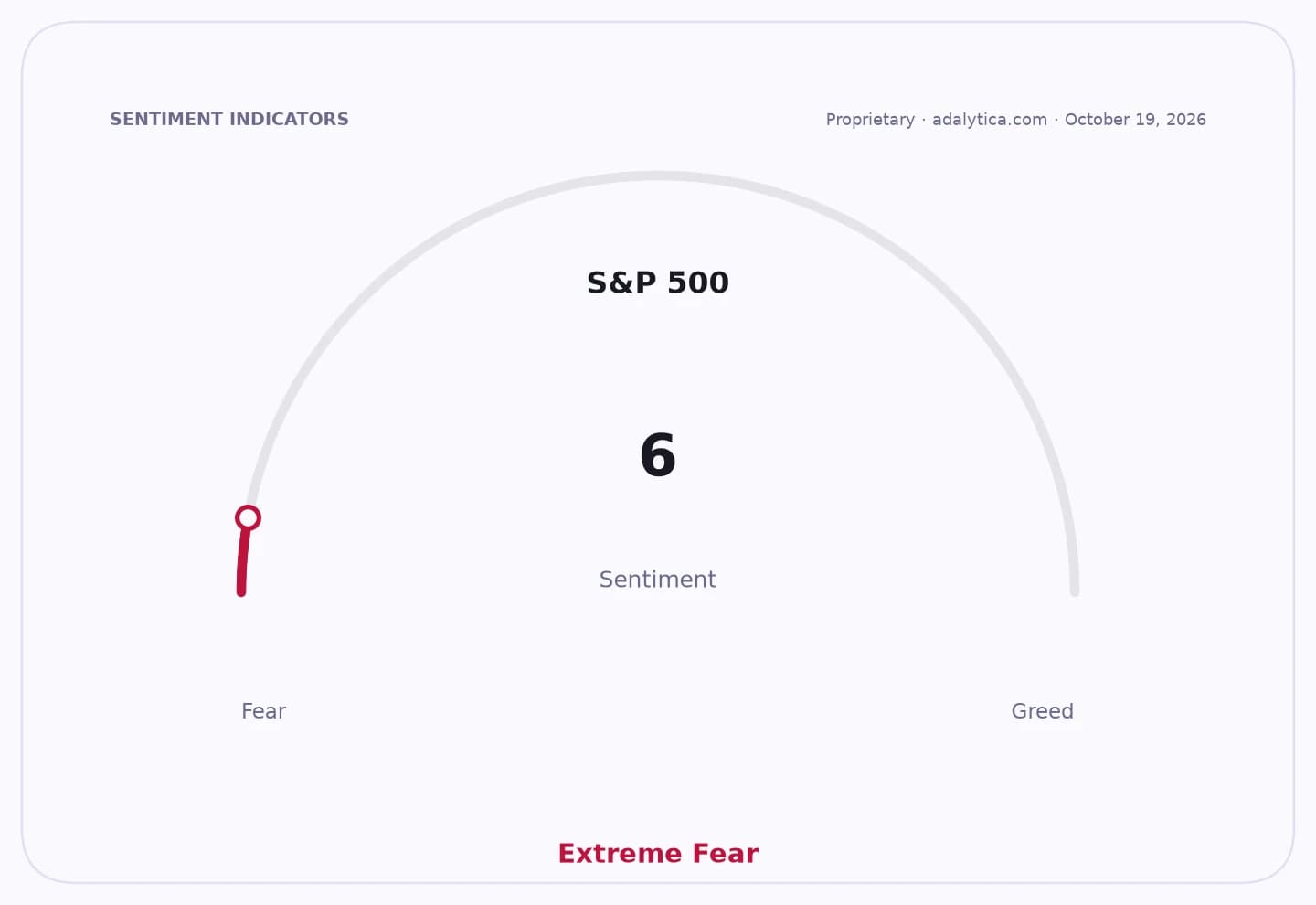
Sentiment Indicators
The pressure is showing up in data centre and infrastructure names. Vertiv, which sells power and cooling equipment to the sector, closed at $212.15 on Oct. 21, still below its 50-day moving average of $251.38 and its 200-day moving average of $268.76 after a steep slide from recent highs. Equinix, one of the industry’s biggest landlords, ended at $995, also below its 50-day and 200-day averages and off a recent peak above $1,000. Digital Realty Trust finished at $176.31, just under its 200-day moving average, after losing ground over the past several sessions.
The stock action underscores a market that is still paying up for AI growth, but is increasingly questioning how cheaply that growth can be financed. Vertiv’s relative strength index at 24.3 points to oversold conditions, while Equinix and Digital Realty remain under technical pressure but far less distressed than Vertiv, which suggests investors are differentiating between hardware suppliers and the more bond-like property owners.
That distinction matters because the AI buildout depends on a steady flow of cheap capital. Equinix’s latest filing warned that a slowdown in AI-related investment could reduce customer demand, while also flagging “substantial debt” and the need to raise more capital to support expansion. Microsoft and Alphabet have likewise said their cloud and AI strategies require heavy ongoing investment, tying the sector’s growth directly to financing conditions.
Broader macro conditions are not offering much relief. The 10-year Treasury yield has risen from 5.12% to 5.13% in the past two sessions, and US policy rates remain restrictive with the fed funds forecast at 3.726%. That leaves investors wary that even strong AI demand may not translate into attractive equity returns if debt costs stay elevated and credit spreads widen further.
For investors, the key question is whether the AI infrastructure trade can absorb higher-for-longer rates without a reset in valuations. If bond spreads keep widening or Treasury yields stay near current levels, the market may reward cash-rich platform companies over debt-heavy data centre builders and their suppliers.
| Entity | Gains | Losses |
|---|---|---|
| Cash-rich hyperscalers | ▲Can self-fund AI capex | ▼Face less financing leverage |
| Data centre owners | ▲Access demand growth | ▼Higher debt service costs |
| Equipment suppliers | ▲Benefit from buildout | ▼Vulnerable to project delays |
| Bondholders/credit investors | ▲Higher spreads and yields | ▼More refinancing risk |