Rising inflation expectations and mounting anxiety over the debt financing behind the AI boom are hitting technology shares and credit markets at the same time, raising the cost of capital just as investors question whether earnings can keep pace with the spending binge.
AI Boom Debt Pressure Hits Tech and Credit Markets
The latest CPI data show prices still running hot enough to keep the Federal Reserve on guard. The consumer price index stood at 336.298 in September, with a forecast for October pointing to 335.818, a modest 0.14% decline that would do little to ease the broader inflation debate. At the same time, the 10-year Treasury yield rose to 5.21% on Oct. 13 and was still near 5.10% two days later, a level that tightens financial conditions across equities, corporate debt and leveraged balance sheets.
That backdrop matters because the AI trade has increasingly been funded with debt and complex financing structures. Recent weakness in CoreWeave has become a lightning rod for that concern, feeding a broader reassessment of how much borrowing is being used to build out data centers, chips and cloud infrastructure. When rates are this high, debt-funded growth is more expensive to service and refinance, and the market becomes less tolerant of long-dated promises of future cash flow.
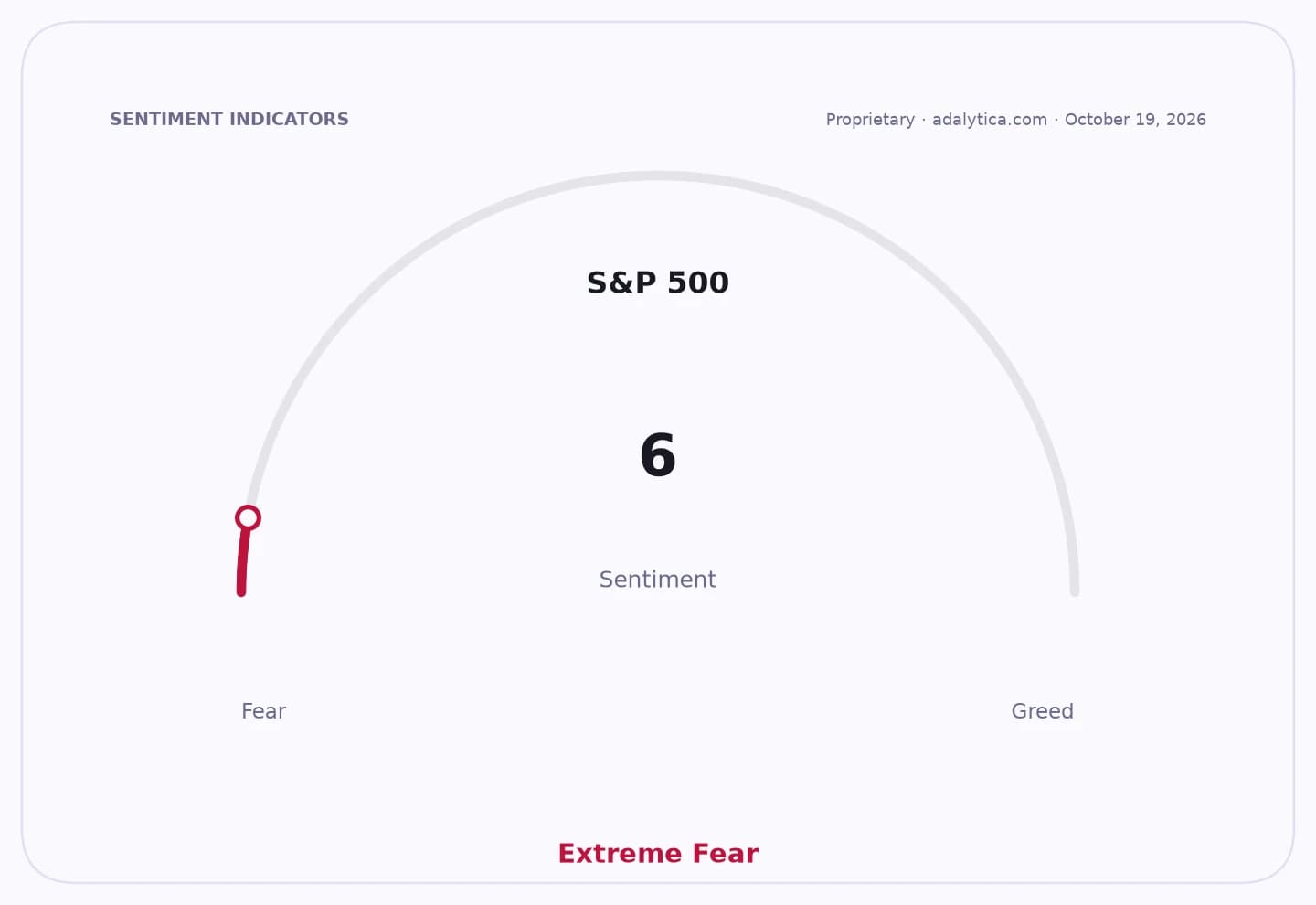
The pressure is showing up in risk assets. Nasdaq-100 proxy QQQ fell to 709.8 on Oct. 16 from 728.95 two sessions earlier, leaving it below its 50-day moving average of 726.33 and pushing its RSI to 33.4, close to oversold territory. The move suggests investors are trimming exposure to the most rate-sensitive parts of the market, especially the large-cap technology names that have carried the index higher this year.
Credit is flashing its own warning. The high-yield spread measured by the ICE BofA index widened to 3.286 percentage points in the latest forecast from 3.23 on Oct. 15, while HYG slipped to 76.86, roughly flat but still below its 50-day average of 78.13. The ETF’s RSI near 41 shows stress without outright panic, but the combination of firmer Treasury yields and wider spreads is exactly the mix that makes refinancing risk more acute for weaker borrowers.
Financials are not immune. XLF has recovered to 55.52 after a sharp spring selloff, but it remains below its recent highs and has lost momentum as investors reconsider loan exposure, underwriting risk and trading sensitivity to rate volatility. Banks can benefit from higher yields if credit holds, but the current setup is less about margin expansion than about the risk that tighter financial conditions eventually spill into defaults, deal activity and capital markets volume.
The bull case is that inflation remains contained enough to prevent a sharper policy shock, while the AI build-out is being financed largely by strong cash generators such as Microsoft, Nvidia and Meta rather than by speculative debt alone. Those companies still sit on substantial liquidity, and the long-term demand case for AI infrastructure has not disappeared.
The bear case is that the market is underestimating how much leverage has been layered onto the AI ecosystem just as inflation and real yields stay elevated. If borrowing costs remain near current levels, the market may punish companies with aggressive capex plans, opaque financing structures or dependence on continued investor appetite for growth at any price.
For investors, the key issue is no longer just whether AI spending is justified, but whether it can be financed efficiently in a 5%-plus yield environment. Unless inflation cools enough to pull Treasury yields lower, the market’s tolerance for debt-heavy AI expansion is likely to keep shrinking, with the weakest balance sheets and the most richly valued growth stocks first in line for pressure.
| Entity | Gains | Losses |
|---|---|---|
| Treasury bears | ▲Higher yields, tighter financial conditions | ▼Bond prices |
| AI cash-rich leaders | ▲Strategic advantage, cheaper relative funding | ▼None immediately |
| Debt-funded AI builders | ▲Access to capital in boom phase | ▼Higher refinancing costs |
| Nasdaq growth longs | ▲Potential long-term AI upside | ▼Near-term valuation pressure |