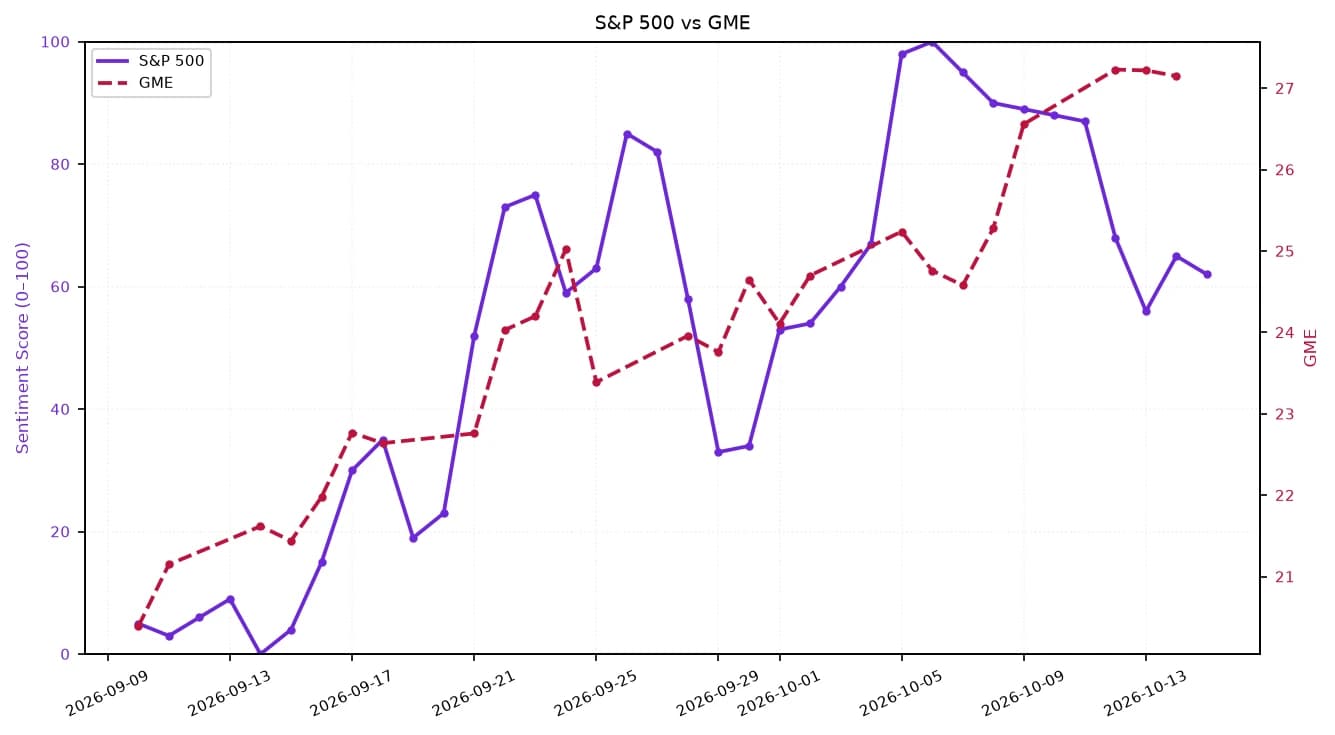
US stocks sold off after a hotter-than-expected inflation reading revived the case for higher-for-longer interest rates just as investors grew more uneasy about the financing behind the artificial-intelligence buildout.
US Stocks Fall on Hot Inflation and AI Spending Fears

The combination matters because it strikes at the two pillars that had been supporting equities: easier monetary policy and confidence that AI capital spending would keep translating into profits. September US annual inflation accelerated to 3.7% from 3.4%, above expectations for 3.6%, while monthly prices rose 0.6%, the fastest pace in the latest run of data. That pushed Treasury yields higher at first, with the 10-year note jumping to 5.32%, before a later bond rally took it back to 5.1%. For equities, the message was less ambiguous: higher rates would stay a headwind, and the market’s appetite for richly valued growth stocks was already fragile.
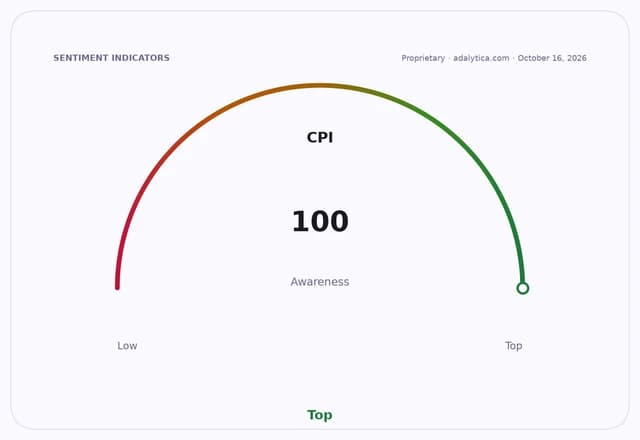
Sentiment IndicatorsⓘProprietary · adalytica.com · October 16, 2026
This is a snapshot — live sentiment, awareness and momentum for 130+ markets update continuously in the dashboard.Open AlphaPulse

The Nasdaq fell 1.88% and the S&P 500 1.11% as technology shares led declines. Semiconductors dropped 3.6%, while AI-linked megacaps including Meta, Microsoft, Tesla and Amazon all weakened. The move was not just a generic rates trade. It was also a reassessment of whether the enormous debt and capital spending now flowing into AI infrastructure can be justified by returns.
That concern sharpened after CoreWeave slid 17%. The AI cloud provider, which rents computing power to customers including Microsoft and OpenAI, has more than $40 billion of debt tied largely to data-center expansion. Investors are increasingly questioning whether the cash the business generates can cover its interest burden. Its 2032 bonds are now trading around 78 cents on the dollar, and credit-default swap protection has climbed above 11% a year, a stark sign that the market is assigning real default risk. In other words, the AI investment cycle is starting to look less like a straight-line growth story and more like a balance-sheet test.
Anthropic’s third-quarter numbers did little to ease that anxiety. Revenue reportedly rose to $16.8 billion from $11.5 billion in the second quarter, a 46% quarterly increase, but analysts noted the pace is slowing from earlier periods. That matters for the broader AI trade because markets have been pricing infrastructure spending as if demand growth will remain steep enough to absorb massive outlays from cloud providers, chipmakers and model developers. If revenue growth decelerates even while capex stays elevated, margins and funding costs become harder to reconcile.
The selloff spread quickly beyond the US. Asia took the brunt on Thursday, with Korea’s KOSPI dropping 8%, Japan’s Nikkei falling 5% and Taiwan’s TAIEX off 3.5%. Futures pointed to more losses in Europe and the US. Meanwhile, the inflation surprise and risk-off mood drove investors into bonds, lifting demand for safe assets and weakening the dollar from its intraday peak. The greenback’s index fell about 1%, while euro-dollar moved up 0.5% to 1.12.
The market backdrop leaves the Federal Reserve with less room to pivot and investors with fewer reasons to pay up for long-duration assets. A December rate hike is now being more firmly priced, and that keeps pressure on valuation-sensitive sectors, especially those most dependent on future cash flows. Health care, consumer staples and energy held up better than technology, underscoring the rotation into defensive earnings as the cost of capital rises.
For investors, the key question is whether this is a brief repricing or the start of a broader unwinding in the AI trade. If inflation remains sticky, bond yields stay elevated and leverage-heavy AI names continue to wobble, the market may need to recalibrate both earnings expectations and financing assumptions. The next inflation prints and any Fed signaling will determine whether Thursday’s move becomes a one-day reset or the opening of a more sustained de-rating in growth stocks.
| Entity | Gains | Losses |
|---|---|---|
| Treasury bonds | ▲Safe-haven bid | ▼Yield levels |
| Defensive sectors | ▲Relative inflows | ▼Growth leadership |
| AI infrastructure firms | ▲— | ▼Higher funding costs |
| Tech-heavy indices | ▲— | ▼Valuation pressure |