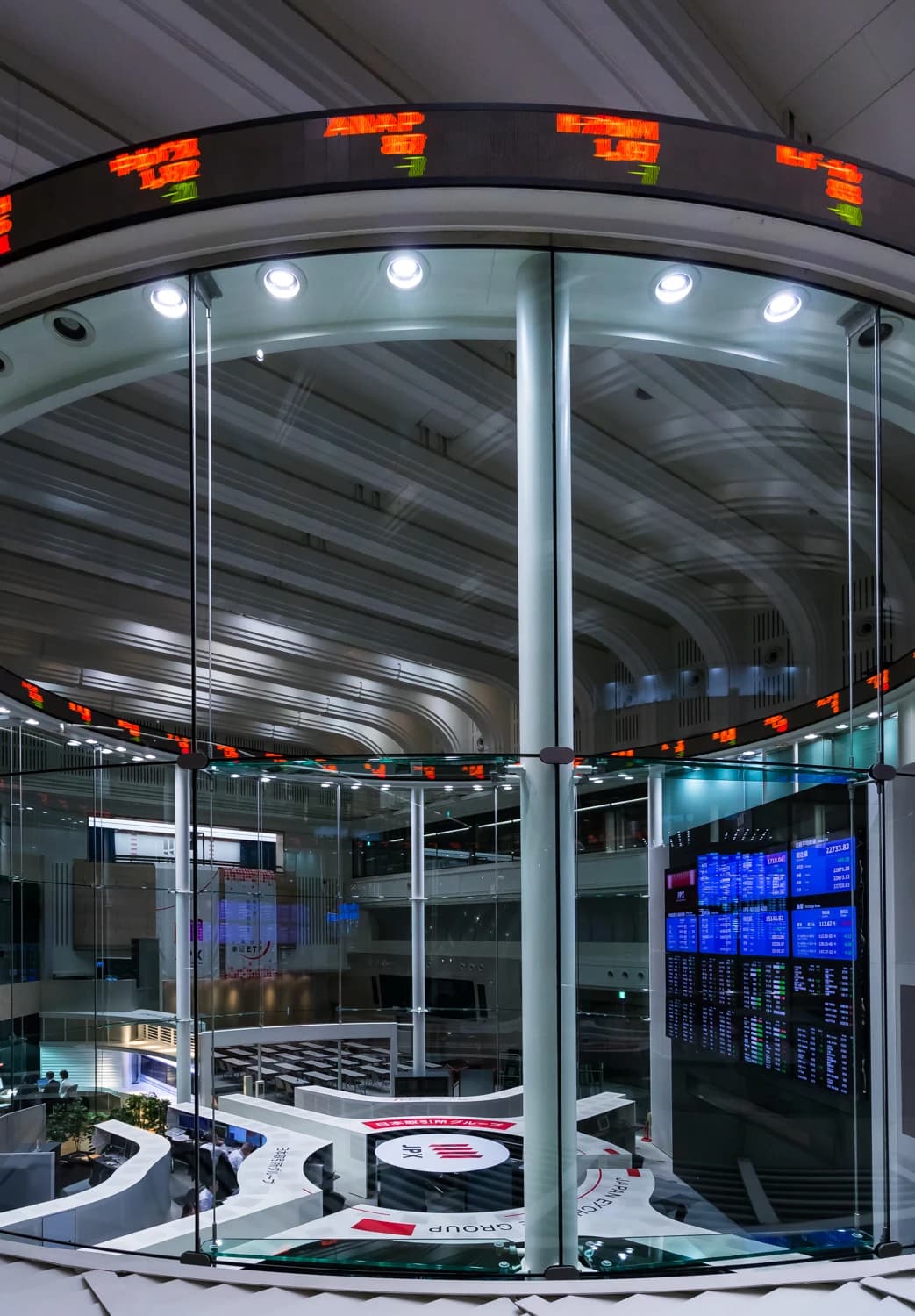
Japan’s Nikkei 225 tumbled nearly 5% on Thursday as a sharp reassessment of AI-fueled spending hit one of the market’s most crowded trades, wiping out gains in chip and startup-linked names and underscoring how fragile the global artificial intelligence boom has become when borrowing costs rise.
Nikkei 225 Drops on AI Spending and Rate Fears

That matters because the selloff is no longer just about stretched valuations — it is starting to challenge the financing model behind the AI buildout. When markets begin to doubt whether AI firms can generate cash fast enough to service debt, capital spending gets repriced, lenders get more selective and the entire supply chain from chip tools to data-center operators comes under pressure.
Sentiment IndicatorsⓘProprietary · adalytica.com · October 16, 2026
This is a snapshot — live sentiment, awareness and momentum for 130+ markets update continuously in the dashboard.Open AlphaPulse
The tech-heavy Nikkei dropped 4.8% to 64,489.06 at the midday break, while the broader Topix fell 2.5%. Losses were led by AI-linked shares, with Advantest plunging 13.9%, Tokyo Electron sliding 7.3% and SoftBank Group — a key backer of AI startups — down 9.4%. The weakness followed worries around CoreWeave’s debt and broader anxiety over whether the AI capex boom can justify the leverage being piled onto the sector.
That concern is spreading beyond Japan. U.S. inflation data that came in hotter than expected reinforced bets that the Federal Reserve may keep rates elevated for longer, raising the cost of funding for capital-intensive growth businesses. The Nasdaq Composite fell 1.9% on Wednesday as investors reconsidered both rate expectations and the rich multiples assigned to technology leaders.
The economic significance is straightforward: higher rates make long-duration growth more vulnerable, especially when that growth depends on debt, equipment purchases and aggressive expansion. AI is not being repriced as a software story anymore; it is being treated as an infrastructure story with balance-sheet risk. That is a different market regime, and it tends to punish the most indebted or most exposed names first.
For investors, the message is that the AI trade is narrowing. The market is punishing the leverage providers and the most sentiment-sensitive beneficiaries, while rotating toward defensives. In Tokyo, pharmaceuticals were the best-performing industry group, rising 3.4%, with Sumitomo Pharma jumping 13%, a classic sign of capital moving from momentum to shelter.
The breadth of the move makes the point even clearer. Among Nikkei constituents, 145 stocks fell and just 80 rose at midday, showing this was not a one-stock correction but a broad de-risking event. For holders of AI hardware and adjacent ecosystem names, that means the market is now demanding visible cash flow, not just promising order books.
My view is that this is where the next major opportunity — and the next major washout — will come from. The market underestimates how sensitive the AI supply chain is to financing conditions, but it may also be overcorrecting in the best-positioned infrastructure names. If the leverage-heavy parts of the trade continue to unravel, investors should look for stronger balance sheets, pricing power and secular compute demand rather than chasing the most crowded beta.
The next catalyst will be whether U.S. rates and credit spreads stabilize or continue to tighten the screws on AI funding. If they do not, this selloff could extend well beyond Japan and force a deeper reset across the global AI complex.
| Entity | Gains | Losses |
|---|---|---|
| Pharmaceuticals | ▲Defensive inflows | ▼Momentum traders |
| Advantest | ▲— | ▼Heavy AI-capex exposure |
| Tokyo Electron | ▲— | ▼Chip-equipment rerating |
| SoftBank Group | ▲— | ▼AI startup leverage premium |