Tokyo shares slumped more than 3% in early trade on Thursday after a Wall Street-led rout rattled risk appetite and knocked the Nikkei back below a closely watched technical level.
Nikkei Falls 3% After Wall Street Rout
The Nikkei 225 fell as much as 2,258.91 points, or 3.33%, to 65,485.38 within the first 15 minutes, after opening at 66,880.37, down 1.27%. The move tracked a sharp decline in U.S. equities overnight, with the Dow Jones Industrial Average lower and the Nasdaq tumbling more than 500 points as investors worried hotter-than-expected inflation could keep the Federal Reserve on a tighter policy path for longer.
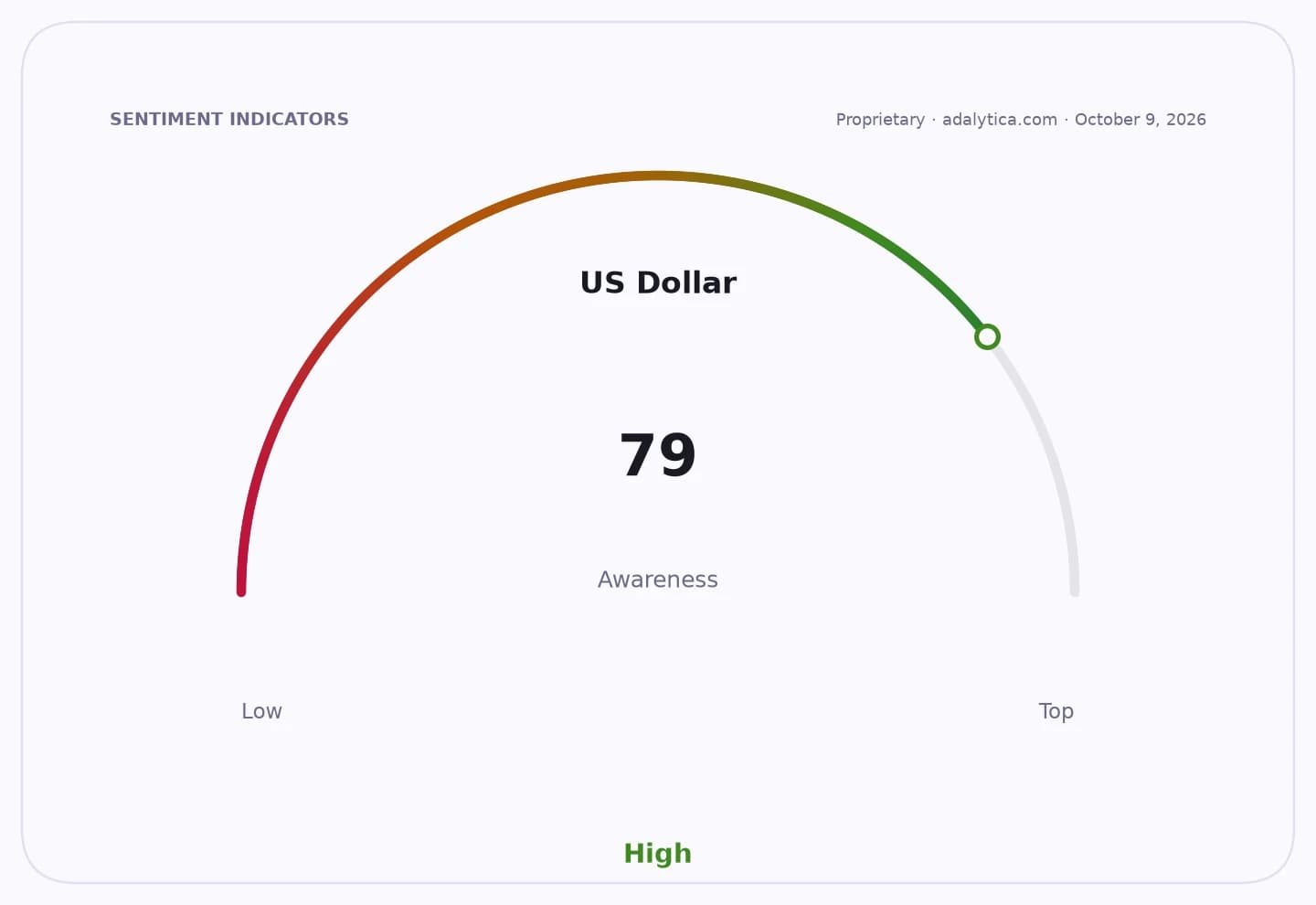
Sentiment IndicatorsⓘProprietary · adalytica.com · October 16, 2026
This is a snapshot — live sentiment, awareness and momentum for 130+ markets update continuously in the dashboard.Open AlphaPulse
That matters because the selloff is not just a one-day equity move: it is a reminder that Japan’s market, despite strong domestic momentum this year, remains highly exposed to U.S. rates and the valuation premium attached to technology shares. Higher borrowing costs tend to compress multiples in long-duration growth stocks, especially those linked to artificial intelligence, and Tokyo’s morning losses were led by nonferrous metals, machinery and electrical equipment — sectors tied to the global semiconductor and capital-expenditure cycle.
The Nikkei had been trading near the top end of its recent range, closing at 67,744.29 on Wednesday, well above its 50-day moving average of 66,224.60 and 200-day average of 60,963.39. Thursday’s early drop pushed it back toward the middle of that band, underscoring how quickly momentum can reverse when the market shifts from earnings and buyback support to macro fear. The index’s relative strength reading, at 46.2 in the latest session data, also suggests the market is no longer in an overbought state, leaving room for more volatility if U.S. yields climb further.
For investors, the immediate issue is whether the move marks a healthy reset after a strong run or the start of a broader de-rating in Asia’s growth trades. A persistent rise in U.S. yields would pressure Japanese exporters’ valuation multiples and weigh on the same technology names that have driven much of the year’s gains, while also testing the durability of buyback demand that helped cushion the market in recent sessions.
The broader narrative is straightforward: Tokyo is still trading as a high-beta expression of Wall Street’s rate outlook. If U.S. inflation keeps the Fed on alert, the Nikkei’s leadership from AI, chip and machinery stocks will stay vulnerable. If Treasury yields stabilize, however, the pullback could be limited to a rotation rather than a trend break.
| Entity | Gains | Losses |
|---|---|---|
| U.S. dollar bulls | ▲Higher-rate backdrop | ▼Risk assets |
| Japanese exporters | ▲Weaker yen support | ▼Multiple compression |
| Tokyo value sectors | ▲Relative rotation | ▼Tech-led selloff |
| AI and chip stocks | ▲None | ▼Highest duration exposure |