AI shares are under pressure again, forcing South Korea’s Kospi to halt trading and dragging the sector back into the kind of volatility that has kept investors wary of the market’s biggest winners. The selloff matters because AI has become a key driver of global equity gains, and when that leadership wobbles, it can hit risk appetite far beyond semiconductors.
AI shares pressure South Korea Kospi trading halt
The immediate trigger is a renewed flight from richly valued AI-related names as investors reassess how much earnings can justify the spending boom in chips, data centers and model development. The downturn has deepened concerns about leverage, liquidity and overly aggressive profit forecasts in parts of the AI ecosystem, particularly after recent weak sales updates and debt worries at some smaller players.
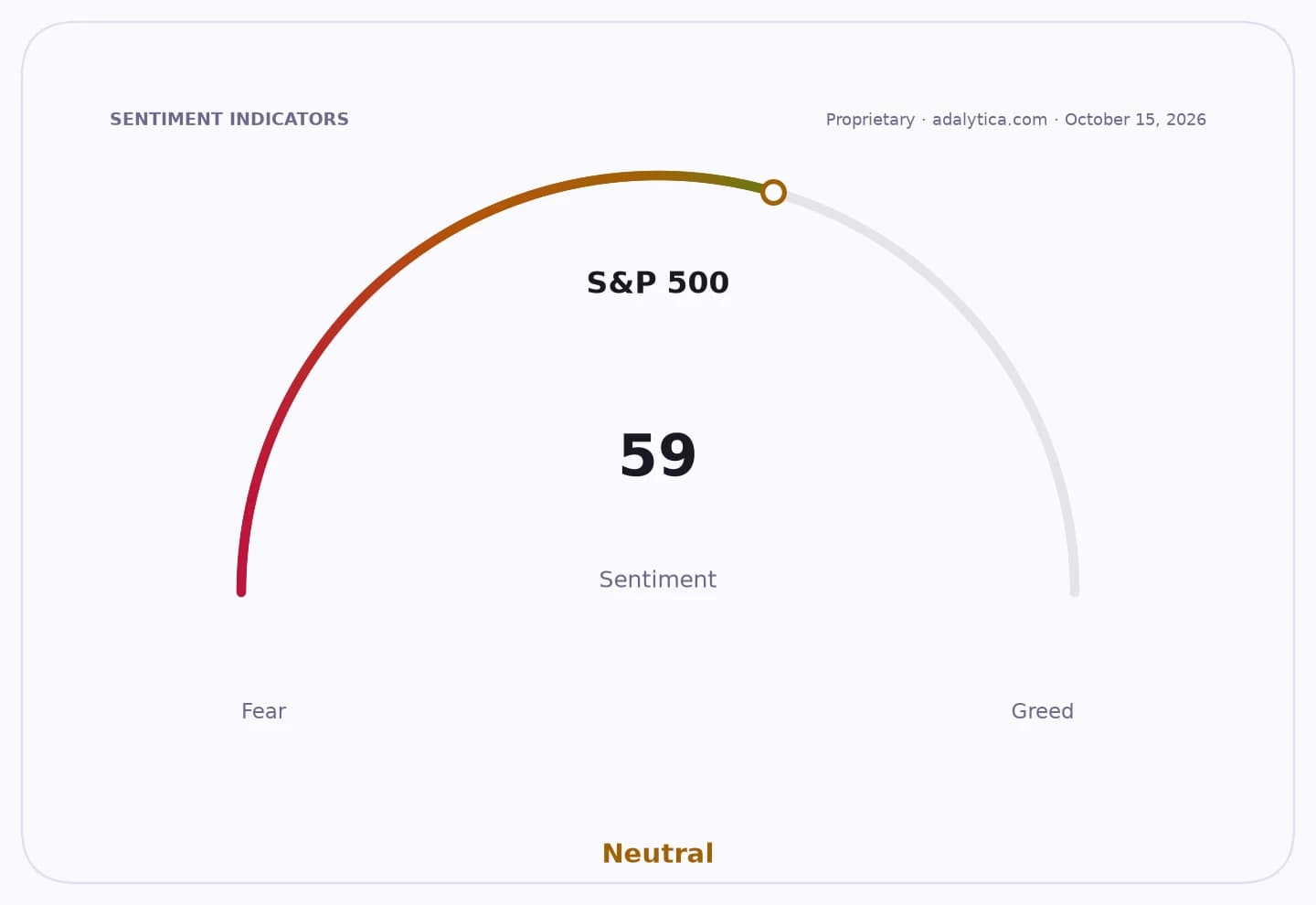
Sentiment IndicatorsⓘProprietary · adalytica.com · October 16, 2026
This is a snapshot — live sentiment, awareness and momentum for 130+ markets update continuously in the dashboard.Open AlphaPulse
That caution is showing up across major benchmarks. The S&P 500 ETF, SPY, closed at 771.48 on Oct. 16, up sharply from 645.57 in late November, but the latest reading also shows a market that has gotten technically stretched: the fund’s 14-day RSI stood at 57.2, after having flashed 90.2 in April, while price remains near its 50-day moving average of 767.56 and well above its 200-day average of 721.92. The Nasdaq-100 ETF, QQQ, slipped to 721.82 from 728.95 the prior session, with RSI at 39.2 and the close sitting just below its 50-day average of 726.57, signaling momentum has cooled even as the broader uptrend holds.
Semiconductor exposure is weakening more sharply. The VanEck Semiconductor ETF, SMH, fell to 550.84 on Oct. 16 from 564.74 a day earlier and is now well below its 50-day average of 579.25, with RSI at 29.0 and the MACD below its signal line. That is a classic sign that traders are trimming exposure to the most crowded AI trade, even if longer-term demand for advanced chips remains intact.
The market backdrop is also less forgiving. Adalytica’s S&P 500 trade-signal snapshot shows sentiment at 80, or “Greed,” while awareness sits at 1, labeled “Extreme Fear,” a combination that points to a market still chasing gains but increasingly vulnerable to abrupt reversals. Its global stability gauge has dropped to 25, or “Fear,” underscoring rising macro and geopolitical unease just as investors are questioning how much more the AI theme can stretch.
For investors, the key question is whether this is a routine rotation or the start of a broader de-risking out of AI leadership. If the pressure spreads, high-multiple software, chipmakers and data-center beneficiaries could all reprice lower; if buyers step in, the pullback may prove to be another volatile pause in a still-intact bull market.
The next catalyst is likely to come from earnings and guidance across the AI supply chain, along with any further signs of stress in leveraged AI names or added regulatory scrutiny around the sector’s financing and claims.
| Entity | Gains | Losses |
|---|---|---|
| Cash-heavy large-cap index funds | ▲Buy-the-dip entries | ▼Near-term volatility |
| AI chipmakers with strong balance sheets | ▲Selective rotation support | ▼Momentum-selling pressure |
| Highly leveraged AI names | ▲None | ▼Valuation compression |
| Investors holding SPY/QQQ | ▲Broader market resilience | ▼Choppy leadership from tech |