AI concerns are again dragging on markets, and the damage is showing up fastest in the stocks and sectors most tied to the boom in data centers, chips and capex. In Stockholm, that meant a broad selloff in industrial names exposed to AI infrastructure, while Nordea’s 6% drop after its quarterly report added another weight to a market already uneasy about growth, inflation and valuation.
Stockholm stocks fall on AI worries and Nordea drop
The Stockholm benchmark was lower in late morning trade, with the OMXS30 down 1.1% and the broader OMXSPI off 1.0%, as renewed AI worries hit European equities after a weak close on Wall Street and losses in Tokyo and Seoul. The catalyst was an unexpectedly hot US inflation print, which pushed Treasury yields higher and reinforced the idea that the Federal Reserve may have less room to ease financial conditions just as investors are questioning whether AI spending is running ahead of near-term returns.
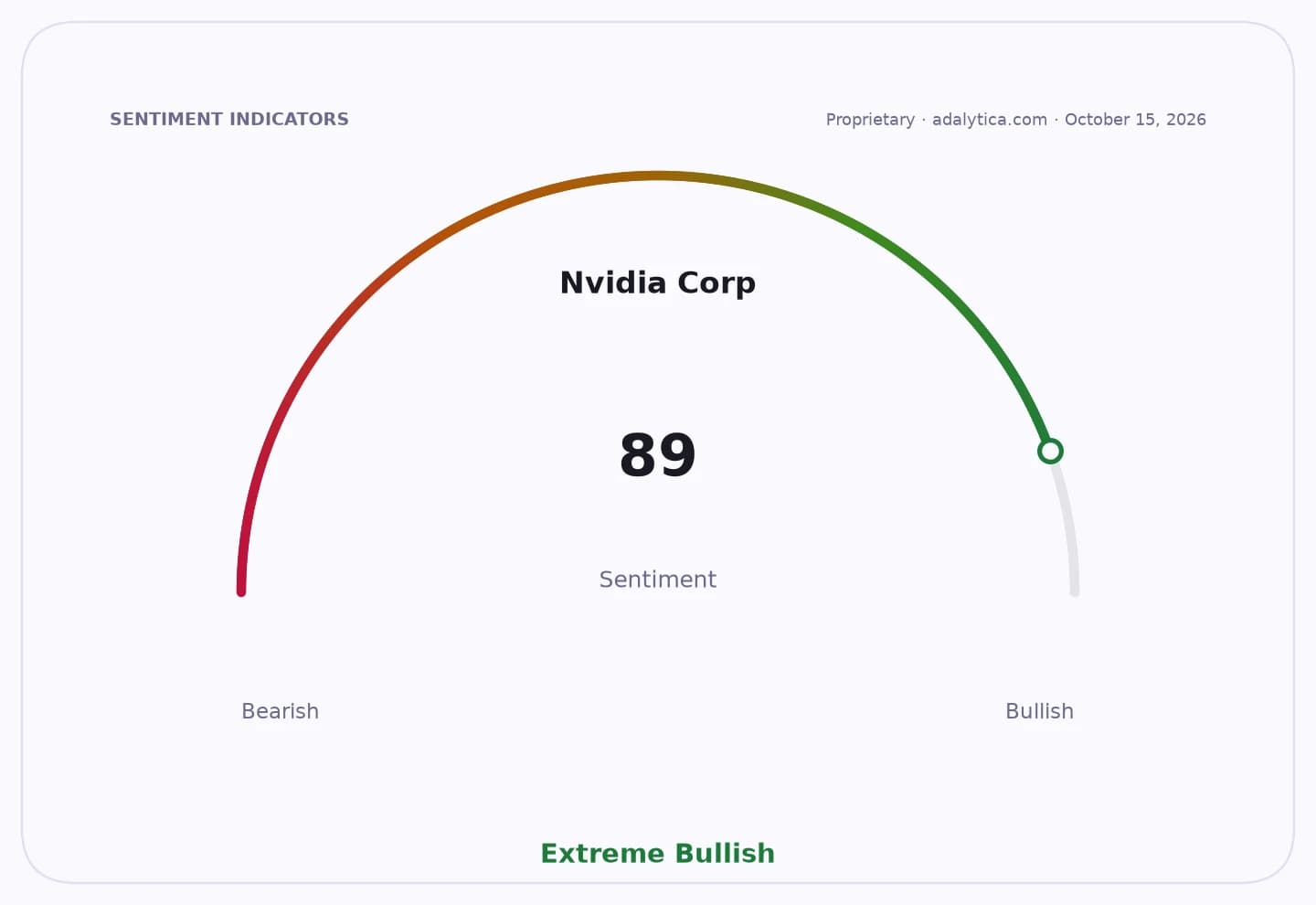
Sentiment IndicatorsⓘProprietary · adalytica.com · October 17, 2026
This is a snapshot — live sentiment, awareness and momentum for 130+ markets update continuously in the dashboard.Open AlphaPulse
That matters because the AI trade has become more than a story about one sector. It is a capital-allocation cycle that has lifted everything from semiconductors to networking gear, electrical equipment and data-center suppliers. When that trade wobbles, the repricing spills into the wider market. Nasdaq futures have already shown the strain, with the benchmark slipping back toward its 50-day moving average as momentum indicators weaken, a sign that investors are trimming risk rather than buying the dip.
In Stockholm, the market’s reaction laid out the winners and losers clearly. Ericsson surged 9% after beating expectations on most lines, helped by stronger sales and cost cuts, while Telia and Tele2 rose 4.5% and 3% respectively as investors rotated toward steadier cash flows. But Atlas Copco fell 5%, ABB lost nearly 5%, and Sandvik and Alfa Laval were also under pressure, reflecting how deeply the AI buildout has been embedded in European industrial earnings narratives. If the market starts to doubt the pace of datacenter expansion, those “picks-and-shovels” names can de-rate quickly.
Nordea’s report was less dramatic on the numbers, but it still mattered for sentiment. The bank’s third-quarter results largely matched expectations, yet the decision to keep pausing share buybacks disappointed traders and sent the stock down 6%. In a risk-off tape, investors want proof of capital return and balance-sheet strength, not just results that meet the street. That makes even a mild miss in shareholder distributions enough to hit the shares.
The bigger message is that markets are now wrestling with two forces at once: inflation that refuses to cool as fast as hoped, and an AI investment cycle that may be entering a more selective phase. Adalytica’s Long-Term Inflation Expectations Sentiment sat at an “Extreme Greed” reading of 89, while confidence in the Fed’s 2% target dropped sharply to 54, underscoring how quickly conviction can erode when price pressures reappear.
For investors, the setup argues for discipline, not abandonment of the theme. I believe the market is underestimating how much value will still be created in AI infrastructure, but it is also underestimating the difference between the true toll roads of the cycle and the higher-beta suppliers riding on exuberant capex expectations. That means staying constructive on the infrastructure winners with recurring demand and pricing power, while being selective on industrial cyclicals that need uninterrupted datacenter spend to justify their multiples.
The near-term catalyst is simple: more earnings, more capex commentary and, crucially, more inflation data. If the macro backdrop stays sticky, the market will keep rewarding balance-sheet quality, buybacks and recurring revenue over pure AI narrative exposure. For now, the trade is no longer about chasing everything linked to artificial intelligence; it is about owning the companies that can survive the reset and compound through it.
| Entity | Gains | Losses |
|---|---|---|
| Ericsson | ▲Q3 beat, margin lift | ▼None |
| Atlas Copco | ▲None | ▼AI-exposure de-rating |
| Nordea | ▲Stable earnings base | ▼Buyback pause disappoints |
| Telia/Tele2 | ▲Defensive rotation inflows | ▼Growth names |