Wall Street is still chasing the AI buildout, and Wednesday’s analyst calls show investors where the next round of alpha may come from: the companies supplying compute, the platforms distributing it, and the consumer names quietly compounding behind the noise.
SpaceX, Nvidia, Dell Calls Track AI Buildout
The most important call was Morgan Stanley’s repeated overweight on SpaceX, which it said remains undervalued because investors are missing the scale of its “Distributed Inference Cloud” opportunity. That matters because the AI trade is moving beyond chips and into the infrastructure that carries, hosts and monetizes inference at scale. If the market has mostly priced Nvidia as the purest beneficiary of AI training and data-center demand, the next leg of the cycle may belong to the toll roads underneath it — satellites, networks, edge compute and connectivity.
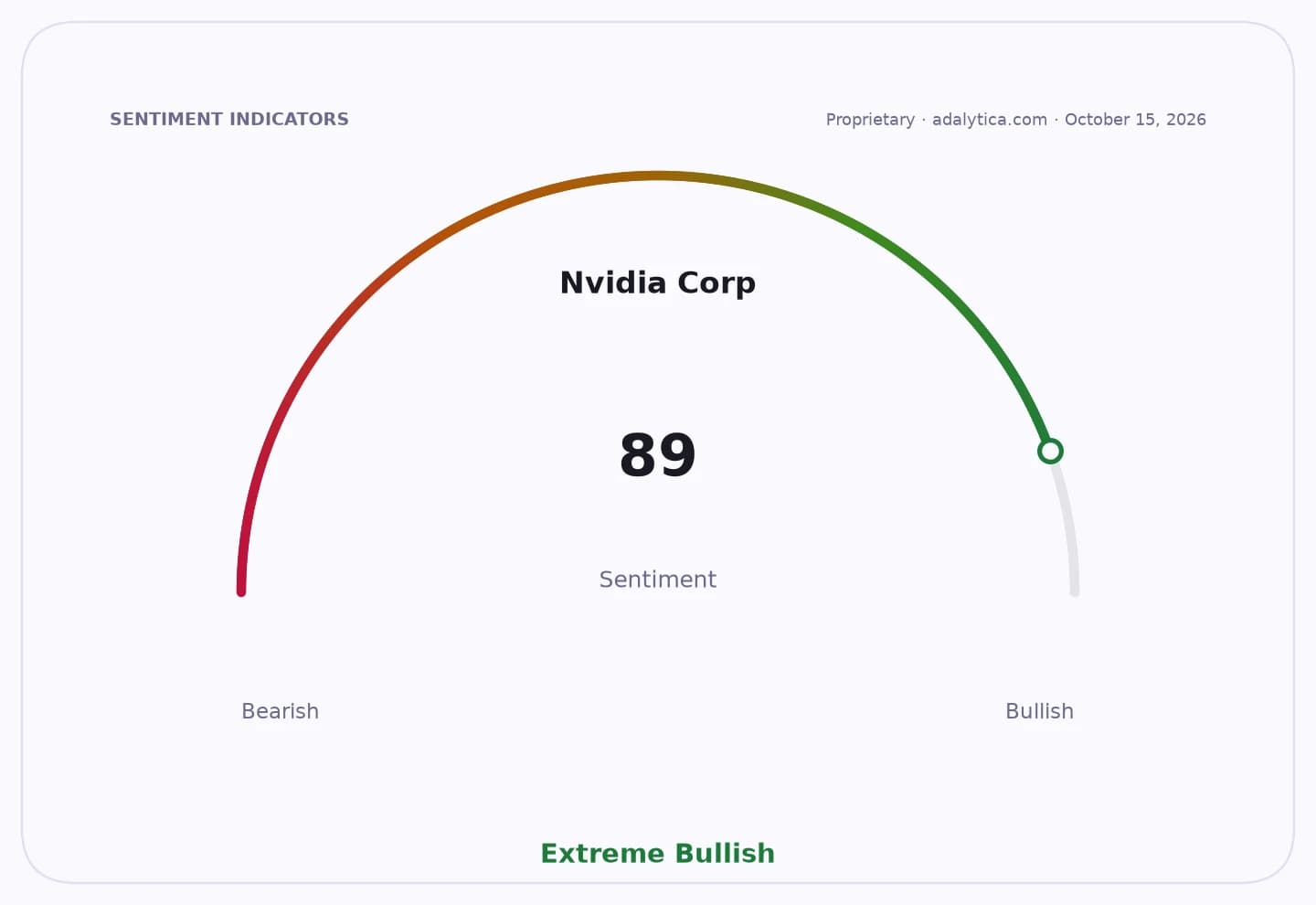
Sentiment IndicatorsⓘProprietary · adalytica.com · October 15, 2026
This is a snapshot — live sentiment, awareness and momentum for 130+ markets update continuously in the dashboard.Open AlphaPulse
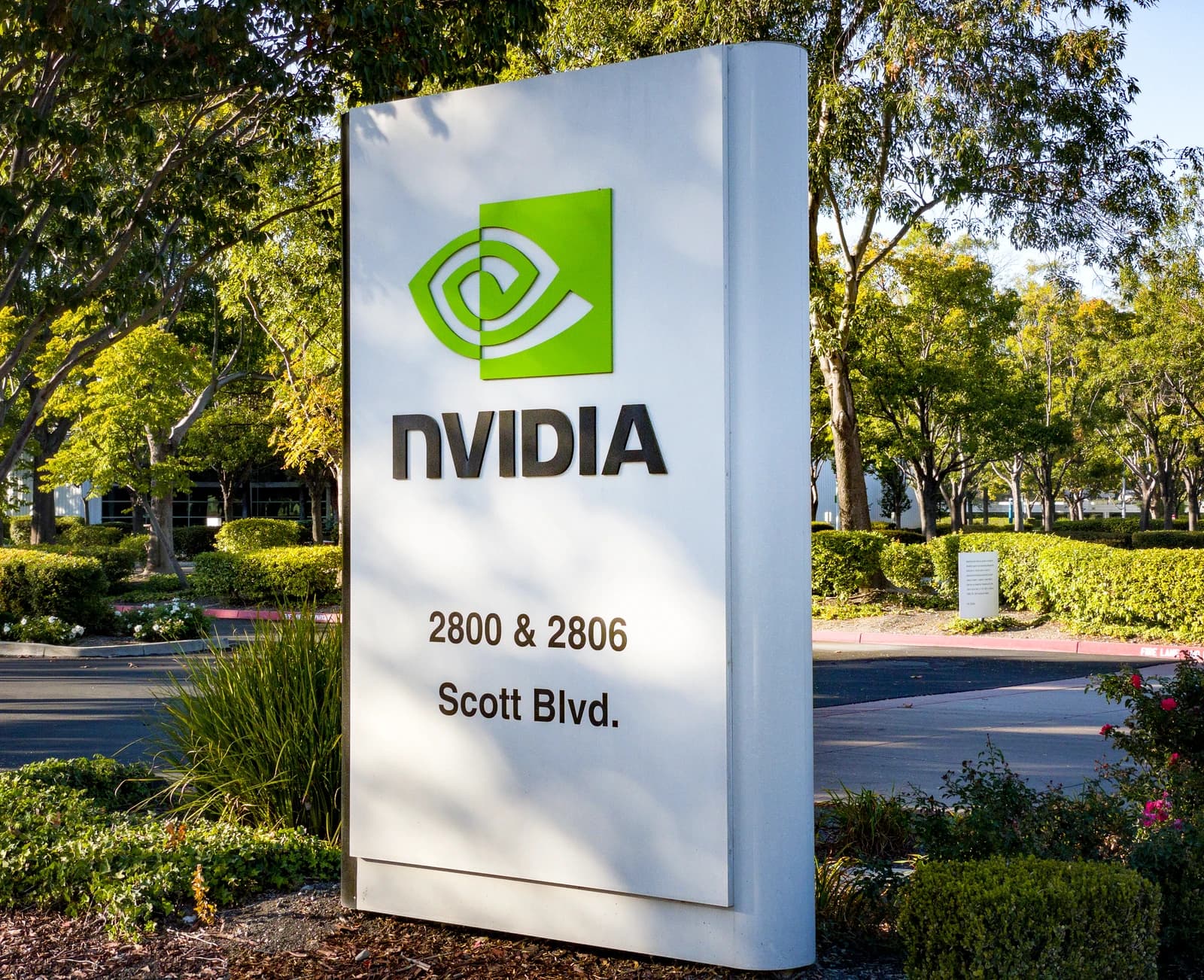
That is why Nvidia still matters so much even in a day packed with stock-specific upgrades. Mizuho kept its outperform rating on the chipmaker, saying it remains the leader in AI training and inference chips for data centers. Nvidia shares have already rebounded sharply from their spring weakness, and recent technical readings show why traders remain engaged: the stock is holding above its 50-day moving average, with momentum indicators still positive even after a volatile stretch. Adalytica’s proprietary earnings snapshot also shows extreme greed alongside very low awareness, a combination that usually means the market is still underestimating how much of the AI capex cycle is being absorbed by the leader in the supply chain.
The broader message for investors is that this is no longer just a semiconductor story. Goldman Sachs raised Meta, citing momentum from its Muse agent launch and Wonder model family, while Truist initiated Entegris on increased content at the most advanced chip nodes. That reinforces a familiar pattern: every wave of AI spending pulls through more equipment, materials, logistics and network infrastructure. When model training shifts into inference and agentic workloads, the winners expand from GPU vendors to anyone enabling bandwidth, power, memory, packaging and distribution.
Nvidia Corp — 30-day sentimentadalytica.com
Explore this data interactively — full history, time series and cross-market comparisons.Open AlphaPulse
The consumer side of the market is also starting to show where capital is flowing. Goldman upgraded Trane Technologies, arguing it is a best-in-class operator with accelerating growth, a reminder that the data-center boom is not just about servers. Cooling, electrical systems and building infrastructure remain crucial constraints on the AI expansion trade. Investors underweight those “unsexy” names risk missing some of the cleanest earnings leverage in the market.
Jefferies’ upgrade of Brinker International to buy is a different kind of call, but the investment logic is similar: the market often misprices transition moments before cash flow acceleration becomes obvious. Jefferies described it as a “compounding story,” and the stock’s recent recovery reflects a business proving that operational improvement can still command a premium even in a choppy consumer backdrop. Kontoor Brands also fits that mold. Jefferies upgraded the Wrangler owner to buy, saying the pending Lee sale frees up capital for investment, especially in women’s apparel, while Helly Hansen gives the company a separate growth lever. In other words, this is not just a denim story; it is a capital allocation story with multiple options for margin and multiple expansion.
Elsewhere, Barclays downgraded Dell, warning that much of its recent growth has been driven by higher average selling prices offsetting memory inflation, with a slowdown likely as memory prices normalize. That is the kind of call investors should pay attention to because it identifies where the easy money in the AI hardware cycle may be fading. If AI spending remains strong but pricing pressure returns, the market will continue rotating toward the suppliers with real scarcity value and away from companies relying on temporary pricing power.
For now, the dominant market narrative is clear: Wall Street is looking for the next layer of the AI trade, and the biggest opportunity may be in the businesses that sit one step removed from the headline chip names. Nvidia remains the anchor, but SpaceX, Entegris, Trane and other infrastructure beneficiaries may offer the more asymmetric upside as AI moves from buildout to monetization. If you want exposure before the crowd catches up, own the picks-and-shovels, not just the gold miners.
| Entity | Gains | Losses |
|---|---|---|
| Nvidia | ▲AI chip demand tailwind | ▼Shorting the core AI trade |
| SpaceX | ▲Inference-cloud upside | ▼Investors focused only on satellites |
| Dell | ▲Higher ASPs in near term | ▼Margin pressure as memory normalizes |
| Brinker/Kontoor Brands | ▲Turnaround and compounding upside | ▼Skeptics on consumer recovery |