Bigger-than-usual bearish options trades in Micron and Nvidia suggest some traders are positioning for the semiconductor rally to stall, even after months of outsized gains in AI-linked chip stocks.
Nvidia and Micron Put Buying Rises in Semis

That matters because chips have become the market’s cleanest expression of the AI capex boom. When sentiment turns in Nvidia, Micron and the broader semiconductor complex, it can ripple through the Nasdaq, the SOXX ETF, supplier chains and the crowded trades built around data-center spending.
Sentiment IndicatorsⓘProprietary · adalytica.com · October 12, 2026
This is a snapshot — live sentiment, awareness and momentum for 130+ markets update continuously in the dashboard.Open AlphaPulse
The most eye-catching move was in Nvidia, where 100,000 Jan. 15 $180 puts traded for about $21 million just after the opening bell. If the trade was directional, it implies a bet that Nvidia could fall roughly 22% by expiry. Nvidia shares have already been volatile, with recent technical readings showing the stock slipping back from overbought levels even as long-term momentum remains intact.
Micron drew even more attention. Traders tied about $270 million in premium to likely put buying, much of it in deep in-the-money contracts expiring in June 2028. SpotGamma data suggest the flow included around 125 puts with strikes between $2,250 and $2,500, while roughly 50 trades at the $2,050 strike looked like sales. With Micron near $1,030, the structure resembles a bearish spread that behaves like a synthetic short position.
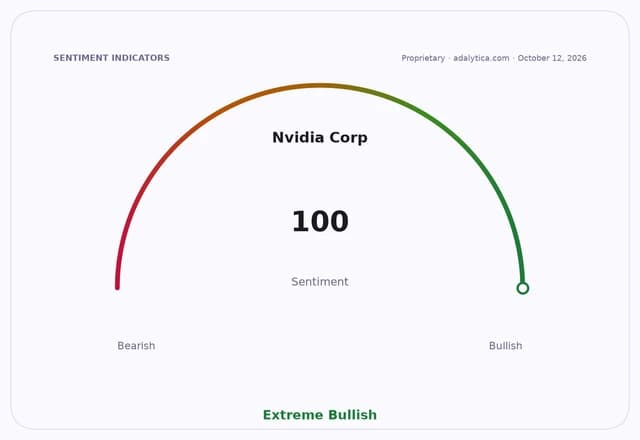
That is important for investors because it points to a sophisticated hedge, not just a quick speculation. Traders often buy deep in-the-money puts instead of shorting stock when borrow is expensive or when they want defined risk. In other words, the market is not merely chasing upside in memory and AI chips; it is also paying up for protection against a sharp reset.
The broader tape confirmed the caution. More than 180,000 puts changed hands in the SMH semiconductor ETF by midday, versus about 50,000 calls, with put premium outpacing call premium. The put-to-call open-interest ratio in SMH climbed to 1.95, its highest since the second week of August, while the same ratio for QQQ rose to 1.51. That is a sign that traders are using index and sector options to fade the recent rebound rather than chase it.
For the market, the narrative is straightforward: the AI chip trade is still powerful, but it is now crowded enough that even a small shift in expectations can trigger heavy hedging. That does not mean the secular story is broken. Nvidia still sits at the center of AI infrastructure spending, and Micron remains levered to memory demand as hyperscalers keep pouring money into compute. But after a relentless run, investors are being forced to price in not just growth, but also valuation risk, supply surprises, and the possibility that the trade has run ahead of fundamentals.
This is where the opportunity lies. The market often punishes the most obvious winners first when positioning gets too one-sided, then rotates toward the less crowded picks-and-shovels beneficiaries: equipment makers, power infrastructure, cooling, networking and the industrial names tied to data-center buildouts. If semiconductor leadership wobbles, that second-order trade can become the better risk-adjusted way to own the AI boom.
The next catalyst is whether these options flows are isolated hedges or the start of a broader de-risking across semis. If chip shares lose momentum, expect the unwind to show up first in the most crowded AI names and then in the ETF layer that sits on top of them. For investors, the message is clear: stay exposed to the AI buildout, but stop treating Nvidia and Micron as one-way trades. In a market this crowded, volatility itself has become the opportunity.
| Entity | Gains | Losses |
|---|---|---|
| Put buyers | ▲Downside protection | ▼Premium paid |
| Nvidia/Micron shorts | ▲Bearish exposure | ▼Risk of squeeze |
| SOXX/SMH hedgers | ▲Portfolio insurance | ▼Lower upside participation |
| AI infrastructure suppliers | ▲Rotation inflows | ▼Sentiment spillover from chip leaders |