Nvidia’s 29% advance this year has put the stock back near record territory, but the real debate for investors is whether the company can keep translating the artificial intelligence build-out into outsized earnings without a slowdown in hyperscaler spending.
Nvidia rises on AI spending outlook
That remains the core bull case. Nvidia trades at 24.9 times forward earnings even after a five-year gain of more than 1,110%, and the latest quarter showed revenue up 106% and net income up 126% year over year, underscoring how much of the AI infrastructure wave is still flowing through the company’s GPUs.
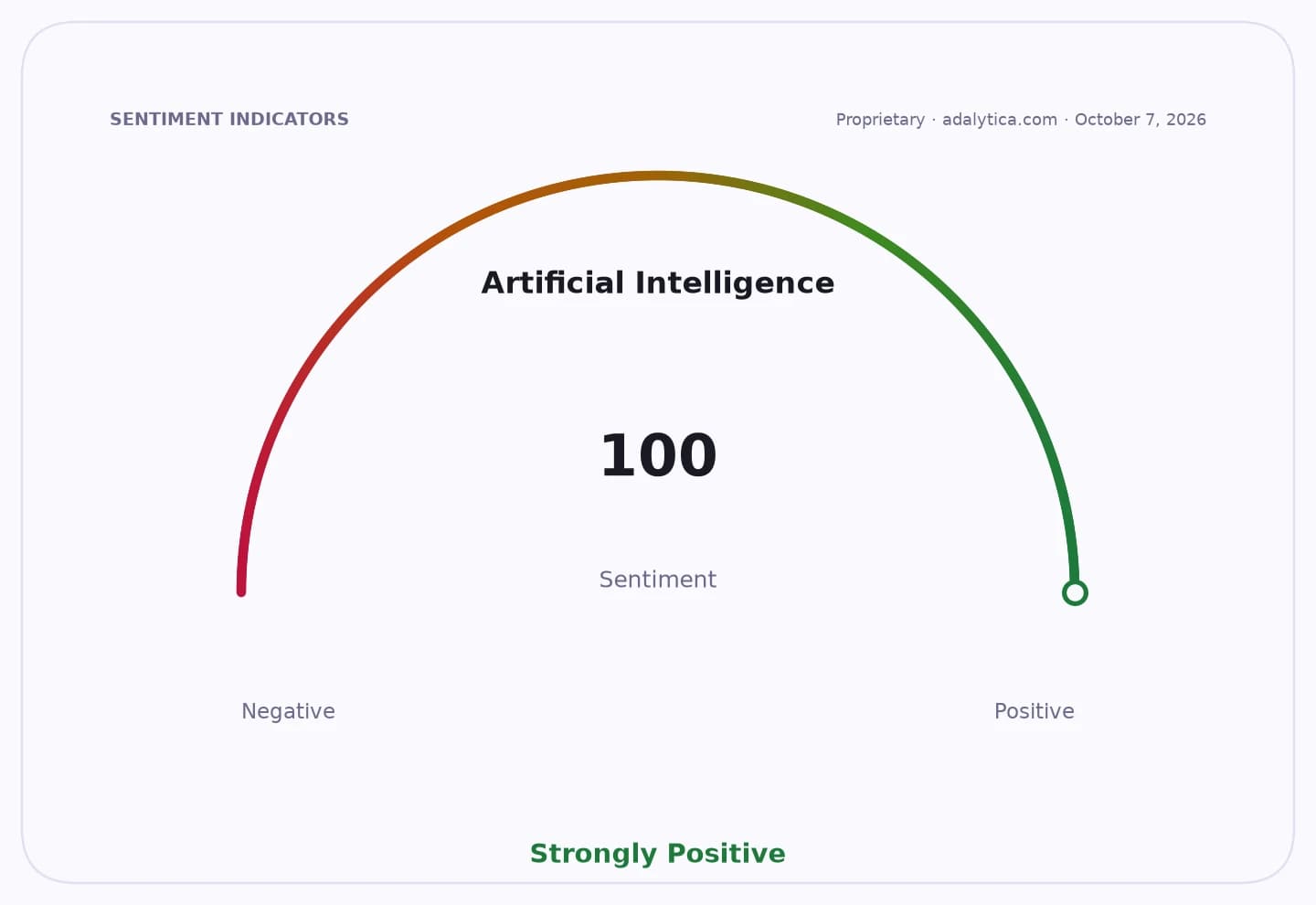
Sentiment IndicatorsⓘProprietary · adalytica.com · October 9, 2026
This is a snapshot — live sentiment, awareness and momentum for 130+ markets update continuously in the dashboard.Open AlphaPulse

The scale of that spending is what makes Nvidia look compelling in October. The five biggest hyperscalers are on track to top $1 trillion in capital expenditures in 2027, a level that points to another year of heavy demand for data-center chips, networking gear and related hardware. Nvidia has been the biggest beneficiary of that capex cycle, and that helps explain why the stock has climbed to a $5.8 trillion market value.
But the caution is just as important for investors. The market is paying for sustained growth, and it does not reward deceleration for long. If hyperscalers fail to generate adequate returns on their AI investments, spending could cool and ripple back through the semiconductor supply chain, pressuring demand for Nvidia’s chips and the stock multiple.
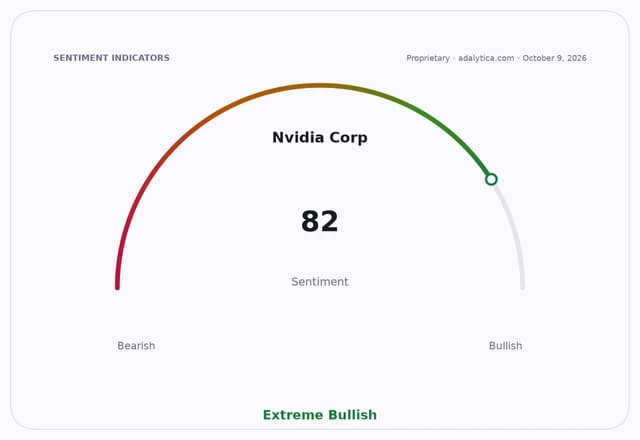
That tension is visible in the shares and the sector. Nvidia closed at $229.28 on Oct. 9, after a brief run above $237, while the broader semiconductor ETF SOXX has also been volatile, trading at $559.40 after a sharp retreat from its recent high. Nvidia’s 50-day moving average sits above the 200-day average, a sign the uptrend remains intact, but the stock’s momentum has cooled from an overbought reading earlier this week.
Adalytica’s Nvidia earnings sentiment snapshot still shows “Greed” even as awareness remains in “Extreme Fear,” a mix that reflects strong enthusiasm around the name alongside lingering uncertainty about how long the AI capex cycle can last. For investors, that means Nvidia remains the clearest way to play the AI build-out — and the clearest stock to watch for signs that the cycle is losing steam.
The next catalyst is the pace of hyperscaler spending and the next earnings update, which should show whether AI demand is still outrunning expectations or beginning to normalize.
| Entity | Gains | Losses |
|---|---|---|
| Nvidia | ▲Higher AI chip demand | ▼Multiple compression if growth slows |
| Hyperscalers | ▲AI infrastructure buildup | ▼Heavy capex and ROI pressure |
| Semiconductor sector | ▲Spillover from AI spending | ▼Broad selloff if capex cools |
| Long Nvidia investors | ▲Continued earnings upside | ▼Valuation risk from deceleration |