Nvidia and Microsoft are still looking like the two best-positioned winners in artificial intelligence, and the latest price action suggests investors are continuing to reward that kind of durability.
Nvidia and Microsoft stay strong in AI rally
That matters because AI is no longer just a story about excitement and hype. It is becoming a capital-allocation race, where the companies with the deepest ecosystems, strongest customer lock-in, and most dependable free-cash-flow engines are the ones most likely to keep compounding for years. In that framework, Nvidia and Microsoft stand out for different reasons: Nvidia owns the core computing stack, while Microsoft sits across the software, cloud, and enterprise distribution layers that make AI usable at scale.
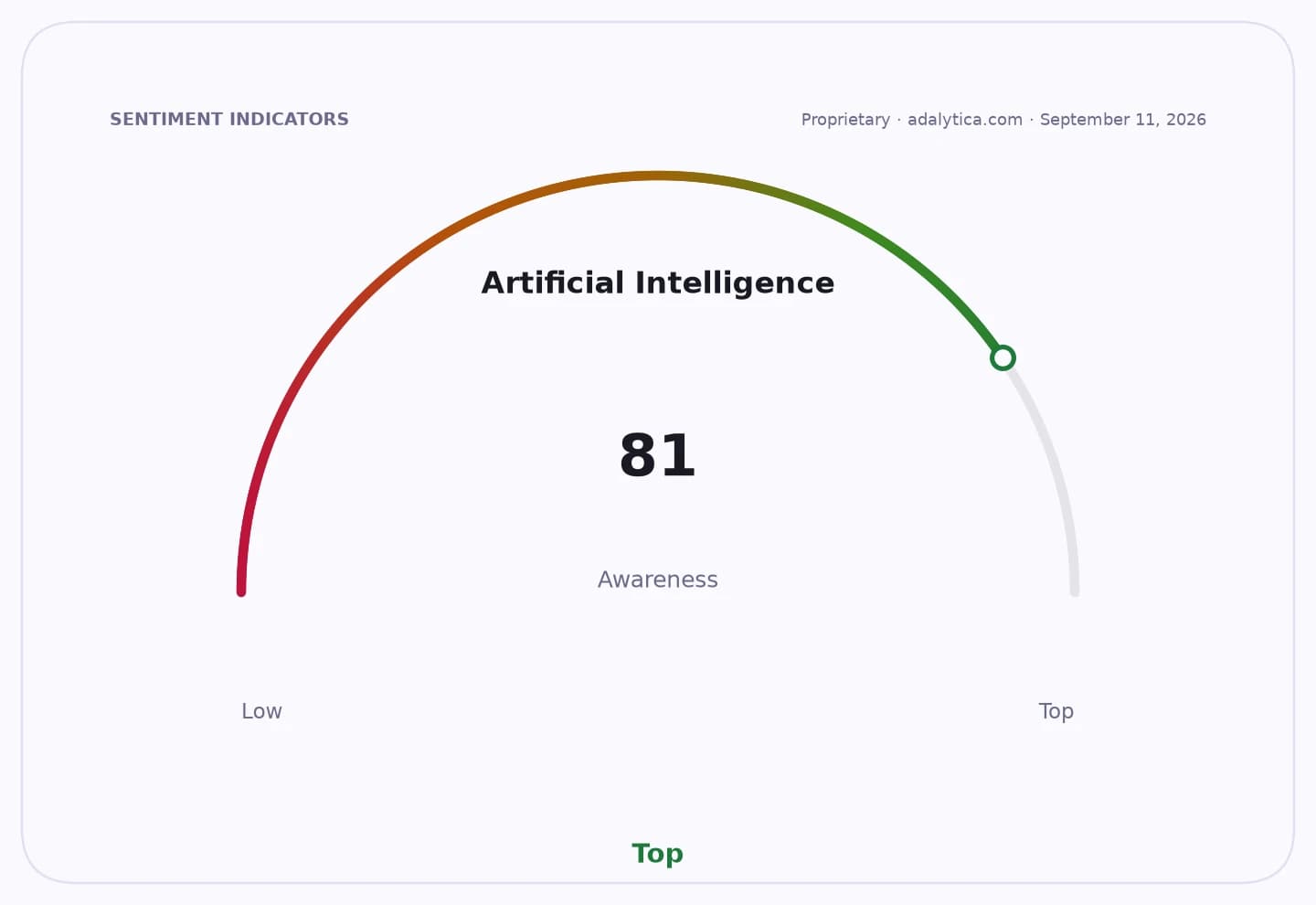
Sentiment IndicatorsⓘProprietary · adalytica.com · September 29, 2026
This is a snapshot — live sentiment, awareness and momentum for 130+ markets update continuously in the dashboard.Open AlphaPulse
Nvidia’s shares ended at $228.86 on Sept. 28, not far from their recent highs, after rebounding sharply from the mid-170s earlier this year. The stock is now above both its 50-day and 200-day moving averages, with RSI readings back in constructive territory. That does not guarantee upside, but it does show the market has regained confidence in the company’s long-term earnings power after a volatile stretch.
Microsoft looks even more telling from a moat perspective. The stock closed at $509.22, also comfortably above its 50-day and 200-day moving averages, after a brutal selloff earlier this year gave way to a powerful recovery. For long-term investors, that matters because Microsoft’s advantage is not just AI hype; it is the ability to layer AI into products and services that already touch businesses every day. That makes monetization easier, customer churn lower, and recurring revenue more predictable.
The broader lesson for investors is that moats matter most when a new technology wave creates both opportunity and scarcity. AI is forcing companies to spend heavily on chips, cloud infrastructure, software integration, and developer tools. Nvidia benefits because its hardware and software stack remains the default choice for high-end AI workloads. Microsoft benefits because its cloud and productivity footprint gives it a built-in route to distribute AI across enterprises without starting from zero.
That combination is why volatility in both stocks should be viewed in the context of long-term compounding, not short-term noise. Nvidia’s Adalytica earnings sentiment snapshot is neutral, but awareness sits in “Extreme Fear,” a reminder that public attention can lag fundamentals or swing wildly around earnings. Microsoft’s sentiment reading is in “Extreme Fear” as well, even though the stock remains a dominant franchise with enormous installed advantages. For patient investors, that gap between fear and fundamentals is often where the best opportunities emerge.
The risk, of course, is valuation and execution. These are not cheap stocks, and neither company can afford a stumble if AI spending slows or competition intensifies. Nvidia also faces concentration risk around a handful of major customers, while Microsoft must keep proving that AI adoption translates into durable profit growth rather than just higher spending.
Still, if you are building a portfolio for the next five to 10 years, the core question is not which stock has had the cleanest quarter. It is which company is most likely to keep widening its moat as AI becomes embedded in computing, enterprise software, and digital infrastructure. On that score, Nvidia and Microsoft remain two of the strongest names in the market.
For investors, the takeaway is simple: keep both on the watchlist, and if you already own them, think like a long-term owner, not a trader.
| Entity | Gains | Losses |
|---|---|---|
| Nvidia | ▲AI chip dominance | ▼GPU rivals |
| Microsoft | ▲Enterprise AI monetization | ▼Pure-play software vendors |
| Long-term investors | ▲Durable compounding | ▼Short-term timing bets |
| AI infrastructure buyers | ▲Scalable tools | ▼Higher spending pressure |