GameStop, Alphabet and BlackRock were among the names drawing investor attention Wednesday as U.S. rates remained pinned near 5.2% on the 10-year Treasury and the Fed funds rate held around 3.7%, keeping the market’s focus on balance-sheet strength, AI spending and asset-gathering franchises.
Alphabet, BlackRock, GameStop Draw Investor Attention
That combination matters because high borrowing costs are still the market’s most important macro filter. A 10-year yield forecast at 5.196% and a policy-rate outlook of 3.726% leave little room for speculative excess, which is why capital is rotating toward businesses with real cash generation, pricing power or direct exposure to infrastructure buildout. In that environment, the market underestimates how much the next leg of equity leadership depends on the firms that either finance the cycle or sell the picks-and-shovels into it.
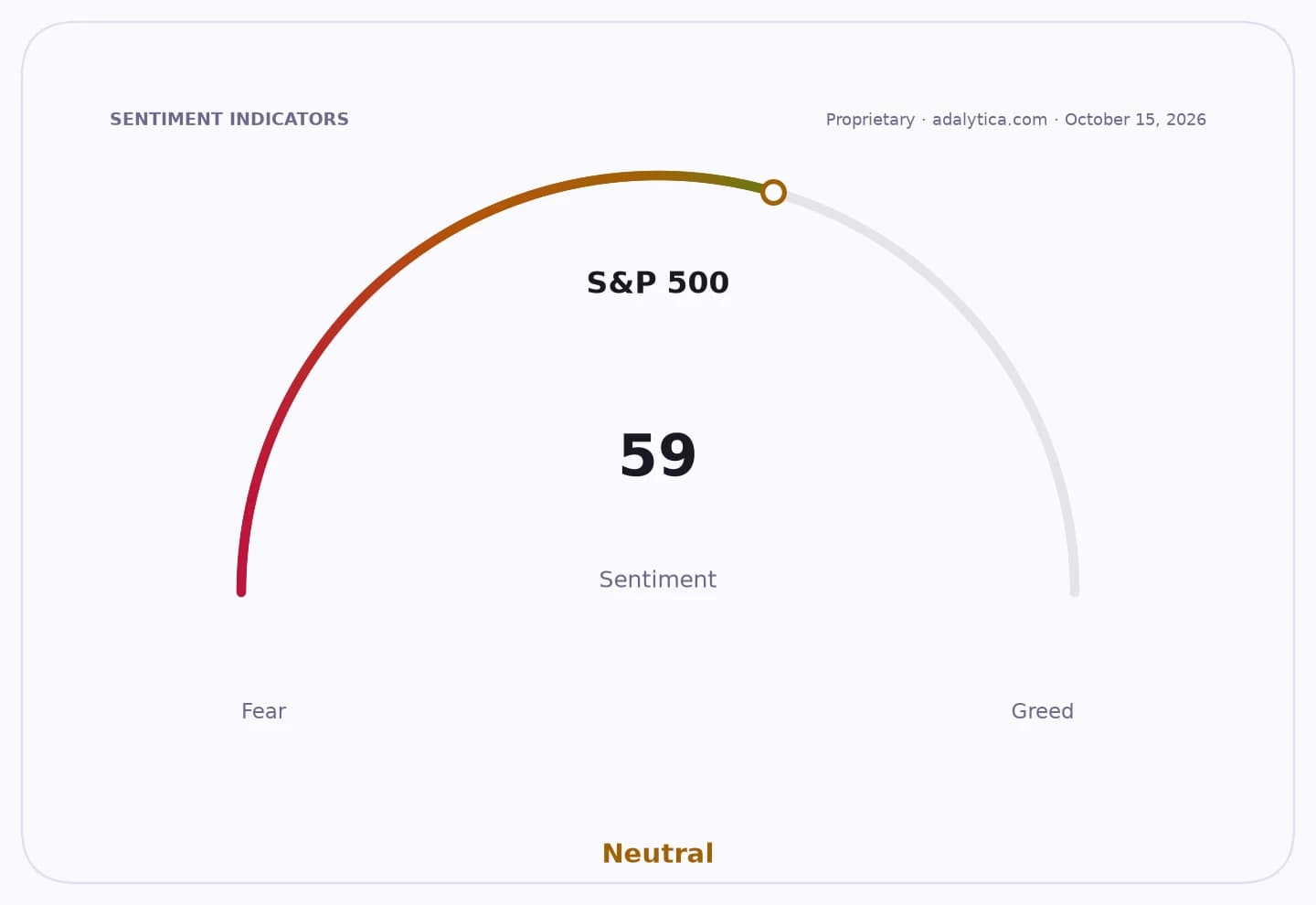
Sentiment IndicatorsⓘProprietary · adalytica.com · October 15, 2026
This is a snapshot — live sentiment, awareness and momentum for 130+ markets update continuously in the dashboard.Open AlphaPulse
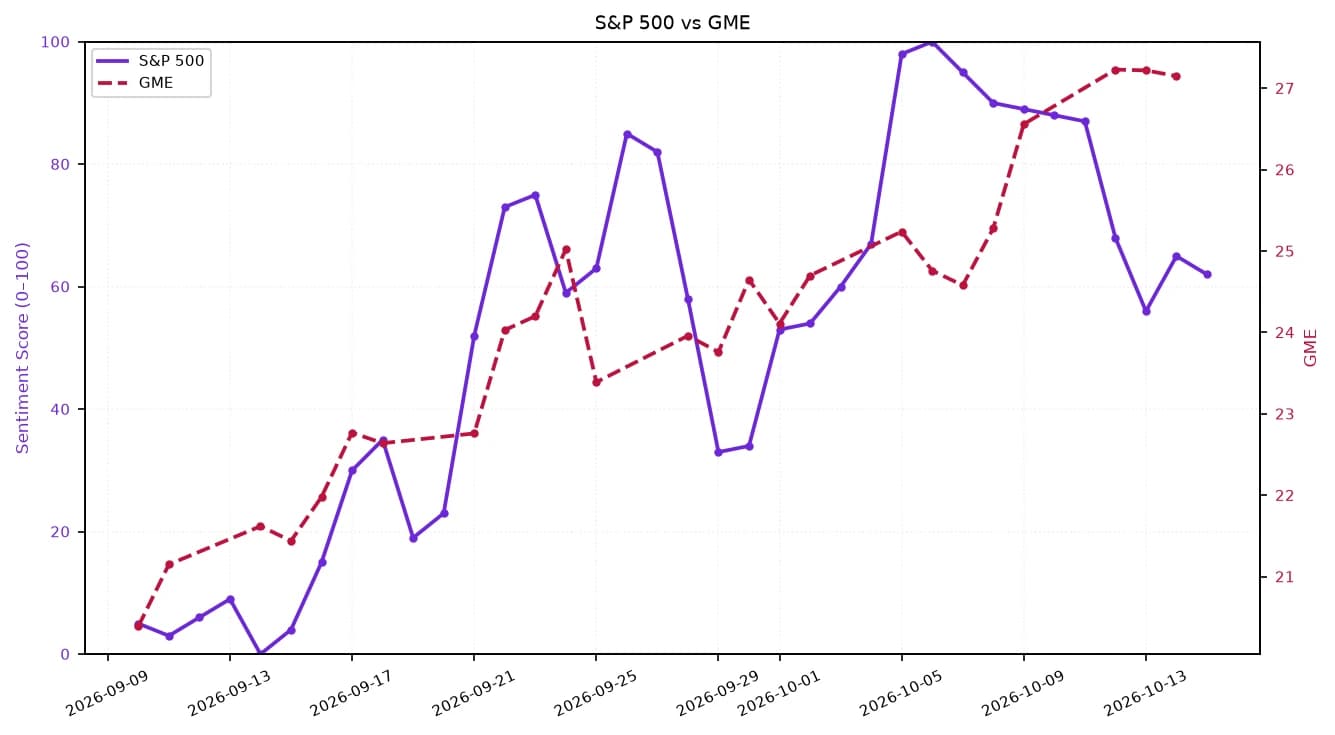
GameStop remains a trading vehicle, but its latest price action shows how quickly momentum can reassert itself when liquidity is still abundant enough for retail flows to matter. The stock closed at $27.15, above its 50-day moving average of $21.31 and its 200-day line of $22.42, while volume jumped to 16.3 million shares. That is not a fundamental rerating; it is a reminder that the market continues to pay up for optionality when the broader tape is fragile.
Alphabet, by contrast, is the cleaner long-term expression of the AI capex boom. Shares finished at $347.64, just below the upper end of their Bollinger Band, with the stock trading above both its 50-day and 200-day moving averages. The move matters because investors are no longer paying only for search resilience; they are paying for a platform that can monetize cloud demand, AI tooling and infrastructure intensity at scale. If the market is right that AI spend remains durable, Alphabet is one of the few megacap names that can absorb that cycle and turn it into operating leverage.
BlackRock sits at the other end of the capital stack and may be the most underappreciated beneficiary of the same macro backdrop. The world’s largest asset manager closed at $1,073.79, holding well above its 200-day average even after recent volatility. Elevated yields and persistent market turnover tend to reward firms with scale in asset gathering, private markets and portfolio rebalancing. In other words, the higher-for-longer regime that compresses speculative multiples can still be constructive for BlackRock’s fee engine.
The broader message for investors is that this market is not being led by cheap money anymore. It is being led by businesses tied to real capital allocation: AI infrastructure, index and active asset flows, and a smaller class of names that can survive speculation-heavy trading. That is why the next opportunity is likely not in chasing every spike, but in owning the companies that profit from the economy of expensive capital.
For now, the trade is straightforward: stay selective, favor cash-generative leaders with structural tailwinds, and treat the most crowded momentum names as trading instruments rather than durable compounders.
| Entity | Gains | Losses |
|---|---|---|
| Alphabet | ▲AI and cloud demand | ▼Speculative peers |
| BlackRock | ▲Higher-rate asset flows | ▼Rate-sensitive borrowers |
| GameStop traders | ▲Momentum volatility | ▼Long-term holders |
| Treasury bears | ▲Elevated yield environment | ▼Duration-heavy assets |