AI infrastructure’s funding model is under growing strain as investors demand more compensation to own data centre debt, Goldman Sachs says, sharpening concern that the industry’s breakneck expansion may run ahead of credit markets’ willingness to finance it.
Goldman warns AI data centre debt costs are rising
That matters because the AI boom is increasingly a capital markets story, not just a technology story. The data centre build-out requires heavy upfront spending on land, power, construction and equipment long before cash flow arrives. When bond spreads widen, the cost of that capital rises, refinancing gets harder and marginal projects become more vulnerable to delays, cost overruns or cancellation.
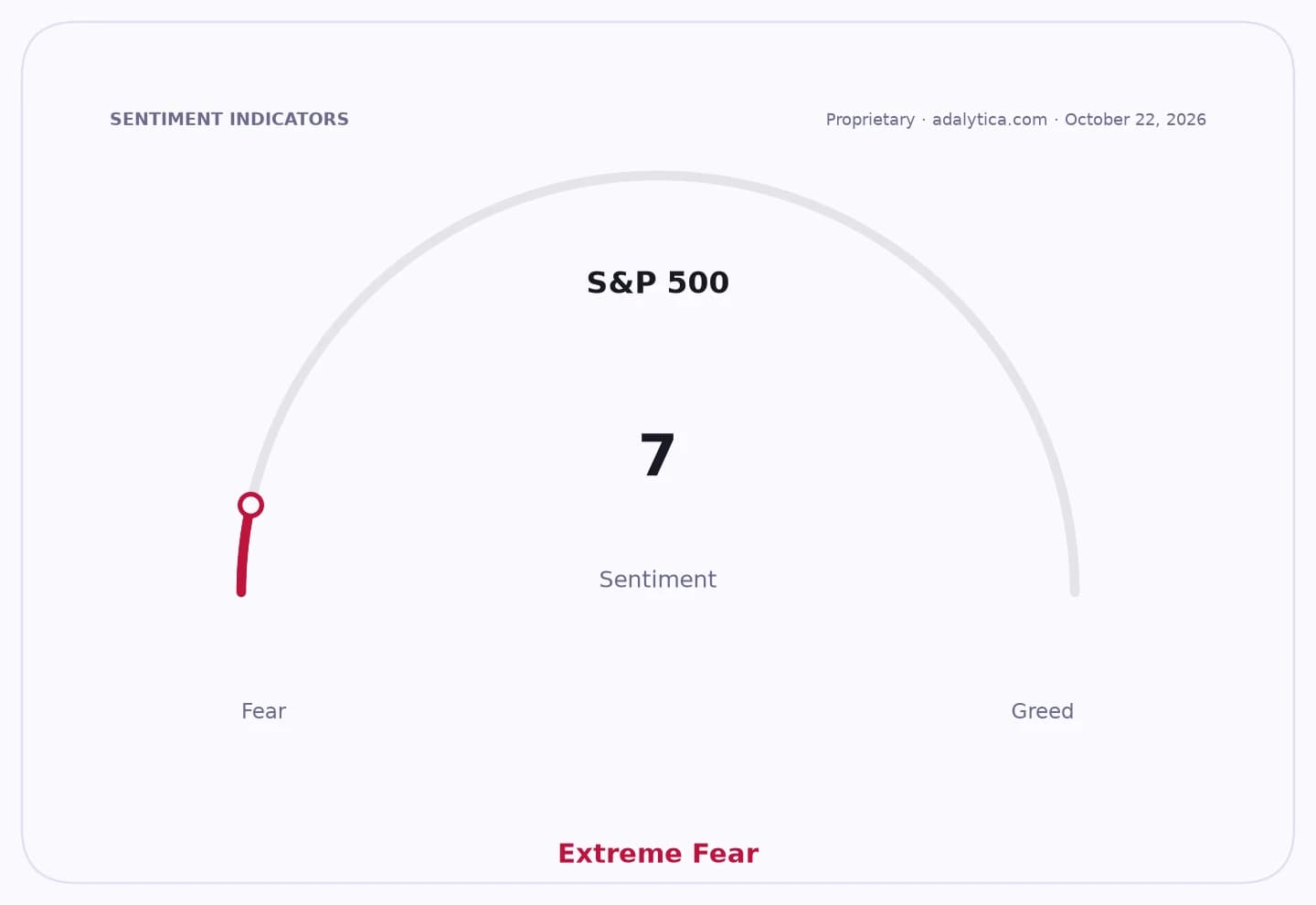
Sentiment IndicatorsⓘProprietary · adalytica.com · October 22, 2026
This is a snapshot — live sentiment, awareness and momentum for 130+ markets update continuously in the dashboard.Open AlphaPulse
Goldman’s credit team said investors should not treat all AI infrastructure as one trade, but instead assess each project on its own merits. The bank pointed to construction risk, debt repayment capacity, refinancing needs, tenant concentration and claims on assets, along with practical bottlenecks such as power availability, regulatory approvals and insurance. In other words, the market is moving from a simple “AI wins” thesis to a more selective underwriting regime.
For equity investors, that shift is just as important. Many listed firms across energy, real estate and industrials are increasing exposure to data centres, often by committing more capital or entering joint ventures. That can create upside if demand remains strong and financing stays open. But it also raises the risk that returns will be diluted if projects require more leverage than expected or if tenants do not ramp up quickly enough.
The broader rates backdrop helps explain the caution. The U.S. 10-year Treasury yield is around 5.15%, while Goldman’s warning comes against a market still pricing a meaningful premium for credit risk in lower-rated debt. High-yield funds such as JNK and HYG have been relatively stable, but their recent price action and technical indicators show no clear conviction that risk appetite is improving enough to absorb a wave of heavy infrastructure issuance without wider spreads.
Goldman also highlighted Spanish renewable energy group Solaria, which has drawn attention after announcing a data centre deal in Uruguay. The example underlines how AI infrastructure is pulling in companies outside the traditional cloud and telecom universe, widening the set of investors exposed to execution risk. Goldman analyst Alberto Gandolfi said the deal’s risks were skewed to the upside, and the firm suggested further announcements could come at Solaria’s capital markets day in November.
The economic implication is straightforward: AI demand may still justify massive investment, but the financing terms will increasingly determine which projects get built. If spreads stay wide, lenders and bondholders are likely to favor established operators with power access, credible tenants and balance-sheet capacity, while speculative developments face higher hurdles. That makes project selection, not sector exposure alone, the key variable for investors.
For now, the AI infrastructure trade still has structural support from strong demand for computing capacity. But the market is beginning to price a more selective phase of the cycle, where access to power, permits and cheap capital matters as much as the AI narrative itself.
| Entity | Gains | Losses |
|---|---|---|
| Established data centre operators | ▲Easier access to funding | ▼Less pricing power for marginal projects |
| High-quality lenders/bondholders | ▲Better risk-adjusted returns | ▼Lower appetite for weak credits |
| Speculative AI infra developers | ▲Potential upside if execution works | ▼Higher financing costs |
| Equity investors | ▲More disciplined capital allocation | ▼Greater project-specific downside |